Bylines

Alex Wellerstein

Collage featuring a propaganda poster for Civil Defense in Georgia, featuring woman holding Confederate flag.

Paper Cups and a Confederate Flag

Civil Defense and the Deep South in the 1950s.
Map of the United States visualizing what a thermonuclear war would look like.

Bananas for BRAVO

An early attempt to visualize the broader implications of thermonuclear war.
Harry Truman superimposed on an American Flag and a mushroom cloud.

Why Harry Truman Didn’t Trust the U.S. Military with Atomic Bombs

At a pivotal moment in the Cold War, the decision was made that the President would be ultimately responsible for atomic weapons.
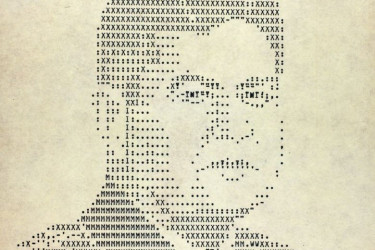
A teletype portrait of Curtis LeMay.

"I Have Sought to Slaughter as Few Civilians as Possible."

The rabid, apocalyptic Beat poetry that is "Mission with LeMay."
Photographs of historian Zachary Schrag and his father Philip Schrag in front of a Nuclear War plan background

Two Generations of Nuclear Hopes and Nuclear Fears

A conversation with historian Zachary Schrag and his father Philip Schrag about their multi-generational encounters with nuclear threats.
Civil Defense warning.

The Occasion Instant, 1961

What can be learned from how people responded to false alarms about nuclear war in the late 1950s?
Summer Interns, posting with the casing of a B-61 bomb in 1982.

Pantex Employee Photos, 1980s

Team photographs at a nuclear weapons factory offer a glimpse into the mundanity and materiality of the bomb.
Oppenheimer movie poster.

Fact, Fiction, and the Father of the Bomb

On Christopher Nolan’s “Oppenheimer.”

Counting the Dead at Hiroshima and Nagasaki

How many people really died because of the Hiroshima and Nagasaki bombings? It’s complicated. There are at least two credible answers.
People looking at the Fat Man bomb covered with a tarp

What Journalists Should Know About the Atomic Bombings

As we approach the 75th anniversary of the atomic bombings, we're going to see a lot of journalistic takes on them — many of them totally wrong.

John Wheeler’s H-bomb Blues

In 1953, as a political battle raged over the US’s nuclear future, the physicist lost a classified document on an overnight train from Philadelphia to DC.

A 'Purely Military' Target? Truman’s Changing Language about Hiroshima

A set of speech drafts suggests that Truman may not have fully understood the implications of dropping an atomic bomb on the city.

The Curious Death of Oppenheimer’s Mistress

Who killed J. Robert Oppenheimer's Communist lover?

Why Nagasaki?

Why was a second bomb used against Japan, so soon after Hiroshima? A review of several theories.