Menu
Excerpts
Exhibits
Collections
Originals
Podcasts
Categories
Map
Search
Person
Alexis de Tocqueville
Book
Democracy in America
Alexis de Tocqueville
1835-1840
View on Map
Related Works
Book
The Man Who Understood Democracy
: The Life of Alexis de Tocqueville
Olivier Zunz
2022
Related Excerpts
Load More
Viewing 1–20 of 57
American Nightmares
Wang Huning and Alexis de Tocqueville’s dark vision of the future.
by
Tanner Greer
via
Scholar's Stage
on
March 28, 2024
Bourgeois Stew: Alexis de Tocqueville
In contrast to feudal society, where everyone, lord or serf, remained rooted to the land, and words were ‘passed on'.
by
Oliver Cussen
via
London Review of Books
This publication restricts nonsubscriber access to some or all of its articles.
on
November 16, 2023
What Tocqueville Saw in the Courts
Tocqueville understood how constitutional review, without meaningful checks, could enable judicial despotism.
by
Alan S. Kahan
via
Law & Liberty
on
September 12, 2023
‘A Great Democratic Revolution’
Alexis de Tocqueville left France to study the American prison system and returned with the material that would become “Democracy in America.”
by
Lynn A. Hunt
via
New York Review of Books
This publication restricts nonsubscriber access to some or all of its articles.
on
November 17, 2022
Liberalism and Equality
Liberalism’s relationship to equality has, historically, been far from a warm embrace.
by
Gregory Conti
via
American Affairs
This publication restricts nonsubscriber access to some or all of its articles.
on
August 20, 2024
Separation of Church and State Has Always Been Good for Religion
The US Supreme Court's most recent decisions undermine centuries of established secularism within American government.
by
Ed Simon
via
Arc: Religion, Politics, Et Cetera
on
June 30, 2022
Tocqueville’s Uneasy Vision of American Democracy
American government succeeded, Tocqueville thought, because it didn’t empower the people too much.
by
Jedediah Britton-Purdy
via
The New Republic
This publication restricts nonsubscriber access to some or all of its articles.
on
April 22, 2022
Living Memory
Black archivists, activists, and artists are fighting for justice and ethical remembrance — and reimagining the archive itself.
by
Megan Pillow
via
Guernica
on
June 23, 2021
Even the Founding Fathers Couldn’t Envision a President Like Trump
Reflections on Alexander Hamilton, Alexis de Tocqueville, and the power of the presidency.
by
Liesl Schillinger
via
Literary Hub
on
February 6, 2020
“The Town Was Us”
How the New England town became the mythical landscape of American democracy.
by
Garrett Dash Nelson
via
Places Journal
on
July 1, 2018
Religion and the Republic
Looking to the French Revolution and the writings of Tocqueville for insight into Trump’s America.
by
Philip Gorski
via
Public Books
on
November 14, 2017
A Brief History of Solitary Confinement
Dickens, Tocqueville, and the U.N. all agree about this American invention: It’s torture.
by
Jean Casella
,
James Ridgeway
via
Longreads
on
February 2, 2016
partner
You've Got Mail
The rise and fall of the Post Office from Tocqueville to Fred Rogers.
via
BackStory
on
December 7, 2012
partner
The Invention of the Continental Divide
A Civil War-era push for unity helped transform a little-known geographic boundary into a powerful symbol of American identity.
by
Matthew Wills
,
James D. Drake
via
JSTOR Daily
on
May 11, 2026
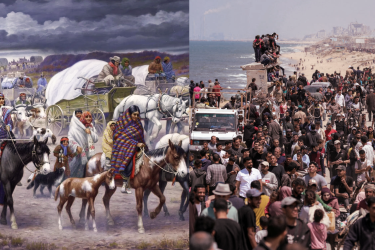
First the Cherokee, Now the Palestinians
Revisiting U.S. attitudes toward the Cherokee shows how the rhetoric of oppressors stays consistent. The rationalizations for ethnic cleansing do not change.
by
Norman G. Finkelstein
via
Current Affairs
on
March 11, 2026
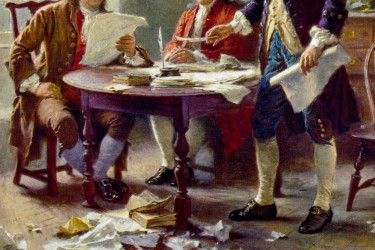
The Declaration Still Unites Our Nation
As we celebrate the 250th anniversary of American independence, our founding charter remains central to our national life.
by
Michael Auslin
via
American Heritage
on
February 17, 2026
The Rise of the Tech Hamiltonians
The political coalition that has formed under Trump’s banner has the potential to reshape American politics.
by
Walter Russell Mead
via
The Atlantic
This publication restricts nonsubscriber access to some or all of its articles.
on
January 24, 2026
The Return of the Jewish Question
The “Jewish Question” is a scapegoating conspiracy. This essay traces its appeal, partial truths, and why it falsely absolves America of blame.
by
David Azerrad
via
Compact
on
December 22, 2025
The Ideal That Underlies the Declaration of Independence
Restoring stability to American politics will require reviving an age-old concept: common ground.
by
Walter Isaacson
via
The Atlantic
This publication restricts nonsubscriber access to some or all of its articles.
on
November 9, 2025
The Decline and Fall of Christianity in America
If we imagine religion as a technology, argues Notre Dame sociologist Christian Smith, we can better see the cause of its decline: obsolescence.
by
Daniel N. Gullotta
via
The Bulwark
on
July 1, 2025
Previous
Page
1
of 3
Next