Menu
Excerpts
Exhibits
Collections
Originals
Podcasts
Categories
Map
Search
Person
Jack Kerouac
Book
On the Road
: A Novel
Jack Kerouac
1957
View on Map
Related Works
Book
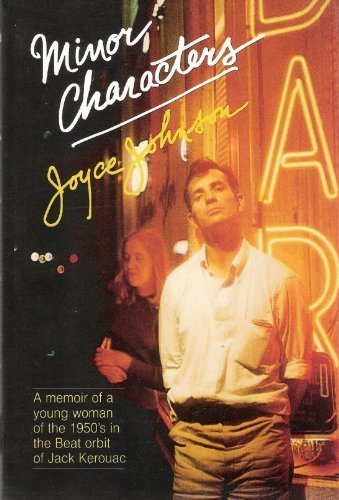
Minor Characters
: A Memoir of a Young Woman of the 1950s in the Beat Orbit of Jack Kerouac
Joyce Johnson
1983
Related Excerpts
Viewing 1–17 of 17
Scrolling Through
Jack Kerouac, Malcolm Cowley, and the difficult birth of "On the Road."
by
Gerald Howard
via
The American Scholar
on
September 2, 2025
Jack Kerouac’s Journey
For "On the Road"’s author, it was a struggle to write, then a struggle to live with its fame. “My work is found, my life is lost,” he wrote.
by
Joyce Johnson
via
New York Review of Books
This publication restricts nonsubscriber access to some or all of its articles.
on
March 2, 2022
Drive, Jack Kerouac Wrote
"On the Road" is a sad and somewhat self-consciously lyrical story about loneliness, insecurity, and failure. It’s also a story about guys who want to be with other guys.
by
Louis Menand
via
The New Yorker
This publication restricts nonsubscriber access to some or all of its articles.
on
September 24, 2007
My Norman Mailer Problem—and Ours
Digging down into the roots of white America’s infatuation with Black.
by
Darryl Pinckney
via
The Nation
This publication restricts nonsubscriber access to some or all of its articles.
on
March 7, 2022
Ride Shotgun through Mid-Century LA with Ed Ruscha’s Photos and Jack Kerouac’s Words
A kinetic slice of Americana so pure you can almost smell Kerouac’s invoked apple pie – or maybe it’s the faint stench of exhaust fumes.
by
Matthew Miller
via
Aeon
on
January 7, 2020
‘You Got Eyes’: Jack Kerouac and Robert Frank’s Shared Vision
Joyce Johnson on the friendship between two famous outsiders.
by
Joyce Johnson
via
New York Review of Books
This publication restricts nonsubscriber access to some or all of its articles.
on
October 25, 2019
The Man Who Helped Make the American Literary Canon
In the early twentieth century, America's literature seemed provincial until Malcolm Cowley championed writers like Kerouac and Faulkner as distinctly American.
by
Kevin Lozano
via
The New Yorker
This publication restricts nonsubscriber access to some or all of its articles.
on
November 19, 2025
For Pete’s Sake
A new book traces "the rise and fall of Pete Rose, and the last glory days of baseball."
by
Christopher Caldwell
via
The Washington Free Beacon
on
May 12, 2024
On Menand’s "The Free World" and Dinerstein’s "The Origins of Cool in Postwar America"
Two differing explorations of post-WWII culture, politics, and ideals.
by
Michael J. Kramer
via
Society for U.S. Intellectual History
on
May 21, 2023
Historic Fire Lookout Towers Are Burning Down in Today’s Megafires
One of the country’s oldest fire lookouts was destroyed last year in the largest wildfire in California’s history. What else is being lost?
by
Hannah Kingsley-Ma
via
The New Republic
This publication restricts nonsubscriber access to some or all of its articles.
on
September 7, 2022
Stewart Brand’s Dubious Futurism
What did the creator of the Whole Earth Catalog stand for?
by
Malcolm Harris
via
The Nation
This publication restricts nonsubscriber access to some or all of its articles.
on
June 13, 2022
The Dropout, a History: From Postwar Paranoia to a Summer of Love
The dropout was not just a hippy-trippy hedonist but a paranoid soul, who feared brainwashing and societal control.
by
Charlie Williams
via
Aeon
on
December 3, 2021
Freedom for Sale
In the 1950s and 1960s, a new generation of American artists began to think of advertising and commercial imagery as the new avant-garde.
by
Fintan O’Toole
via
New York Review of Books
This publication restricts nonsubscriber access to some or all of its articles.
on
July 1, 2021
How Americans Re-Learned to Think After World War II
In ‘The Free World: Art and Thought in the Cold War,’ Louis Menand explores the poetry, music, painting, dance and film that emerged during the Cold War.
by
Carlos Lozada
via
Washington Post
This publication restricts nonsubscriber access to some or all of its articles.
on
April 16, 2021
Allen Ginsberg at the End of America
The polarized dialogue over Vietnam and the civil rights movement convinced Ginsberg that America was teetering on the precipice of a fall.
by
Michael Shumacher
via
The Paris Review
on
August 27, 2020
No Girls Allowed
How America's persistent preference for brash boys over "sivilizing" women fueled the candidacy of Donald Trump.
by
Rebecca Onion
via
Slate
This publication restricts nonsubscriber access to some or all of its articles.
on
October 28, 2016
Suddenly That Summer
LSD, ecstasy, and a blast of utopianism: How 1967’s “Summer of Love” all began.
by
Sheila Weller
via
The Hive
on
June 14, 2012