Menu
Excerpts
Exhibits
Collections
Originals
Podcasts
Categories
Map
Search
Bylines
Livia Gershon
All Content Related to This Author
Load More
Viewing 73–96 of 110 written by Livia Gershon
partner
The Protestant Astrology of Early American Almanacs
The wildly popular books helped people understand farming and health through the movement of the planets, in a way compatible with Protestantism.
by
T. J. Tomlin
,
Livia Gershon
via
JSTOR Daily
on
March 15, 2020
partner
Wounded Knee and the Myth of the Vanished Indian
The story of the 1890 massacre was often about the end of Native American resistance to US expansion. But that’s not how everyone told it.
by
Livia Gershon
,
Lisa Tatonetti
via
JSTOR Daily
on
February 17, 2020
partner
A Brief History of the Calorie
The measure of thermal energy expended by exercise was adapted from the study of explosives and engines.
by
Livia Gershon
,
Nick Cullather
via
JSTOR Daily
on
February 6, 2020
partner
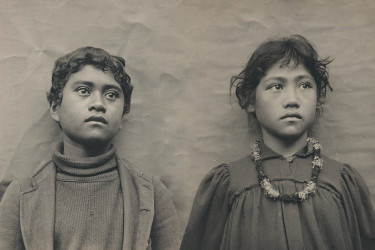
How Public Schools "Americanized" Hawai‘i
Colonial education administrators recruited teachers from the mainland, but soon realized another strategy was in order.
by
Livia Gershon
,
Michelle Morgan
via
JSTOR Daily
on
February 3, 2020
partner
Who Was Elsie, Besides the World’s Most Famous Cow?
In the Great Depression, Borden sought a new spokescow to help preserve its traditional agrarian image.
by
Livia Gershon
,
Anna Thompson Hajdik
via
JSTOR Daily
on
December 13, 2019
partner
The End of Men, in 1870
In 1790, U.S. men were about twice as likely as U.S. women to be literate. But by 1870, girls were surpassing boys in public schools.
by
Livia Gershon
,
David Tyack
,
Elizabeth Hansot
via
JSTOR Daily
on
December 2, 2019
partner
What the Reconstruction Meant for Women
Southern legal codes included parallel language pairing “master and slave” and “husband and wife.”
by
Livia Gershon
,
Amy Dru Stanley
via
JSTOR Daily
on
November 6, 2019
partner
Selling Slashers to Teen Girls
The heroines of 1970s and 80s teen horror movies were traditionally feminine, tough, and sexually confident.
by
Livia Gershon
,
Richard Nowell
via
JSTOR Daily
on
September 25, 2019
partner
Why Did Christianity Thrive in the U.S.?
Between 1870 and 1960, Christianity declined dramatically across much of Europe. Not in America. One historian explains why.
by
Jon Butler
,
Livia Gershon
via
JSTOR Daily
on
August 22, 2019
partner
Rachel Carson's Critics Called Her a Witch
When Silent Spring was published, the response was overtly gendered. Rachel Carson's critics depicted her as hysterical, mystical, and witchy.
by
Livia Gershon
,
Maril Hazlett
via
JSTOR Daily
on
February 21, 2019
partner
What Does History Smell Like?
Scholars don't typically pay that much attention to smells, but odors have historically been quite significant.
by
Mark S. R. Jenner
,
Livia Gershon
via
JSTOR Daily
on
December 28, 2018
partner
A History of Police Violence in Chicago
At the turn of the century, Chicago police killed 307 people, one in eighteen homicides in the city—three times the body count of local gangsters.
by
Jeffrey S. Adler
,
Livia Gershon
via
JSTOR Daily
on
October 3, 2018
partner
Being a Victorian Librarian Was Oh-So-Dangerous
In the late 19th century, more women were becoming librarians. Experts predicted they would suffer ill health and breakdowns.
by
Livia Gershon
,
Rosalee McReynolds
via
JSTOR Daily
on
August 7, 2018
Happy, Healthy Economy
Growth is only worth something if it makes people feel good.
by
Livia Gershon
via
Longreads
on
August 6, 2018
partner
A History of Noise
Whether we consider the sounds of nature to be pleasant or menacing depends largely on our ideologies.
by
Livia Gershon
via
JSTOR Daily
on
June 1, 2018
partner
The Campaign for Child Labor
Why did David Clark campaign to keep kids working in the early 20th century? For one thing, it benefited his interests.
by
Livia Gershon
,
Bart Dredge
via
JSTOR Daily
on
May 28, 2018
partner
Can Consumer Groups Be Radical?
A historian looked at the consumer movements of the 1930s to find out.
by
Lawrence B. Glickman
,
Livia Gershon
via
JSTOR Daily
on
May 16, 2018
partner
Where Sunday School Comes From
Sunday school was a major part of nineteenth century reformers’ efforts to improve children’s lives and morals.
by
Livia Gershon
via
JSTOR Daily
on
April 22, 2018
partner
The Lost Language of American Loggers
A 1942 glossary documents the origins of terms like "punk," "haywire," and "skidroad."
by
Livia Gershon
,
Elrick B. Davis
via
JSTOR Daily
on
April 6, 2018
partner
What Is Presidents’ Day Actually About?
For most of American history, Washington's Birthday was a really big deal, but that’s changed a lot since the middle of the twentieth century.
by
Livia Gershon
,
Barry Schwartz
via
JSTOR Daily
on
February 3, 2018
partner
What the Prisoners’ Rights Movement Owes to the Black Muslims of the 1960s
Black Muslims have been an influential force in the prisoners' rights movement and criminal justice reform.
by
Christopher E. Smith
,
Livia Gershon
via
JSTOR Daily
on
January 22, 2018
partner
Before Net Neutrality, There Was Radio Regulation
How today's media landscape was shaped by a 1920s decision to privilege corporate broadcasters over noncommercial ones.
by
Livia Gershon
,
Robert W. McChesney
via
JSTOR Daily
on
December 11, 2017
partner
The Populist Power of the American Trucker
How did truckers nudge the American economy toward deregulation?
by
Shane Hamilton
,
Livia Gershon
via
JSTOR Daily
on
December 1, 2017
partner
The Cookbook That Brought Chinese Food to American Kitchens
The lasting influence of "How to Cook and Eat in Chinese."
by
Livia Gershon
,
Charles W. Hayford
via
JSTOR Daily
on
November 5, 2017
Previous
Page
4
of 5
Next