Menu
Excerpts
Exhibits
Collections
Originals
Podcasts
Categories
Map
Search
Person
Thomas Pynchon
Book
Gravity's Rainbow
Thomas Pynchon
1973
Book
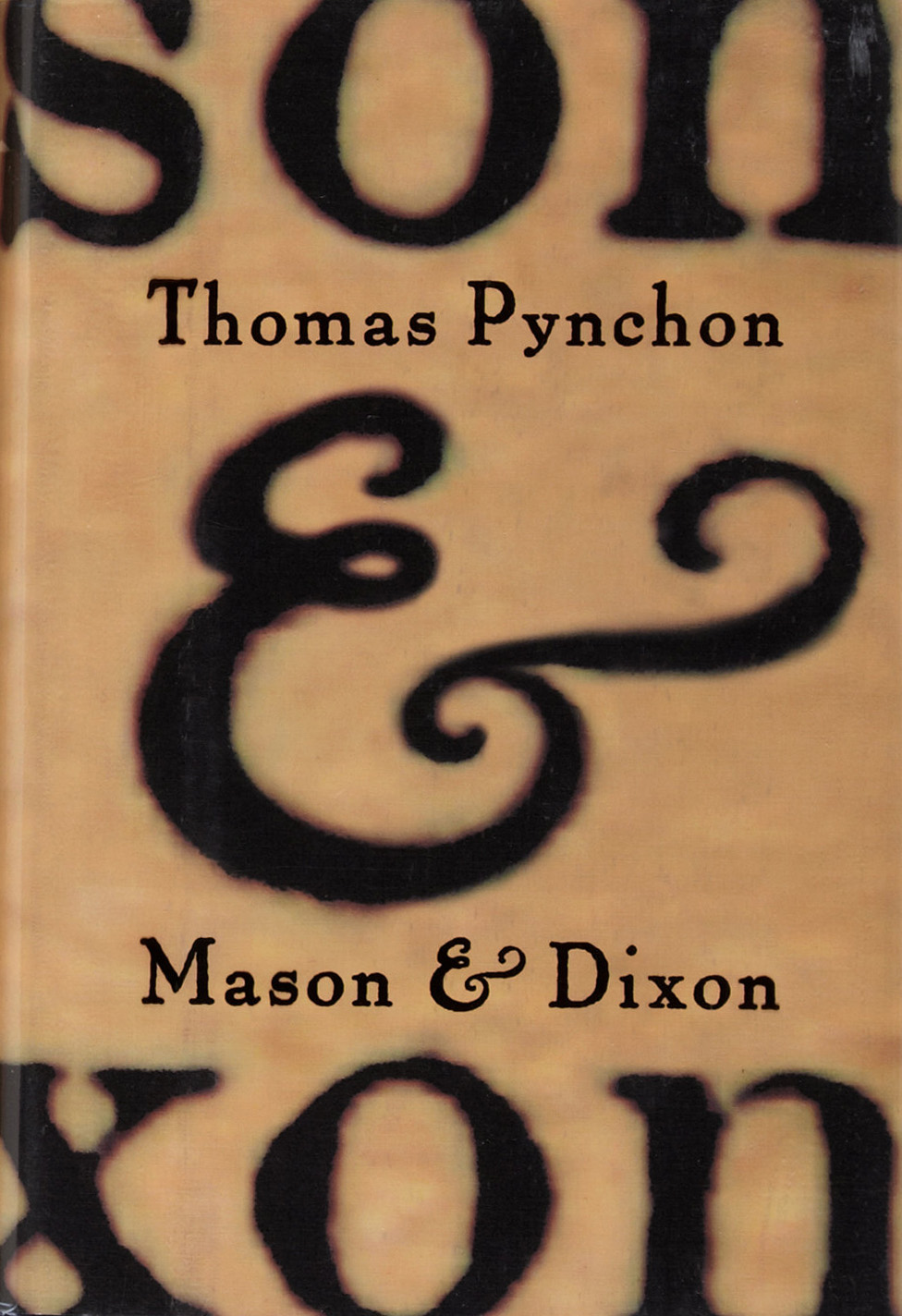
Mason & Dixon
Thomas Pynchon
1997
Related Excerpts
Viewing 1–10 of 10
Mason-Dixon Lines
The boundary lines preceding Mason and Dixon, everybody knows, were a sham. What’s to follow will be no better.
by
Edward G. Gray
via
Commonplace
on
January 16, 2024
History Is Hard to Decode
On 50 years of Thomas Pynchon’s “Gravity’s Rainbow.”
by
M. Keith Booker
via
Los Angeles Review of Books
on
February 28, 2023
The Most Rancorous Line
How did the Mason–Dixon Line—meant to resolve a longstanding colonial border dispute—come to represent the US’s foundational divide between slavery and freedom?
by
Nicholas Guyatt
via
New York Review of Books
This publication restricts nonsubscriber access to some or all of its articles.
on
December 25, 2025
On Menand’s "The Free World" and Dinerstein’s "The Origins of Cool in Postwar America"
Two differing explorations of post-WWII culture, politics, and ideals.
by
Michael J. Kramer
via
Society for U.S. Intellectual History
on
May 21, 2023
The Enduring Lessons of a New Deal Writers Project
The case for a Federal Writers' Project 2.0.
by
Jon Allsop
via
Columbia Journalism Review
on
December 22, 2020
The Age of Innocence: How a US Classic Defined Its Era
Cameron Laux looks at how The Age of Innocence – published 100 years ago – marked a pivotal moment in US history.
by
Cameron Laux
via
BBC News
on
September 23, 2020
Watching the End of the World
The Doomsday Clock is set to two minutes to midnight. So why don't we make movies about nuclear war anymore?
by
Stephen Phelan
via
Boston Review
on
June 11, 2019
How Literature Became Word Perfect
Before the word processor, perfect copy was the domain of the typist—not the literary genius.
by
Josephine Livingstone
via
The New Republic
This publication restricts nonsubscriber access to some or all of its articles.
on
May 2, 2016
Seeing Ornette Coleman
Coleman’s approach to improvisation shook twentieth-century jazz. It was a revolutionary idea that sounded like a folk song.
by
Taylor Ho Bynum
via
The New Yorker
This publication restricts nonsubscriber access to some or all of its articles.
on
June 12, 2015
Drive, Jack Kerouac Wrote
"On the Road" is a sad and somewhat self-consciously lyrical story about loneliness, insecurity, and failure. It’s also a story about guys who want to be with other guys.
by
Louis Menand
via
The New Yorker
This publication restricts nonsubscriber access to some or all of its articles.
on
September 24, 2007