Digital illustration of a wagon filled with newspapers.

Fear in the Heartland

How the case of the kidnapped paperboys accelerated the “stranger danger” panic of the 1980s.
Ralph Waldo Emerson

Ralph Waldo Emerson Would Really Hate Your Twitter Feed

For Ralph Waldo Emerson, political activism was full of empty gestures done in bad faith. Abolition called for true heroism.
Map of Charleston Harbor, 1822.

Elkison v. Deliesseline: The South Carolina Negro Seaman Act of 1822 in Federal Court

Elkison v. Deliesseline presented a federal court with the question of whether a state could incarcerate and enslave a free subject of a foreign government.
Statue of Dred Scott and wife

Allegiance, Birthright, and Race in America

What the Dred Scott v. Sandford case meant for black citizenship.
Rubble from atomic bombs in Japan

Thousands of Japanese Americans Were in Hiroshima and Nagasaki in 1945

Among the nearly half a million atomic bomb victims and survivors were thousands of Japanese American citizens of the United States.
Newark protesters and National Guard

A Warning Ignored

America did exactly what the Kerner Commission on the urban riots of the mid-1960s advised against, and fifty years later reaped the consequences it predicted.
Young Lords Party march to the UN.

The Young Lords' Radical Fight for Environmental Justice

Johanna Fernández's new book on the Young Lords sheds light on the group's fight for clean streets and public health in 1960s New York City.
Bob Moses at SNCC

The Quiet Courage of Bob Moses

The late civil-rights leader understood that grassroots organizing was key to delivering political power to Black Americans in the South.
Cutouts of black children reading

Today It’s Critical Race Theory. 200 Years Ago It Was Abolitionist Literature.

The common denominator? Fear of Black liberation.
Children's coloring sheets of overturned police cars.

Magic Actions

Looking back on the George Floyd rebellion.
Photo of immigants being detained.

‘I Became a Jailer’: The Origins of American Immigrant Detention

The massive U.S. apparatus for holding immigrants has a long American tradition.
Collage of sexual freethinkers with a book, a gavel, and a bra.

The Radical Women Who Paved the Way for Free Speech and Free Love

Anthony Comstock’s crusade against vice constrained the lives of ordinary Americans. His antagonists opened up history for feminists and other activists.
U.S. Supreme Court justices.
partner

A Major Supreme Court First Amendment Decision Could be at Risk

Without New York Times vs. Sullivan, freedom of speech and the press could be drastically truncated.
Lithograph of "The Tea Tax Tempest," an allegorical depiction of the American Revolution.

Black Women and American Freedom in Revolutionary America

The relationship between enslaved women and the Revolutionary war.
Astronaut John Glenn surrounded by piles of mail

Sexism in the Early Space Program Thwarted the Ambitions of Women

John Glenn's fan mail shows many girls dreamed of the stars.
Scottsboro Boys standing

Ada Wright, The Scottsboro Defense Campaign, and the Popular Front

The Scottsboro Case quickly became one of the most infamous international spectacles that would eventually define the interwar period.
Chicago Vietnam antiwar march

How the Asian American Movement Learned a Lesson in Liberation from the Black Panthers

In 1968, Chicago grabbed the eyes of the world when fifteen thousand Vietnam antiwar protesters vowed to shut down the National Democratic Convention.
Henrietta Rodman walking

How Teachers Won the Right to Get Pregnant

In the early twentieth century, teachers were prohibited from keeping their jobs after getting pregnant. Socialist feminists organized to change that.
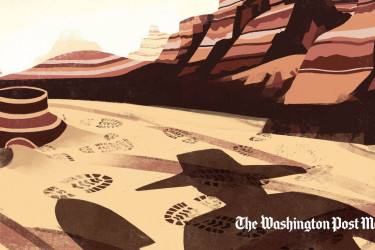
Cartoon drawing of footprints in sand

Will the Mass Robbery of Native American Graves Ever End?

For centuries, everyone from archaeologists to amateurs pillaged artifacts — and human remains. Now, the FBI is cracking down on those who continue to dig.
Picture of the outdoor proceedings of the Scopes Trial in 1925.

Was David Domer Canceled?

A look in on the first evolution trial.
Aerial view of Japanese internment camp barracks

Social Science as a Tool for Surveillance in World War II Japanese American Concentration Camps

Edward Spicer's writings indicate an awareness of the deeply unjust circumstances that Japanese Americans found themselves in within Japanese internment camps.
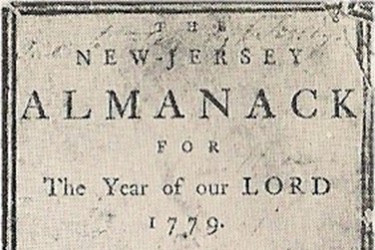
An example of an almanac for New Jersey, from 1779

Inspiration Porn and Depictions of Impairment in Early America

How people understood disabilities in the 18th century, in contrast to contemporary interpretation, requires historical nuance.
Mounted police clashing with strikers, one carrying an American flag, outside an electrical plant in Philadelphia, 1946

Cops at War: How World War II Transformed U.S. Policing

As wartime labor shortages depleted police forces, and fear of crime grew, chiefs turned to new initiatives to strengthen and professionalize their officers.
partner

Special Education: The 50-Year Fight for the Right to Learn

Today’s special education system was shaped five decades ago, when parents fought for disabled children’s right to learn.
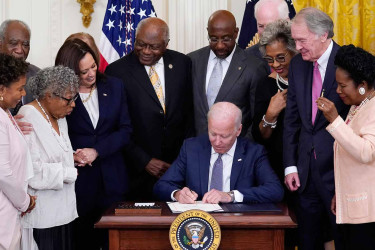
Joe Biden signs the legislation making Juneteenth a federal holiday.

Juneteenth and the Problem of American Freedom

Of course, Juneteenth should be recognized as a Black holiday belonging to Black people. But this is not a day purely of joyful celebration.
A painting entitled Our Town, with Black children playing on a suburban street

The Truth About Black Freedom

This year’s Juneteenth commemorations must take a deeper look at the history of Black self-liberation to understand what emancipation really means.
James Baldwin, sitting.
partner

James Baldwin and the FBI

The author was monitored for his political activities, but also for being gay. The surveillance took a toll on him.
Black men and women in Hilton Head, South Carolina, after the Civil War.

The United States' First Civil Rights Movement

A new history charts the radical agitation around Black rights and freedom back to the early nineteenth century. 
Artistic photo of John Marshall

America’s ‘Great Chief Justice’ Was an Unrepentant Slaveholder

John Marshall not only owned people; he owned many of them, and aggressively bought them when he could.
Protest for trans rights
partner

The New Wave of Anti-Trans Legislation is Based on Very Old Arguments and Ideas

Trans Americans have taken to the courts for decades to fight against the notion that they are a threat.