Menu
Excerpts
Exhibits
Collections
Originals
Podcasts
Categories
Map
Search
Category
Money
On systems of production, consumption, and trade.
Load More
Viewing 1,291–1,320 of 1,357
Dream Reading
Interpreting dreams for fun and profit. The importance of oneiromancy (dream reading) to American betting culture.
by
Ann Fabian
via
Lapham’s Quarterly
on
June 1, 2016
partner
Welfare and the Politics of Poverty
Bill Clinton’s 1996 welfare reform was supposed to move needy families off government handouts and onto a path out of poverty. How has it turned out?
via
Retro Report
on
May 1, 2016
Partisan Banking and the Emergence of Free Banking in Early 19th-Century Massachusetts
The critical role that banking played in the political struggles of early American history.
by
Nicholas Curott
via
Dissertation Reviews
on
April 21, 2016
Credit Bureaus Were the NSA of the 19th Century
They were enormous, tech-savvy, and invasive in their methods—and they enlisted Abraham Lincoln into their ranks.
by
Sarah Jeong
via
The Atlantic
This publication restricts nonsubscriber access to some or all of its articles.
on
April 21, 2016
Why Are America’s Most Innovative Companies Still Stuck in 1950s Suburbia?
Suburban corporate campuses have isolated themselves by design from the communities their products were supposed to impact.
by
Hunter Oatman-Stanford
via
Collectors Weekly
on
April 8, 2016
The Homestead Strike
The Digital Public Library of America brings together the riches of America’s libraries, archives, and museums, and makes them freely available to the world.
by
Franky Abbott
via
Digital Public Library of America
on
April 6, 2016
“What We Have is Capture of the Regulators’ Minds, A Much More Sophisticated Form of Capture Than Putting Money in Their Pockets”
How every major industry and marketplace in America came to be controlled by a single, monolithic player.
by
Barry C. Lynn
,
Asher Schechter
via
Pro-Market
on
March 26, 2016
Land and The Roots of African-American Poverty
Land redistribution could have served as the primary means of reparations for former slaves. Instead, it did exactly the opposite.
by
Keri Leigh Merritt
via
Aeon
on
March 11, 2016
How the Pioneering Childs Restaurant Chain Built an Empire Based on Food Safety and Hygiene
Victorian diners loved white tile, too.
by
Elizabeth Yuko
via
CityLab
This publication restricts nonsubscriber access to some or all of its articles.
on
February 3, 2016
How Quaker War Tax Resistance Came and Went, Twice
A history of a sometimes-forgotten Quaker witness.
by
David M. Gross
via
Friends Journal
on
February 1, 2016
How Immigrants Fit Into America's Economy, Now and 100 Years Ago
Compared to 19th-century arrivals, today's new arrivals are much more likely to be at the extreme ends of the earnings spectrum.
by
Gillian B. White
via
The Atlantic
This publication restricts nonsubscriber access to some or all of its articles.
on
January 24, 2016
Composite Photographs of Child Labourers
A unique set of composite photographs by Lewis Hine depicting Southern cotton mill workers.
by
Lewis Hine
,
Adam Green
via
The Public Domain Review
on
January 16, 2016
A History of Black Bartenders
In the late 19th century, Black bartenders gained esteem in the North and South. But their experiences were very different — in ways that may defy assumptions.
by
David Wondrich
via
The Bitter Southerner
on
January 12, 2016
partner
Liquid Poison
American Indians and the tumult in their cultures precipitated by the arrival of alcohol.
via
BackStory
on
January 1, 2016
partner
Canals 1820-1890
An interactive map of U.S. canals in the first half of the 19th century.
by
Ed Ayers
,
Robert K. Nelson
,
Scott Nesbit
,
Justin Madron
,
Nathaniel Ayers
,
Beaumont Smith
via
American Panorama
on
December 1, 2015
When Tipping Was Considered Deeply Un-American
Imported from Europe, the custom of leaving gratuities began spreading in the U.S. post-Civil War. It was loathed as a master-serf custom.
by
Nina Martyris
via
NPR
on
November 30, 2015
Who Took Care of Rosie the Riveter's Kids?
Government-run childcare was crucial in enabling women’s employment during World War II, but today the program has largely been forgotten.
by
Rhaina Cohen
via
The Atlantic
This publication restricts nonsubscriber access to some or all of its articles.
on
November 18, 2015
How the US Military Became a Welfare State
Long in retreat in the US, the welfare state found a haven in an unlikely place – the military, where it thrived for decades.
by
Jennifer Mittelstadt
via
Aeon
on
September 21, 2015
Why Liberals Separate Race from Class
The tendency to divorce racial disparities from economic inequality has a long liberal lineage.
by
Touré F. Reed
via
Jacobin
This publication restricts nonsubscriber access to some or all of its articles.
on
August 22, 2015
Puerto Rico’s Long Fall from ‘Shining Star’ to The ‘Greece’ of The Caribbean
Puerto Rico's financial situation could make it the "next Greece."
by
Pedro Caban
via
The Conversation
on
July 12, 2015
partner
Route Cause
On the 1870s skirmish between John D. Rockefeller and the upstart competitors who built the country’s first long-distance oil pipeline.
via
BackStory
on
June 5, 2015
A Brief History of the ATM
How automation changed retail banking.
by
Bernardo Bátiz-Lazo
via
The Atlantic
This publication restricts nonsubscriber access to some or all of its articles.
on
March 26, 2015
The War on Poverty: Was It Lost?
Four changes are especially important when we try to measure changes in the poverty rate since 1964.
by
Christopher Jencks
via
New York Review of Books
This publication restricts nonsubscriber access to some or all of its articles.
on
March 18, 2015
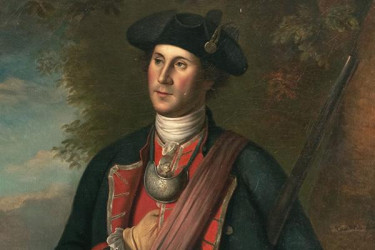
Why Did George Washington Become a Revolutionary?
How did George Washington, one of America’s elite 1%, become its leading revolutionary? His evolution came in stages.
by
Ray Raphael
via
Journal of the American Revolution
on
February 16, 2015
partner
Women at Work: A History
Women in the workplace, from 19th century domestic workers to the Rosies of World War II to the labs of Silicon Valley.
via
BackStory
on
February 6, 2015
partner
The Oil Battlefields
Syracuse University Geography professor Matt Huber discusses the 1930s oil boom in the American southwest, and the military might brought in to control it.
via
BackStory
on
January 9, 2015
Every Which Way but Regulated: The “Free Market” Trucking Industry
No longer home to the open-road outlaws and concrete cowboys of the ’70s, becoming a trucker is now the equivalent of operating a sweatshop on wheels thanks to deregulation.
by
Llewellyn Hinkes-Jones
via
Los Angeles Review of Books
on
November 25, 2014
The Self-Made Man
The story of America’s most pliable, pernicious, irrepressible myth.
by
John Swansburg
via
Slate
This publication restricts nonsubscriber access to some or all of its articles.
on
September 29, 2014
Our Mis-Leading Indicators
How statistical data came to rule public policy.
by
Stephen Macekura
via
Public Books
on
September 15, 2014
When Labor Day Meant Something
Remembering the radical past of a day now devoted to picnics and back-to-school sales.
by
Chad Broughton
via
The Atlantic
This publication restricts nonsubscriber access to some or all of its articles.
on
September 1, 2014
Previous
Page
44
of 46
Next