Menu
Excerpts
Exhibits
Collections
Originals
Podcasts
Categories
Map
Search
Category
Power
On persuasion, coercion, and the state.
Load More
Viewing 2,341–2,370 of 2,392
A Yacht, A Mustache: How A President Hid His Tumor
Grover Cleveland believed that if anything happened to his mustache during his surgery at sea, the public would know something was wrong.
by
Matthew Algeo
via
NPR
on
July 6, 2011
Podcast
BackStory
Civil War 150th: The Road to War
This is the first of a three-part reflection on the Civil War at its sesquicentennial. It explores Lincoln’s election, secession fears, slavery’s role in the conflict, and how Americans have misjudged the war’s devastating impact.
March 24, 2011
partner
Beyond Numbers: A History of the U.S. Census
To mark the culmination of Census 2010, we explore the fascinating story of how Americans have counted themselves.
via
BackStory
on
December 22, 2010
Atlas of the Transatlantic Slave Trade
Nine maps of the transatlantic slave trade between 1500 and 1900.
by
David Eltis
,
David Richardson
via
The Trans-Atlantic Slave Trade Database
on
November 18, 2010
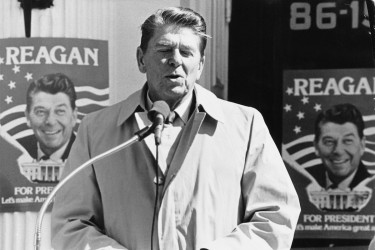
The Reagan Democrat Delusion
Whenever Democrats lose votes, pundits crow that they've lost the working class. Not so, though they have alienated unions.
by
Michael Paarlberg
via
The Guardian
on
November 16, 2010
When Blue-Collar Pride Became Identity Politics
Remembering how the white working class got left out of the New Left, and why we're all paying for it today.
by
Jefferson Cowie
,
Joan Walsh
via
Salon
on
September 6, 2010
The Empty Chamber
For many reasons, senators don’t have the time, or the inclination, to get to know one another—least of all members of the other party.
by
George Packer
via
The New Yorker
This publication restricts nonsubscriber access to some or all of its articles.
on
August 2, 2010
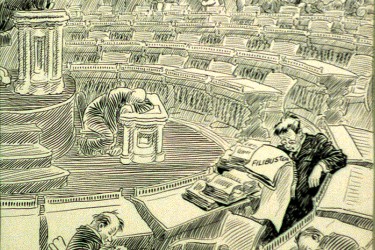
The History of the Filibuster
In testimony before a committee of the U.S. Senate, Sarah Binder counters a number of conventionally held notions about the filibuster.
by
Sarah Binder
via
Brookings
on
April 22, 2010
partner
The Health of a Nation
Political scientist Jacob Hacker explains how we wound up with a healthcare system so different from the European model, and why lobbyists hold so much sway.
via
BackStory
on
October 1, 2009
“Young Men for War”: The Wide Awakes and Lincoln’s 1860 Presidential Campaign
Wearing shiny black capes and practicing infantry drills had nothing to do with preparing for civil war.
by
Jon Grinspan
via
Journal of American History
This publication restricts nonsubscriber access to some or all of its articles.
on
September 1, 2009
Lower the Voting Age!
Why 16 year-olds can help us heal our broken political system.
by
Marco Roth
via
n+1
on
November 1, 2008
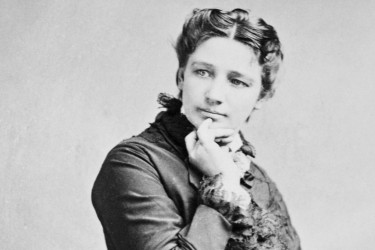
Banging on the Door: The Election of 1872
In the 1872 election, Victoria Woodhull ran for president of the United States – the first woman in American history to do so.
by
Joe Richman
,
Samara Freemark
via
Radio Diaries
on
October 13, 2008
Sailors’ Health and National Wealth
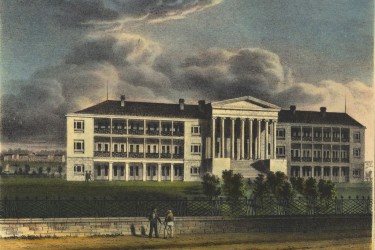
That the federal government created this health care system for merchant mariners in the early American republic will surprise many.
by
Gautham Rao
via
Commonplace
on
October 1, 2008
Was Andrew Jackson Really the People's Choice in 1824?
In 1828, Jackson's campaign argued that an 1824 victory was stolen from him. Is it really so clear-cut?
by
Donald J. Radcliffe
via
Commonplace
on
October 1, 2008
Political Construction of a Natural Disaster: The Yellow Fever Epidemic of 1853
The conversation around race after Hurricane Katrina echoed discourse from another New Orleans disaster 150 years before.
by
Henry M. McKiven Jr.
via
Journal of American History
This publication restricts nonsubscriber access to some or all of its articles.
on
December 1, 2007
partner
The Myth of the Media's Role in Watergate
Journalists' role in uncovering the scandal may not have been as significant as we think.
by
Mark Feldstein
via
HNN
on
August 30, 2004
The Debate Over War Powers
Two legal scholars make the case that President Bush must seek congressional authorization before initiating a preemptive military strike on Iraq.
by
Mark R. Shulman
,
Lawrence J. Lee
via
American Bar Association
on
January 1, 2003
partner
The History of Macho Presidents
A survey of presidential unilateralism going all the way back to the nation‘s founding.
by
Alexander DeConde
via
HNN
on
September 16, 2002
The Performer
The presidency of Theodore Roosevelt and his creation of the modern "performer" president.
by
Russell Baker
via
New York Review of Books
This publication restricts nonsubscriber access to some or all of its articles.
on
April 11, 2002
The Most Patriotic Act
A warning from September 2001 about government overreach in the name of national security.
by
Eric Foner
via
The Nation
This publication restricts nonsubscriber access to some or all of its articles.
on
September 20, 2001
Mrs. Roosevelt's Revolution
In the wake of the Second World War, Eleanor Roosevelt seized the moment and gave lasting life to the idea of universal human rights.
by
Brian Urquhart
via
New York Review of Books
This publication restricts nonsubscriber access to some or all of its articles.
on
April 26, 2001
Birchismo
Culture-shocked Americans in the 1960s were all too happy to take directions from the John Birch Society: take an extreme right and drive forever.
by
Dan Kelly
via
The Baffler
This publication restricts nonsubscriber access to some or all of its articles.
on
December 16, 1999
That Government is Best...
Did Thomas Jefferson really believe, “That government is best which governs least?”
by
Eyler Robert Coates Sr.
via
The Jeffersonian Perspective
on
January 1, 1999
The Bisbee Deportation of 1917
It had not only a pivotal effect in Arizona's own labor history, but also on labor activity throughout the country.
by
Sheila Bonnand
via
University of Arizona Library
on
January 1, 1997
John Lewis's American Odyssey
The congressman is the strongest link in American politics between the early 1960s--the glory days of the civil rights movement--and the 1990s.
by
Sean Wilentz
via
The New Republic
This publication restricts nonsubscriber access to some or all of its articles.
on
July 1, 1996
Anita Hill's Opening Statement
In 1991, Anita Hill publicly accused then Supreme Court nominee Clarence Thomas of sexual harassment in the early 1980s.
via
CNN
on
October 11, 1991
Ronald Reagan Jokes about the USSR
Reagan's use of jokes to openly mock the Soviet system were part of his broader Cold War strategy.
via
Voices & Visions
on
March 28, 1988
Reading, Writing, and Redbaiting
When McCarthy stalked the groves of academe.
by
Alan Wald
via
Boston Review
on
October 1, 1986
The Not-So-New Deal
The New Deal brought Black voters over to the Democratic Party, but was marred by racial inequality.
by
C. Vann Woodward
via
New York Review of Books
This publication restricts nonsubscriber access to some or all of its articles.
on
December 8, 1983
Death and the All-American Boy
Joe Biden was a lot more careful around the press after this 1974 profile.
by
Kitty Kelley
via
Washingtonian
on
June 1, 1974
Previous
Page
79
of 80
Next