Menu
Excerpts
Exhibits
Collections
Originals
Podcasts
Categories
Map
Search
Category
Science
On our knowledge about the observable world.
Load More
Viewing 481–510 of 1,075
The Tallest Known Tree in New York Falls in the Forest
The white pine known as Tree 103 had lost the dewy glow that it had back in 1675.
by
Susan Orlean
via
The New Yorker
This publication restricts nonsubscriber access to some or all of its articles.
on
January 18, 2022
partner
Failing to Embed Abortion Care in Mainstream Medicine Made It Politically Vulnerable
Actions by the medical profession in the 1970s still reverberate today.
by
Carole Joffe
via
Made By History
on
January 11, 2022
partner
Bureaucracy Under Fire: How the Supreme Court Has Jeopardized the OSHA Vaccine Mandate
Corporate deregulation has long curtailed OSHA’s power to safeguard workers.
by
Alexander Ian Parry
via
Made By History
on
January 7, 2022
Why Scientists Become Spies
Access to information only goes so far to explain the curious link between secrets and those who tell them.
by
Rivka Galchen
via
The New Yorker
This publication restricts nonsubscriber access to some or all of its articles.
on
January 5, 2022
partner
The 1918 Flu is Even More Relevant in 2022 Thanks to Omicron
The past provides a key lesson to minimize the damage from the omicron surge.
by
Christopher McKnight Nichols
via
Made By History
on
January 3, 2022
How Bad Are Plastics, Really?
Plastic production just keeps expanding, and now is becoming a driving cause of climate change.
by
Rebecca Altman
via
The Atlantic
This publication restricts nonsubscriber access to some or all of its articles.
on
January 3, 2022
What Yosemite’s Fire History Says About Life in the Pyrocene
Fire is a planetary feature, not a biotic bug. What can we learn from Yosemite’s experiment to restore natural fire?
by
Stephen Pyne
via
Aeon
on
December 24, 2021
A Utopia of Useful Things
On the nineteenth-century artists and thinkers who pictured a future of abundance powered by steam.
by
Michael Rawson
via
Lapham’s Quarterly
on
December 24, 2021
Baking for the Holidays? Here's Why You Should Thank Culinary Pioneer Fannie Farmer
We all can thank a 19th century Boston-born cookbook author and domestic science pioneer for revolutionizing the way recipes are replicated at home.
by
Andrea Shea
via
Here & Now
on
December 22, 2021
The Tragically Human End of the Ivory-Billed Woodpecker
The ivory-billed woodpecker hasn't been seen for decades. The government is ready to declare it extinct—but at what cost?
by
Isaac Schultz
via
Gizmodo
on
December 22, 2021
partner
Richard Nixon’s War On Cancer Has Lessons For Biden’s New Push Against The Disease
Fifty years later, the legacy of the National Cancer Act illustrates the need for a broad approach.
by
Eugene Rusyn
,
Abbe R. Gluck
via
Made By History
on
December 21, 2021
Is Colorado Home to an Ancient Astronomical Observatory? The Question Is Testing Archaeological Limits.
Did Ancestral Puebloans watch the skies from Mesa Verde's Sun Temple? Solving its mysteries requires overcoming archaeology’s troubled past.
by
David Gilbert
via
The Colorado Sun
on
December 19, 2021
Without Context, COVID Tallies Are Misleading
Counting both uninfected and infected people helps us better understand a pandemic.
by
Jim Downs
via
Los Angeles Times
on
December 19, 2021
partner
History Shows How to Fix the U.S.'s Abysmal Maternal and Infant Mortality Rates
The maternal health intervention from a century ago that worked.
by
Michelle Bezark
via
Made By History
on
December 19, 2021
partner
Whatever Happened to Airships?
In moving away from fossil fuels, some in aviation are thinking of bringing back helium-assisted flight.
by
Martin L. Levitt
,
Livia Gershon
via
JSTOR Daily
on
December 16, 2021
The Deep Roots of Vaccine Hesitancy
Understanding the battle over immunization—from the pre-Victorian era onward—between public health and the people may help in treating anti-vax sentiment.
by
Mark Honigsbaum
via
New York Review of Books
This publication restricts nonsubscriber access to some or all of its articles.
on
December 14, 2021
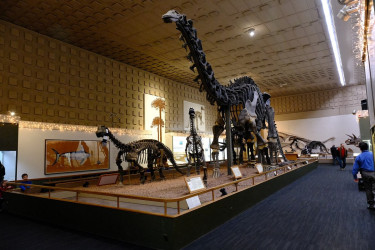
The Second Skeleton
Museums construct knowledge by constructing objects—literally.
by
Mabel Rosenheck
via
Contingent
on
December 9, 2021
This Teen’s AIDS Diagnosis Changed History
Ryan White’s story both reinforced and challenged assumptions about the disease.
by
Paul M. Renfro
via
Teen Vogue
on
December 6, 2021
One Ancient Culture Actually Benefited From 'The Worst Year in Human History'
The challenges of 536 CE, including cold temperatures and volcanic fallout, prompted a flourishing of Ancestral Pueblo society.
by
Mike McRae
via
ScienceAlert
on
December 3, 2021
54 Years Ago, a Computer Programmer Fixed a Massive Bug — and Created an Existential Crisis
A blinking cursor follows us everywhere in the digital world, but who invented it and why?
by
Sarah Wells
via
Inverse
on
December 3, 2021
America’s First Opioid Crisis Grew Out Of the Carnage Of The Civil War
Tens of thousands of sick and injured soldiers became addicted.
by
Michael E. Ruane
via
Retropolis
This publication restricts nonsubscriber access to some or all of its articles.
on
December 1, 2021
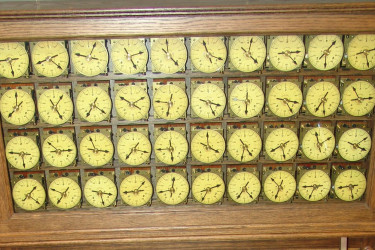
How the US Census Kick-Started America’s Computing Industry
As the country grew, each census required greater effort than the last. That problem led to the invention of the punched card – and the birth of an industry.
by
David Lindsay Roberts
via
The Conversation
on
December 1, 2021
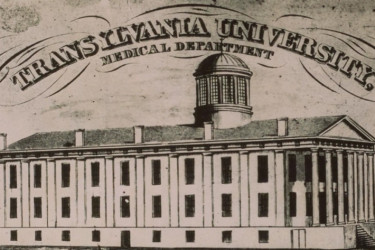
The Murderous Origins of the American Medical Association
How a bloody gun duel between two doctors in Transylvania sparked a frenzy of outrage—and helped create the American Medical Association.
via
The Disappearing Spoon
on
November 30, 2021
How WD-40 Became Rust’s Worst Enemy
The history of WD-40, a chemical substance with an unusual origin story and a rust-fighting ability that has become a standby of workbenches the world over.
by
David Buck
via
Tedium
on
November 26, 2021
Inventing the Science of Race
In 1741, the Royal Academy of Sciences held a contest searching for the origin of “blackness.” The results show how Enlightenment thinkers justified slavery.
by
Andrew S. Curran
,
Henry Louis Gates Jr.
via
New York Review of Books
This publication restricts nonsubscriber access to some or all of its articles.
on
November 24, 2021
Brainwashing Has a Grim History That We Shouldn’t Dismiss
Scientific research and historical accounts can help us identify and dissect the threat of ‘coercive persuasion.’
by
Joel E. Dimsdale
via
Psyche
on
November 24, 2021
The Big ‘What If’ of Cancer
How a feisty, suicidal Nobel laureate infuriated both Hitler and Stalin, and stalled cancer research for fifty years along the way.
by
Sam Kean
via
The Disappearing Spoon
on
November 23, 2021
When Benjamin Franklin Shocked Himself While Attempting to Electrocute a Turkey
The statesman was embarrassed by the mishap—no doubt a murder most fowl.
by
Timothy J. Jorgensen
via
Smithsonian Magazine
on
November 22, 2021
Face Surveillance Was Always Flawed
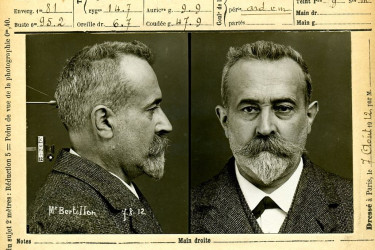
On the origins, use, and abuse of mugshots.
by
Amanda Levendowski
via
Public Books
on
November 20, 2021
In 19th-Century New England, This Amateur Geologist Created Her Own Cabinet of Curiosities
A friend of Henry David Thoreau, Ellen Sewall Osgood's pursuit of her scientific passion illuminates the limits and possibilities placed on the era's women.
by
Reed Gochberg
via
Smithsonian Magazine
on
November 19, 2021
Previous
Page
17
of 36
Next