Menu
Excerpts
Exhibits
Collections
Originals
Podcasts
Categories
Map
Search
Category
Science
On our knowledge about the observable world.
Load More
Viewing 661–690 of 1,075
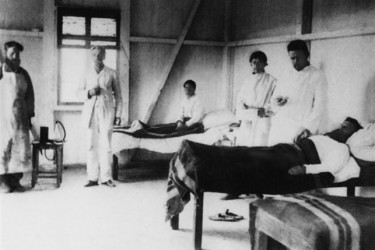
Penicillin: How a Miracle Drug Changed the Fight Against Infection During World War II
Before antibiotics, a scratch or blister could lead to death. Who knew this all could change with a little mold?
by
Diane Bernard
via
Retropolis
This publication restricts nonsubscriber access to some or all of its articles.
on
July 11, 2020
partner
What the Bungled Response to HIV Can Teach Us About Dealing With Covid-19
Politics, public health and a pandemic. What we didn’t learn from HIV.
by
Clyde Haberman
via
Retro Report
on
July 1, 2020
How the Digital Camera Transformed Our Concept of History
We’re capturing the mundane as well as the memorable.
by
Allison Marsh
via
IEEE Spectrum
on
June 30, 2020
Why It's Right That the Theodore Roosevelt Statue Comes Down
Like the museum behind it, the monument was designed in large part to train white people in a fundamentally racist way of seeing.
by
Nick Mirzoeff
via
Hyperallergic
on
June 30, 2020
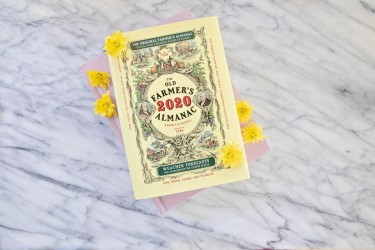
Farmers’ Almanacs and Folk Remedies
The role of almanacs in nineteenth-century popular medicine.
by
Jessica Brabble
via
Nursing Clio
on
June 30, 2020
When Schools Closed in 1916, Some Students Never Returned
Research into the long-term consequences of a polio outbreak found that older students are at highest risk for harm.
by
Stephen Mihm
via
Bloomberg
This publication restricts nonsubscriber access to some or all of its articles.
on
June 26, 2020
The Pioneering Psychologist Who Proved that Being Gay isn’t a Mental Illness
How a friendship between a straight psychology professor and her gay student busted the myth of homosexuality as an illness.
by
Robyn Schelenz
via
Fig. 1 (University Of California)
on
June 26, 2020
The Cure and the Disease
Social Darwinism from AIDS to Covid-19.
by
Erik Baker
via
The Drift
This publication restricts nonsubscriber access to some or all of its articles.
on
June 19, 2020
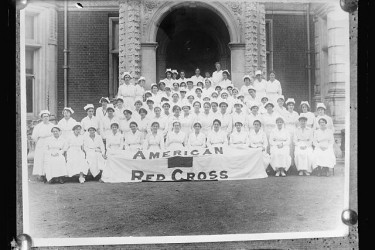
Commemorating the Nurses of the 1918 Influenza Pandemic
Female nurses served their country domestically and abroad by caring for soliders striken by the influenza pandemic.
by
Allison S. Finkelstein
via
Arlington National Cemetery
on
June 12, 2020
Vibrators Had a Long History as Medical Quackery
Before feminists rebranded them as sex toys, vibrators were just another medical device.
by
Kim Adams
via
The Conversation
on
June 8, 2020
Historical Insights on COVID-19, the 1918 Influenza Pandemic, and Racial Disparities
Illuminating a path forward.
by
Lakshmi Krishnan
,
S. Michelle Ogunwole
,
Lisa A. Cooper
via
Annals Of Internal Medicine
on
June 5, 2020
Rampaging Invisible Killer Stalks the Entire Country!
Influenza pandemic of 1918 in the United States.
by
Ashley Cuffia
via
Library of Congress
on
June 1, 2020
The American Nightmare
To be black and conscious of anti-black racism is to stare into the mirror of your own extinction.
by
Ibram X. Kendi
via
The Atlantic
This publication restricts nonsubscriber access to some or all of its articles.
on
June 1, 2020
Patients and Patience: The Long Career of Yellow Fever
Extending the narrative of Philadelphia's epidemic past 1793 yields lessons that are more complex and less comforting than the story that's often told.
by
Simon Finger
via
The Panorama
on
May 18, 2020
Algorithms Associating Appearance and Criminality Have a Dark Past
In discussions about facial-recognition software, phrenology analogies seem like a no-brainer. In fact, they’re a dead-end.
by
Catherine Stinson
via
Aeon
on
May 15, 2020
I Survived Prison During The AIDS Epidemic. Here’s What It Taught Me About Coronavirus
COVID-19 isn’t an automatic death sentence, but the fear, vilification and isolation are the same.
by
Richard Rivera
via
The Marshall Project
on
May 14, 2020
The Defender of Differences
Three new books consider the life, and impact, of Franz Boas, the "father of American cultural anthropology."
by
Kwame Anthony Appiah
via
New York Review of Books
This publication restricts nonsubscriber access to some or all of its articles.
on
May 14, 2020
How Racism Is Shaping the Coronavirus Pandemic
For hundreds of years, false theories of “innate difference and deficit in black bodies” have shaped American responses to disease.
by
Evelynn M. Hammonds
,
Isaac Chotiner
via
The New Yorker
This publication restricts nonsubscriber access to some or all of its articles.
on
May 7, 2020
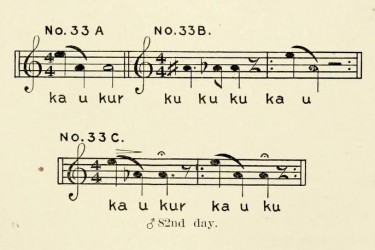
The Expressions of Emotion in the Pigeons (1909–11)
Including musical notation of its songs, kahs, and coos.
via
The Public Domain Review
on
April 30, 2020
Why Humanity Will Probably Botch the Next Pandemic, Too
A conversation with Mike Davis about what must be done to combat the COVID-19 pandemic – and all the other monsters still to come.
by
Mike Davis
,
Eric Levitz
via
Intelligencer
This publication restricts nonsubscriber access to some or all of its articles.
on
April 30, 2020
Writing Histories of Intimate Care and Social Distancing in the Age of COVID-19
Unlike cholera, physical and sensory proximity can spread COVID-19 among the populations most vulnerable to it.
by
Timothy Kent Holliday
via
Nursing Clio
on
April 29, 2020
Disease Has Never Been Just Disease for Native Americans
Native communities’ vulnerability to epidemics is not a historical accident, but a direct result of oppressive policies and ongoing colonialism.
by
Jeffrey Ostler
via
The Atlantic
This publication restricts nonsubscriber access to some or all of its articles.
on
April 29, 2020
Tom Paine’s Bridge
We do not often think of Paine as a revolutionary inventor. But in a very real sense, that is what he believed himself to be.
by
Edward G. Gray
via
Commonplace
on
April 16, 2020
Quarantine in Nineteenth-Century New York
As COVID-19 races through New York, we asked Lorna Ebner to tell us about previous attempts to mitigate disease in the city.
by
Lorna Ebner
via
Books, Health and History
on
April 14, 2020
A Once-In-A-Century Pandemic
We’re repeating a lot of the same mistakes from the 1918 “Spanish Flu” H1N1 outbreak.
by
Sarah Mirk
,
Eleri Harris
,
Joyce Rice
via
The Nib
on
April 13, 2020
In 19th-Century America, Fighting Disease Meant Battling Bad Smells
The history of unpleasant odor, or miasma, has unexpected relevance in the time of COVID-19.
by
Melanie A. Kiechle
,
Daniela Blei
via
Atlas Obscura
on
April 8, 2020
partner
To Save Lives, Social Distancing Must Continue Longer Than We Expect
The lessons of the 1918 flu pandemic.
by
Howard Markel
,
J. Alexander Navarro
via
Made By History
on
April 8, 2020
Yellow Fever Led Half of Philadelphians to Flee the City. Ten Percent of the Residents Still Died.
Schools closed, handshaking ceased and people wore handkerchiefs over their faces as the virus ravaged what was then the nation’s capital.
by
Michael E. Ruane
via
Washington Post
This publication restricts nonsubscriber access to some or all of its articles.
on
April 4, 2020
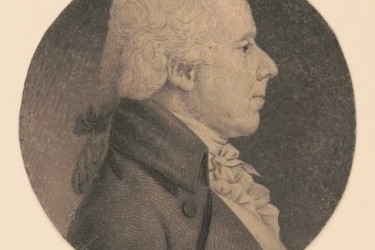
America's Devastating First Plague and the Birth of Epidemiology
In the 1790s a plague struck the new American nation and killed thousands. Noah Webster told the story of pandemics and invented a field.
by
Joshua Kendall
via
TIME
on
April 4, 2020
COVID-19 and the Outbreak Narrative
Outbreak narratives from past diseases can be influential in the way we think about the COVID pandemic.
by
Priscilla Wald
,
Kym Weed
via
Southern Cultures
on
April 2, 2020
Previous
Page
23
of 36
Next