Menu
Excerpts
Exhibits
Collections
Originals
Podcasts
Categories
Map
Search
Category
Science
On our knowledge about the observable world.
Load More
Viewing 721–750 of 1,075
The History of the StairMaster
The 1980s brought about America's gym obsession—and a machine that demands a notoriously grueling cardio workout
by
Michelle Delgado
via
Smithsonian Magazine
on
January 31, 2020
Union Gunboats Didn't Just Attack Rebel Military Sites – They Went After Civilian Property, too
A new look at detailed data about Civil War skirmishes along the Mississippi River reveals another key to the Union's victory.
by
Robert Gudmestad
via
The Conversation
on
January 30, 2020
Ancient Poop Reveals What Happened after the Fall of Cahokia
People hunted and raised small farms near the ruins of the ancient city.
by
Kiona N. Smith
via
Ars Technica
on
January 29, 2020
Organic Farming's Political History
Despite its countercultural associations today, organic farming was entangled with fascist and quasi-fascist politics at its origins.
by
Michelle Niemann
via
Edge Effects
on
January 23, 2020
Victorian Efforts to Export Animals to New Worlds Failed, Mostly
Acclimatization societies believed that animals could fill the gaps of a deficient environment.
by
Harriet Ritvo
via
The Conversation
on
January 23, 2020
The Secret History of Facial Recognition
Sixty years ago, a sharecropper’s son invented a technology to identify faces. The record of his role all but vanished. Who was Woody Bledsoe, and who was he working for?
by
Shaun Raviv
via
Wired
on
January 21, 2020
Native People Did Not Use Fire to Shape New England's Landscape
Evidence shows Native Americans in New England lived lightly on the land for thousands of years. Europeans were the first to majorly impact the environment.
by
Wyatt Oswald
,
David R. Foster
,
Elizabeth Chilton
via
The Conversation
on
January 20, 2020
partner
Can Historical Analysis Help Reduce Military Deaths by Suicide?
A longer look reveals interesting patterns and may clarify what is driving a rise in suicides.
by
Jeffrey Allen Smith
,
Michael Doidge
,
Ryan Hanoa
,
B. Christopher Frueh
via
Made By History
on
January 17, 2020
Racist Housing Practices From The 1930s Linked To Hotter Neighborhoods Today
A study of more than 100 cities shows neighborhoods subjected to discriminatory housing policies nearly a century ago are hotter today than other areas.
by
Meg Anderson
via
NPR
on
January 14, 2020
UVA and the History of Race: Eugenics, the Racial Integrity Act, Health Disparities
Reflections on the long career of race science at Mr. Jefferson's university.
by
P. Preston Reynolds
via
UVA Today
on
January 9, 2020
The Histories Hidden in the Periodic Table
From poisoned monks and nuclear bombs to the “transfermium wars,” mapping the atomic world hasn’t been easy.
by
Neima Jahromi
via
The New Yorker
This publication restricts nonsubscriber access to some or all of its articles.
on
December 27, 2019
I Was Poised to be the First Black Astronaut. I Never Made it to Space.
Ed Dwight Jr. trained to go to the moon, but racism in the selection process kept him out of space.
by
Ben Proudfoot
via
New York Times Op-Docs
on
December 19, 2019
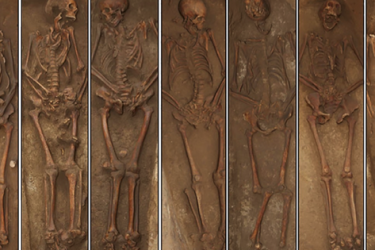
DNA Analysis From Colonial Delaware Skeletons Reveals Beginning Of American Slave Trade
A new DNA study of skeletons from a farmstead on the Delaware frontier has revealed key information about the early transatlantic slave trade.
by
Kristina Killgrove
via
Forbes
on
December 19, 2019
Margaret Morse Nice Thought Like a Song Sparrow and Changed How Scientists Understand Animal Behavior
This 20th century ornithologist earned the respect of her contemporaries for her animal behavior research that went against the grain of traditional science.
by
Kristoffer Whitney
via
The Conversation
on
December 13, 2019
His Whaleship: The Stories of Real, Authentic, Dead Whales
In 1873, there weren’t very many options for the public in the United States to see what a real whale looked like.
by
Lydia Pyne
via
Not Even Past
on
December 3, 2019
Vietnam Draft Lotteries Were a Scientific Experiment
The Vietnam draft lotteries functioned as a randomized experiment—which has allowed social scientists to study its life-changing effects.
by
Tim Johnson
,
Dalton Conley
,
Christopher T. Dawes
via
The Atlantic
This publication restricts nonsubscriber access to some or all of its articles.
on
December 2, 2019
John Wheeler’s H-bomb Blues
In 1953, as a political battle raged over the US’s nuclear future, the physicist lost a classified document on an overnight train from Philadelphia to DC.
by
Alex Wellerstein
via
Physics Today
on
December 1, 2019
partner
America, Where the Dogs Don't Bark and the Birds Don't Sing
The Comte de Buffon's thirty-six volume Natural History claimed that America was a land of degeneracy. That enraged Thomas Jefferson.
by
Matthew Wills
,
Lee Alan Dugatkin
via
JSTOR Daily
on
November 27, 2019
The Planet is Burning Around us: Is it Time to Declare the Pyrocene?
Wild, feral and fossil-fuelled, fire lights up the globe. Is it time to declare that humans have created a Pyrocene?
by
Stephen Pyne
via
Aeon
on
November 20, 2019
The Little Ice Age Is a History of Resilience and Surprises
The world's last climate crisis demonstrates that surviving is possible if bold economic and social change is embraced.
by
Dagomar Degroot
via
Aeon
on
November 11, 2019
The Case Against an American King, Then and Now
Liesl Schillinger Considers the Impeachment of Donald Trump vs. the Indictment of George III.
by
Liesl Schillinger
via
Literary Hub
on
November 8, 2019
The Gay Activists Who Fought the American Psychiatric Establishment
Mo Rocca on the struggle to depathologize homosexuality.
by
Mo Rocca
via
Literary Hub
on
November 6, 2019
From Saving the Earth to Ruling the World
The transformation of the environmental movement.
by
Christopher Caldwell
via
Claremont Review of Books
on
November 1, 2019
The Real Nature of Thomas Edison’s Genius
The inventor did not look for problems in need of solutions; he looked for solutions in need of modification.
by
Casey N. Cep
via
The New Yorker
This publication restricts nonsubscriber access to some or all of its articles.
on
October 21, 2019
The Lines of Code That Changed Everything
Apollo 11, the JPEG, the first pop-up ad, and 33 other bits of software that have transformed our world.
by
Thomas Haigh
,
Arthur Daemmrich
,
Mar Hicks
,
Charlton D. McIlwain
,
Chris Noessel
,
Molly Olmstead
,
Clive Thompson
,
Sara Wachter-Boettcher
,
Elena Botella
,
Ellen Stofan
,
Jamie Zawinski
,
Jane C. Hu
,
Lav Varschney
,
April Glaser
,
Charles Duan
,
Aaron Mak
,
Amanda Levendowski
,
Ethan Zuckerman
,
Nikki Stevens
,
David S. Levine
,
P. W. Singer
,
Ari Ezra Waldman
,
Rusty D. Pickens
via
Slate
This publication restricts nonsubscriber access to some or all of its articles.
on
October 14, 2019
Herd Immunity
Can the social contract be protected from a measles outbreak?
by
Ann Neumann
via
The Baffler
This publication restricts nonsubscriber access to some or all of its articles.
on
October 7, 2019
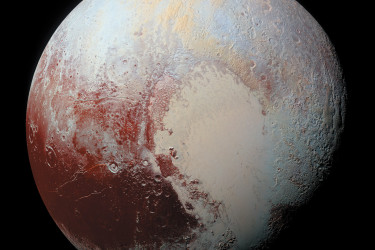
In Search of Planet X
The books examine the history of space exploration, from the race to discover Pluto to the idea of space colonization.
by
Priyamvada Natarajan
via
New York Review of Books
This publication restricts nonsubscriber access to some or all of its articles.
on
October 3, 2019
“Immoderate Menses” or Abortion? Bodily Knowledge and Illicit Intimacy in an 1851 Divorce Trial
Edwin Forrest’s 1851 divorce trial.
by
Sara Lampert
via
Nursing Clio
on
September 23, 2019
partner
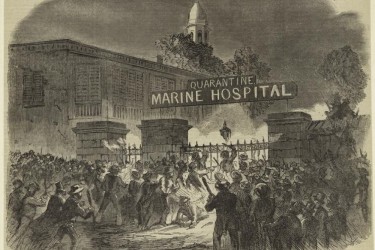
When New Yorkers Burned Down a Quarantine Hospital
On September 1st, 1858, a mob stormed the New York Marine Hospital in Staten Island, and set fire to the building.
by
Matthew Wills
,
Kathryn Stephenson
via
JSTOR Daily
on
September 19, 2019
Camera and Locomotive
Railroads and photography, developed largely in parallel and brought about drastic changes in how people understood time and space.
by
Micah Messenheimer
via
Library of Congress
on
September 18, 2019
Previous
Page
25
of 36
Next