Menu
Excerpts
Exhibits
Collections
Originals
Podcasts
Categories
Map
Search
Category
Science
On our knowledge about the observable world.
Load More
Viewing 931–960 of 1,075
U.S. Wildfire Causes 1980-2016
Lighting, trash burning, powerlines, playing with matches – how do they rank as causes of wildfire?
by
Jill Hubley
via
Jill Hubley.com
on
December 7, 2017
The US Medical System is Still Haunted by Slavery
Medicine’s dark history helps explain why black mothers are dying at alarming rates.
by
Ranjani Chakraborty
via
Vox
on
December 7, 2017
It's Against The Law for Employers To Make You Sick. Thank The 'Radium Girls' For That
100 years ago, factory workers fought to hold companies accountable for their radium poisoning.
by
David Brancaccio
,
Katie Long
via
Marketplace
on
November 28, 2017
The 19th-Century Swill Milk Scandal That Poisoned Infants With Whiskey Runoff
Vendors hawked the swill as “Pure Country Milk.”
by
Tyler Moss
via
Atlas Obscura
on
November 27, 2017
Dog Poo, an Environmental Tragedy
When industrial fertilizer replaced dung heaps, its spoils helped fund the spread of plastics.
by
T. Hugh Crawford
via
The Atlantic
This publication restricts nonsubscriber access to some or all of its articles.
on
November 26, 2017
original
The Other End of the Telescope
Considering astronomy's history from the shadow of the Arecibo Observatory reveals the discipline's intimate ties to imperialism.
by
David Singerman
on
November 24, 2017
Why America's Thanksgiving Turkey Is So Boring
The bland appeal of the Broad Breasted White.
by
Natasha Frost
via
Atlas Obscura
on
November 22, 2017
What The Industry Knew About Sugar's Health Effects, But Didn't Tell Us
A new report says the sugar industry pulled the plug on evidence linking sugar consumption to heart disease.
by
Allison Aubrey
via
NPR
on
November 21, 2017
The Last of the Iron Lungs
A visit with three of the last polio survivors in the U.S. who still depend on iron lungs.
by
Jennings Brown
via
Gizmodo
on
November 20, 2017
How to Measure Ghosts: Arthur C. Nielsen and the Invention of Big Data
How audience measurement became central to the creative and commercial development of television.
by
Matt Locke
via
Medium
on
November 16, 2017
An Emancipation Proclamation to the Motherhood of America
A profile of Hannah Mayer Stone, one of the key figures in the struggle to make contraception safe, effective, and widely available.
by
Jennifer Young
via
The New Inquiry
on
November 16, 2017
Fleas, Fleas, Fleas
A reflection on the role of parasites in early American history.
by
Sarah Swedberg
via
Nursing Clio
on
November 14, 2017
The West Without Water
What can past droughts tell us about tomorrow?
by
B. Lynn Ingram
via
Origins
on
November 8, 2017
Asthma and the Civil Rights Movement
Unraveling the connections between public health and civil rights in 1960s New Orleans.
by
Ijeoma Cola
via
Books, Health and History
on
November 2, 2017
'Walden' Wasn’t Thoreau’s Masterpiece
In his 2-million-word journal, the transcendentalist balanced poetic wonder and scientific rigor as he explored the natural world.
by
Andrea Wulf
via
The Atlantic
This publication restricts nonsubscriber access to some or all of its articles.
on
November 1, 2017
Arsenic and Old Leeches
Three reasons why you shouldn’t consult the nineteenth-century WebMD archives.
by
Lydia Kang
,
Nate Pedersen
via
Lapham’s Quarterly
on
October 31, 2017
An Icy Conquest
“We are starved!” cried the sixty skeletal members of the English colony of Jamestown as provisions arrived in 1610.
by
Susan Dunn
via
New York Review of Books
This publication restricts nonsubscriber access to some or all of its articles.
on
October 26, 2017
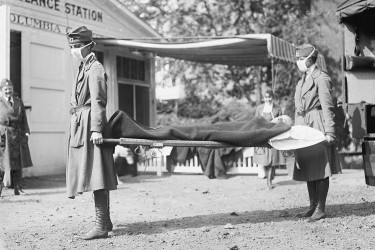
How the Horrific 1918 Flu Spread Across America
The toll of history’s worst epidemic surpasses all the military deaths in World War I and World War II combined. And it may have begun in the United States.
by
John M. Barry
via
Smithsonian Magazine
on
October 25, 2017
original
When Science Was Big
This year's Nobel Prize in physics is a blast from the past of Cold War-era research investment. Is that era gone for good?
by
David Singerman
on
October 19, 2017
From Teddy Roosevelt to Trump: How Drug Companies Triggered an Opioid Crisis a Century Ago
Americans, warned President Teddy Roosevelt's newly appointed opium commissioner in 1908, 'have become the greatest drugs fiends in the world.'
by
Nick Miroff
via
Retropolis
This publication restricts nonsubscriber access to some or all of its articles.
on
October 17, 2017
Sooty Feathers Tell the History of Pollution in American Cities
Preserved birds and digital photos help pinpoint levels of black carbon in the air and the changes that led to its decline.
by
Alex Furuya
via
Audubon
on
October 10, 2017
Meet Mr. Mumler, the Man Who “Captured” Lincoln’s Ghost on Camera
When America’s first aerial cameraman met an infamous spirit photographer, the chemistry was explosive.
by
Peter Manseau
via
Smithsonian Magazine
on
October 10, 2017
Trump's NASA Pivot
His administration has made the moon a destination, not just a pit stop, on the way to Mars.
by
Marina Koren
via
The Atlantic
This publication restricts nonsubscriber access to some or all of its articles.
on
October 7, 2017
How the Benzene Tree Polluted the World
The organic compounds that enabled industrialization are having unintended consequences for the planet’s life.
by
Rebecca Altman
via
The Atlantic
This publication restricts nonsubscriber access to some or all of its articles.
on
October 4, 2017
Sputnik Launch 60 Years Ago Was Slow to Resonate With Americans
The 1957 launch of Sputnik wasn’t necessarily the start of the US-Soviet space race that Americans think of today.
by
Elizabeth Howell
via
Seeker
on
October 2, 2017
The Eye at War: American Eye Prosthetics During the World Wars
How the U.S. military handled a shortage of prosthetic eyes for injured soldiers.
by
Evan P. Sullivan
via
Nursing Clio
on
September 25, 2017
The 1938 Hurricane That Revived New England's Fall Colors
An epic natural disaster restored the forest of an earlier America.
by
Stephen Long
via
What It Means to Be American
on
September 21, 2017
The Columbian Exchange
A primary source set and teaching guide created by educators.
by
Jamie Lathan
via
Digital Public Library of America
on
September 19, 2017
partner
Was It Bad Luck or Climate Change?
Our circumstances have changed a lot since early colonial times. Unfortunately, our thinking about climate hasn’t changed enough.
by
Sam White
via
HNN
on
September 17, 2017
What 100-Year-Old Hurricanes Could Teach Us About Irma
Can the history of hurricanes prove the existence of climate change?
by
Maggie Koerth-Baker
via
FiveThirtyEight
on
September 11, 2017
Previous
Page
32
of 36
Next