Carrie Baker and her book Abortion Pills: US History and Politics.

The Forgotten—and Incredibly Important—History of the Abortion Pill

Mifepristone took longer to get approved than most drugs—but not because it was unsafe.
A satellite orbiting the Earth.

Inside the CIA’s Decades-Long Climate “Spy” Campaign

How a top-secret satellite surveillance program accidentally documented climate change.
Overhead view of neighborhood in the Palisades destroyed by wildfires.
partner

The L.A. Fires Expose the Problem With Conservation Policy

For more than a century, conservation policy has focused on economic development and wisely using natural resources.
A nurse passing a cup with methadone through a glass window.
partner

History Exposes the Flaw in RFK Jr.'s Drug Treatment Plan

Kennedy wants to create "wellness drug rehabilitation farms." But the U.S. tried it before, and it didn't work.
A doctor vaccinating a patient.
partner

The Origins of the Anti-Vaccination Movement

Robert F. Kennedy, Jr.'s nomination to lead HHS reflects the rising power of an anti-vaccination movement more than 100 years in the making.
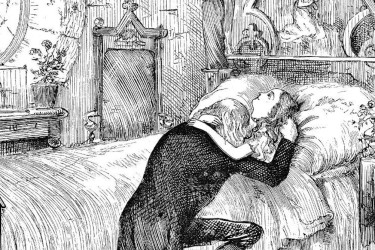
Woman in a hospital bed reading a pamphlet called "After the Abortion."

Her “Health and Thus Her Life”

Abortion exceptions in legal history.

The Naval Scientist Who Wanted To Know How Football Players Would Survive Nuclear War

It wouldn’t take much, the fan explained, just some radioactive material inside the players, who would then undergo a physical examination.

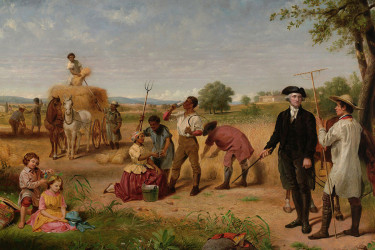
Farmer George

The connections between the first president’s commitment to agricultural innovation and his evolving attitudes toward his enslaved laborers at Mount Vernon.
David Dobson with scientific equipment.

Nuclear Proliferation and the “Nth Country Experiment”

A mid-1960s “do-it-yourself” project produced “credible nuclear weapon” design from open sources.
The Parcae satellite over the earth.

A Spy Satellite You’ve Never Heard of Helped Win the Cold War

The Parcae project revolutionized electronic eavesdropping.
Stephen Jay Gould in front of a picture of a Tyrannosaurus Rex.

How Stephen Jay Gould Fought the Science Culture Wars

In the 1970s, a crop of books purporting to provide a scientific basis for gender inequality met sharp criticism from figures like Gould.
Thomas Jefferson against a backdrop of his weather observations.

Discover Why Thomas Jefferson Meticulously Monitored the Weather Wherever He Went

The third president knew that the whims of nature shaped Americans’ daily lives as farmers and enslavers.
NASA's administrator shows a model of the space shuttle to President Jimmy Carter.

What Spaceflight Owes to Jimmy Carter: The President's Little-Known NASA Legacy

Jimmy Carter, skeptical of NASA's shuttle, saved it with funding despite delays and opposition. His Voyager message carries hope deep into space.
A bird perched on top of a broken tree trunk, surrounded by snow covered bushes and trees.
partner

For the Birds

In 1973, the Christmas Bird Count formed the basis for a press freedom case that centered on the impacts of DDT.
CIA memo about LSD use.

CIA Behavior Control Experiments Focus of New Scholarly Collection

Agency sought drugs and behavior control techniques to use in “special interrogations” and offensive operations.
Rep. Stephen Horn, examines a chart showing his grades for each agency's progress on the Y2K computer problem.
partner

What to Know About Y2K, Before You Watch 'Y2K'

The Year 2000 computer problem continues to nag at us 25 years later.
A very large American home with three garages.

The Invention that Accidentally Made McMansions

How gang-nail plates led to bigger homes.

Infectious Diseases Killed Victorian Children at Alarming Rates. Novels Show the Fragility of Health

Between 40% and 50% of children didn’t live past 5 in the US during the 19th century. Authors documented the common but no less gutting grief of losing a child.
The former Greystone Park Psychiatric Hospital, a 5-story stone building looms above the street.

Phantoms of the Kirkbride Hospitals

The psychiatric hospitals promoted by Thomas Story Kirkbride and Dorothea Dix were quickly overcrowded and underfunded — a failure that haunts us today.
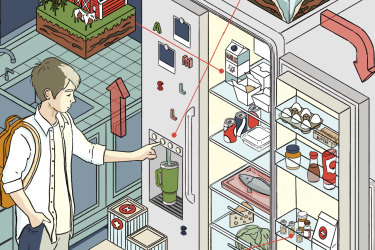
Man surrounded by water fountain, refrigerator, and other modern appliances.

We Live Like Royalty and Don’t Know It

Introducing “How the System Works,” a series on the hidden mechanisms that support modern life.
A drawing of the book "Fat is a Feminist Issue" by Susie Orbach with a magnifying glass in front of it.

Was “Fat Is a Feminist Issue” Liberating? Or Weight-Loss Propaganda?

Susie Orbach’s 1978 book is a fascinating snapshot of diet and physical culture in a very different era.
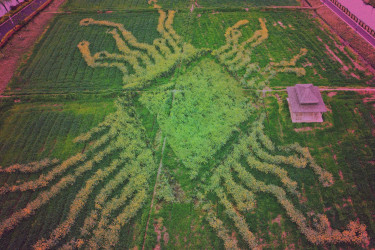
Flowers and grass mowed into the pattern of a computer chip.

The AI We Deserve

Critiques of artificial intelligence abound. Where’s the utopian vision for what it could be?
Destruction in the aftermath of the Galveston disaster, 1900.

Lessons from America’s Deadliest Natural Disaster

The 1900 Galveston hurricane changed the way we deal with severe weather. But as Hurricane Helene showed, there are still lessons to be learned.
Julian Huxley sitting with a chimpanzee.

Julian S. Huxley, the Man Who Put Eugenics Into UNESCO

Why did the first director of the UN agency think eugenics held the key to a more evolved, harmonious world?
Ryan White in school.

The Tragedy of Ryan White

How politicians used the story of one young patient to neglect the AIDS crisis.
A close up picture of an heirloom peach grown by the Muscogee in Oklahoma.

Meet the Peach That Traveled the Trail of Tears and the Tribal Elders Working to Save It

The “Indian peach” survived a genocide—but can it withstand climate change?
World War 2 era military helmet under text reading "He's sure to get 'V' mail."

V-Mail: A Photo-Based Technological Triumph in Wartime Communication

During World War II, the revolutionary V-Mail leveraged cutting-edge microfilm technology to streamline correspondence.
Skeletons in a museum posed with varying postures, as if they are performing different tasks.

Why Americans Are Obsessed With Poor Posture

The 20th-century movement to fix slouching questions the moral and political dimensions of addressing bad backs over wider public health concerns.
Men on horses and with swords exploring the a canyon.

Scratching the Surface

How geology shaped American culture.
A row of beds at the Fort Worth Narcotic Farm.
partner

“I Don’t Expect Many Escapes”

On the rise of the narcotic farm model, a radical reimagining of the nation’s approach to addiction.