Menu
Excerpts
Exhibits
Collections
Originals
Podcasts
Categories
Map
Search
Category
Told
On language and modes of communication.
Load More
Viewing 301–330 of 728
The South’s Jewish Proust
Shelby Foote, failed novelist and closeted member of the Tribe, turned the Civil War into a masterpiece of American literature.
by
Blake Smith
via
Tablet
on
September 6, 2023
The Bloody Labor Crackdown Paramount Didn’t Want America to See
Executives feared their newsreel footage would “cause riots and mass hysteria.”
by
Greg Mitchell
via
Mother Jones
on
September 4, 2023
Possibilities for Propaganda
The founding and funding of conservative media on college campuses in the 1960s.
by
Lauren Lassabe Shepherd
via
Lapham’s Quarterly
on
August 30, 2023
Fact, Fiction, and the Father of the Bomb
On Christopher Nolan’s “Oppenheimer.”
by
Alex Wellerstein
via
Los Angeles Review of Books
on
August 30, 2023
Seeing Was Not Believing
A new book identifies the 1968 Democratic convention as the moment when broad public regard for the news media gave way to widespread distrust, and American divisiveness took off.
by
Eric Foner
via
New York Review of Books
This publication restricts nonsubscriber access to some or all of its articles.
on
August 30, 2023
How the Right Retired “Negrophile”—and Substituted “Woke”
Favorite slur too racist? Replace it.
by
Anthony Conwright
via
Mother Jones
on
August 29, 2023
They Were Fearless 1890s War Correspondents—and They Were Women
Were Harriet Boyd and Cora Stewart rivals in Greece in 1897? The fog of war has obscured a groundbreaking tale.
by
Richard Byrne
via
The New Republic
This publication restricts nonsubscriber access to some or all of its articles.
on
August 25, 2023
original
Reviewing the Oppenheimer Reviews
Christopher Nolan's blockbuster has generated a torrent of historical commentary about the birth of nuclear weapons. Is there something missing from the conversation?
by
Kathryn Ostrofsky
on
August 25, 2023
The Battlefields of Cable
How cable TV transformed politics—and how politics transformed cable TV.
by
Jesse Walker
via
Reason
on
August 15, 2023
The Problem With Fox News Goes Way, Way Back
Richard Nixon decided a powerful new medium should appeal to the marketplace, not to citizens.
by
Kathryn Cramer Brownell
via
The Atlantic
This publication restricts nonsubscriber access to some or all of its articles.
on
August 13, 2023
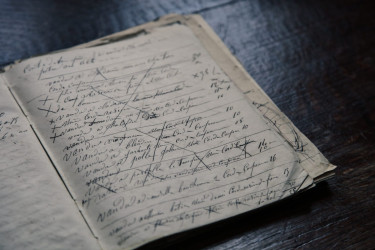
Slanting the History of Handwriting
Whatever writing is today, it is not self-evident. But writing by hand did not simply continue to “advance” until it inevitably began to erode.
by
Sonja Drimmer
via
Public Books
on
August 9, 2023
Thunderbolt and Lightfoot: The American Creation of Irish Outlaw Folk Heroes
Martin’s confession relates outlaw adventures that appear to be original. But were they real?
by
Jerry Kuntz
via
Commonplace
on
August 8, 2023
A Haunting Portrait of Newark’s Bloody Summer of Unrest
The photojournalist Bud Lee captured the riots of 1967 and the human cost of the brutal police crackdown.
by
M. Z. Adnan
via
The New Yorker
This publication restricts nonsubscriber access to some or all of its articles.
on
July 29, 2023
Wake Up and Smell the Coffee
Meet the feuding twin sisters who popularized the American advice column.
by
Leopold Froehlich
via
Lapham’s Quarterly
on
July 24, 2023
George Washington's Information War
Though technologies have altered information warfare, the underlying principles remain unchanged since the day-to-day operations of the Continental Army.
by
Benjamin George
via
Journal of the American Revolution
on
July 18, 2023
How An Untested, Cash-Strapped TV Show About Books Became An American Classic
Despite facing political headwinds and raising 'suspicion' among publishers, 'Reading Rainbow' introduced generations of American kids to books.
by
Jonathan Taylor
via
Los Angeles Times
on
July 11, 2023
How Handwriting Lost Its Personality
Penmanship was once considered a window to the soul. The digital age has closed it.
by
Rachel Gutman-Wei
via
The Atlantic
This publication restricts nonsubscriber access to some or all of its articles.
on
July 11, 2023
The Writers Who Went Undercover to Show America Its Ugly Side
In the 1940s, a series of books tried to use the conventions of detective fiction to expose the degree of prejudice in postwar America.
by
Samuel G. Freedman
via
The Atlantic
This publication restricts nonsubscriber access to some or all of its articles.
on
July 10, 2023
Many Revolutions
The internet has expanded how we understand the possibilities of the trans experience.
by
Jamie Lauren Keiles
,
Avery Dame-Griff
via
The Baffler
This publication restricts nonsubscriber access to some or all of its articles.
on
July 10, 2023
Senator Josh Hawley Tweeted a Christian Nationalist Quote Falsely Attributed to Patrick Henry
It was actually from a 1950s antisemitic and white supremacist magazine. Who cares?
by
Seth Cotlar
via
Rightlandia
on
July 6, 2023
Who Really Wrote ‘the Pursuit of Happiness’?
The voice of Doctor Johnson, archcritic of the American Revolution, was constantly in mind for the Declaration of Independence’s drafter.
by
Peter Moore
via
The Atlantic
This publication restricts nonsubscriber access to some or all of its articles.
on
July 4, 2023
After Winning the Battle of Gettysburg, George Meade Fought With—and Lost to—the Press
The Civil War general's reputation was shaped by partisan politics, editorial whims and his own personal failings.
by
Nicholas Liu
via
Smithsonian Magazine
on
July 3, 2023
The Hypocrisy of This Nation!
How abolitionists viewed the American flag.
by
Matthew J. Clavin
via
Lapham’s Quarterly
on
June 14, 2023
The Invention of Objectivity
The view from nowhere came from somewhere.
by
Darrell Hartman
via
The Atlantic
This publication restricts nonsubscriber access to some or all of its articles.
on
June 3, 2023
Why I Haven’t Embraced the Terms “Forced Labor Camp” and “Enslaved Labor Camp” in My Work on Slavery
“Forced labor” conflates different forms of labor throughout history and minimizes the uniquely brutal conditions of chattel slavery.
by
Nick Sacco
via
Exploring the Past
on
June 2, 2023
Life Is Short. Indexes Are Necessary.
In 1941 an ambitious Philadelphia pediatrician, the wonderfully named Waldo Emerson Nelson, became the editor of America’s leading textbook of pediatrics.
by
Fara Dabhoiwala
via
New York Review of Books
This publication restricts nonsubscriber access to some or all of its articles.
on
June 1, 2023
On the Enduring Power and Relevance of America’s Most Famous WWII Correspondent
by
David Chrisinger
via
Literary Hub
on
May 30, 2023
A Better Journalism?
‘Time’ magazine and the unraveling of the American consensus.
by
Paul Baumann
via
Commonweal
on
May 28, 2023
The Truth About Sojourner Truth
She was a woman, but she was not the author of the speech attributed to her in popular lore.
by
Mary Cuff
via
Law & Liberty
on
May 26, 2023
The Dank Underground
In the late Sixties, countercultural media was distributed by the Underground Press Syndicate and bankrolled by marijuana.
by
J. Hoberman
via
New York Review of Books
This publication restricts nonsubscriber access to some or all of its articles.
on
May 26, 2023
Previous
Page
11
of 25
Next