Menu
Excerpts
Exhibits
Collections
Originals
Podcasts
Categories
Map
Search
Category
Told
On language and modes of communication.
Load More
Viewing 601–630 of 728
How America’s Newspapers Covered Up a Pandemic
The terrifying, censored coverage of the 1918 Spanish flu.
by
Walter Shapiro
via
The New Republic
This publication restricts nonsubscriber access to some or all of its articles.
on
March 31, 2020
Editorial Visions
When editors believed their magazines could change lives.
by
Stephanie Gorton
via
Lapham’s Quarterly
on
March 30, 2020
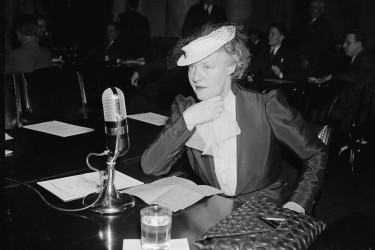
The First Lady of American Journalism
Dorothy Thompson finds a room of her own.
by
Nancy F. Cott
via
Lapham’s Quarterly
on
March 17, 2020
How Socialism Became Un-American Through the Ad Council’s Propaganda Campaigns
Bernie Sanders is a Democratic Socialist, a potential problem for the presidential candidate. A Cold War campaign to link American-ness and capitalism helped create popular distrust of socialism.
by
Oana Godeanu-Kenworthy
via
The Conversation
on
February 27, 2020
Here's What People Thought of YouTube When It First Launched in the Mid-2000s
It took a while for pundits and other observers to truly understand the power of the new platform.
by
Matt Novak
via
Paleofuture
on
February 14, 2020
partner
What Winning New Hampshire — and its Media Frenzy — Could Mean for Bernie Sanders
The New Hampshire returns tell us a lot about the leading candidates.
by
Kathryn Cramer Brownell
via
Made By History
on
February 12, 2020
Of Womb-Furie, Hysteria, and Other Misnomers of the Feminine Condition
On women's bodies and the power of names.
by
Clare Beams
via
Literary Hub
on
February 11, 2020
The History of 'Coming Out,' from Secret Gay Code to Popular Political Protest
In the 1950s, 'coming out' meant quietly acknowledging one's sexual orientation. Today, the term is used by a broad array of social movements.
by
Abigail C. Saguy
via
The Conversation
on
February 10, 2020
“Female Monthly Pills” and the Coded Language of Abortion Before Roe
Our future might look much like our past, with pills as a major part of abortion access—and an obsessive target for abortion opponents.
by
Melissa Gira Grant
via
The New Republic
This publication restricts nonsubscriber access to some or all of its articles.
on
January 22, 2020
partner
On the Right: NET and Modern Conservatism
In the 1960s, the precursor to PBS explored the burgeoning conservative movement, providing a remarkable window into the history of conservatism.
by
Allison Perlman
via
American Archive of Public Broadcasting
on
January 22, 2020
Assassination as Cure: Disease Metaphors and Foreign Policy
The poorly crafted disease metaphor often accompanies a bad outcome.
by
Sarah Swedberg
via
Nursing Clio
on
January 13, 2020
Lord Dunmore's Proclamation: Information and Slavery
Dunmore’s Proclamation was an information document, capitalizing on the institution of slavery, designed to influence the population.
by
Patrick H. Hannum
via
Journal of the American Revolution
on
December 30, 2019
How the Crossword Became an American Pastime
The newspaper standby still rivets our attention a century later.
by
Deb Amlen
via
Smithsonian Magazine
on
December 30, 2019
The Old Internet Died And We Watched And Did Nothing
It’s 2020 — do you know where your content is?
by
Katie Notopoulos
via
BuzzFeed News
on
December 28, 2019
Think Presidential Debates Are Dull? Thank 1950s TV Game Shows
The only debate arrangement that everyone could agree to 60 years ago remains in place today – the game show format.
by
Michael J. Socolow
via
The Conversation
on
December 17, 2019
The Rightness of the Singular ‘They’
This year, Merriam-Webster added a new definition to the word “they”: “used to refer to a single person whose gender identity is nonbinary.”
by
Jen Manion
via
Los Angeles Review of Books
on
December 15, 2019
The Decade America Terrorized Itself
The next 9/11 never came. Instead, we got Sandy Hook, and Las Vegas, and Parkland…
by
Patrick Blanchfield
via
Gen
on
December 10, 2019
The Rise and Fall of Facts
Tracing the evolution and challenges of fact-checking in journalism.
by
Colin Dickey
via
Columbia Journalism Review
on
December 6, 2019
How Three Texas Newspapers Manufactured Three Competing Images of Immigrants
In Depression-era San Antonio, polarized portraits of Mexicans appealed to the biases of readers.
by
Melita M. Garza
via
Zócalo Public Square
on
December 5, 2019
partner
The War Documentary That Never Was
John Huston's 1945 movie The Battle of San Pietro presents itself as a war documentary, but contains staged scenes. What should we make of it?
by
Kristin Hunt
via
JSTOR Daily
on
December 5, 2019
Why It's So Hard to Talk about the N-word
A professor explains the trauma of encountering "an idea disguised as a word."
by
Elizabeth Stordeur Pryor
via
TED
on
December 1, 2019
The Hipster
It happens every year.
by
Lauren Michele Jackson
via
Public Books
on
November 12, 2019
He Was Trump Before Trump: VP Spiro Agnew Attacked the News Media 50 Years Ago
When Vice President Spiro Agnew gave a speech in 1969 bashing the press, he fired some of the first shots in a culture war that persists to this day.
by
Thomas Alan Schwartz
via
The Conversation
on
November 8, 2019
The Battle Between NBC and CBS to Be the First to Film a Berlin Wall Tunnel Escape
Declassified government documents show how both sides of the Iron Curtain worked to have the projects canned.
by
Mike Conway
via
The Conversation
on
November 8, 2019
The Unmistakable Black Roots of 'Sesame Street'
Celebrating its 50th anniversary, the beloved children’s television show was shaped by the African-American communities in Harlem and beyond.
by
Bryan Greene
via
Smithsonian Magazine
on
November 7, 2019
How TV Paved America’s Road to Trump
“A brand mascot that jumped off the cereal box”: a TV critic explains the multimedia character Trump created.
by
Sean Illing
,
James Poniewozik
via
Vox
on
November 7, 2019
From Entertainment to Outrage: On the Rise of Rush Limbaugh and Conservative Talk Radio
How the alienated margins arrived at the center of American politics.
by
Brian Rosenwald
via
Literary Hub
on
November 5, 2019
Editing Donald Trump
What I saw as the editor of “The Art of the Deal,” the book that made the future President millions of dollars and turned him into a national figure.
by
Peter Osnos
via
The New Yorker
This publication restricts nonsubscriber access to some or all of its articles.
on
November 3, 2019
Disinfo Redux
Wherever there has been power, there has been a struggle for narrative control.
by
Laura Thorne
via
Columbia Journalism Review
on
November 1, 2019
The Difference Between Nixon and Trump is Fox News
Fox News shields President Trump, but his love for their conspiracies might bring him down.
by
Nicole Hemmer
via
Vox
on
October 7, 2019
Previous
Page
21
of 25
Next