Upstate New York, 1883 is an odd place to start a blog on Open Source Intelligence. It was here that one of intelligence’s most influential figures was born. The son of devout Irish immigrants, William Donovan grew up in a working class family, excelling himself in school and academia.
Donovan’s ambition was to become the first Roman Catholic President of the United States. He did come close to the Presidency – in 1905, Donovan went to Columbia Law School, where a young Franklin D. Roosevelt was among his classmates.
After fighting in World War I, Donovan had a successful career as an International Lawyer, narrowly missing out on becoming the Attorney General in 1925. Throughout the interwar period, Donovan travelled the world as a Lawyer, meeting influential foreign figures and subsequently writing up reports for the US Government in a semi official capacity.
It was Donovan’s connection to F.D.R. that lead to the creation of an intelligence agency in the United States. Until that time, the world of intelligence and spying was seen as ungentlemanly by America. Donovan lobbied F.D.R to formalise his unofficial work for the US Government and on the 11th July, 1941, F.D.R. created for Donovan the post ‘Coordinator of Information’. After Pearl Harbour, the need for intelligence was clear and Donovan’s department was renamed the Office of Strategic Services – the precursor to the CIA. Like the Special Operations Executive in the UK, the OSS was involved in everything from assassination attempts to agent running and information warfare.
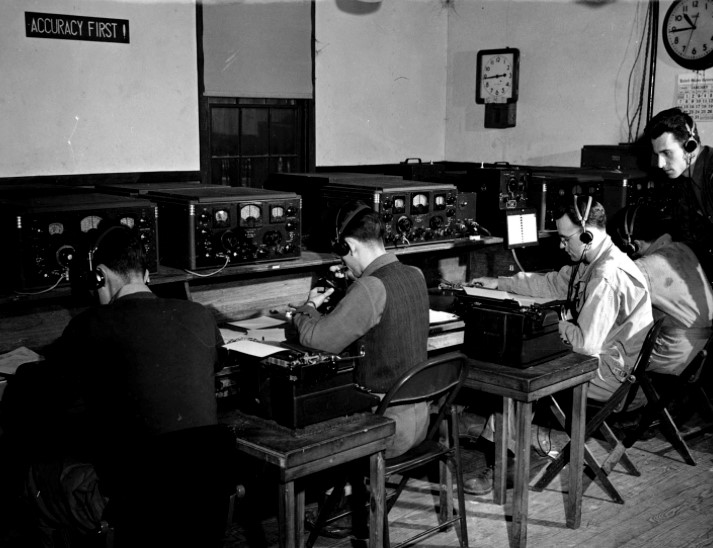
It may surprise readers of 2016, that the OSS had an entire branch dedicated to open source intelligence. The OSS’ Research and Analysis Branch meticulously collected dozens of newspapers, journals, press clippings, radio broadcasts reports from around the world, hunting for photos and articles that may give away crucial intelligence about the enemy. In Donovan’s words:
“Even a regimented press will again and again betray their nation’s interests to a painstaking observer”
The OSS poured over obituaries in German regional newspapers, seeking news of important Nazis. Images of new battleships, bomb craters and aircraft were painstakingly collated, and when assessed together, allowed the OSS to assess the state of its enemies. It’s striking how similar the OSS’ activities are to modern day OSINT investigations, albeit without computers. From the OSS and SOE, it’s possible to argue the roots of open source intelligence stretch back almost a century. Indeed one could argue Donvoan’s quote is more true today than ever; amongst the billions of posts, uploads, shares and likes, individuals again and again betray their interests to painstaking observers.After World War II, the discipline of OSINT became a backwater of most Government and military agencies, staffed with career librarians and researchers. When the noun Library became an unfashionable term in the mid-2000’s, few, if any intelligence professionals sought to work in the field, when the sexy, secret world of agent-running and signals intelligence was available.