The Vietnam War, or at least some memory of it, continues to loom large in the American cultural consciousness. Still, there remain a few holes left relatively unexplored. The largest of these lacunae probably concerns the Phoenix Program: a “counterinsurgency” plan led by the Central Intelligence Agency (CIA) between 1968-1972—effectively a mass murder operation that killed tens of thousands of Vietnamese in the countryside, prefiguring the “night raids” and drone strikes of the later “War on Terror.”
The second-least scoured piece of the Boomers’ war has to do with the drug trade. While the image of the drug-addicted GI may be a familiar one, less familiar is the role that the military itself played in transmitting that drug addiction to the U.S. and elsewhere. By 1972, 70% of the world’s heroin supply was coming from Southeast Asia, sourced primarily from countries in the so-called Golden Triangle next to U.S.-occupied Vietnam: Laos, Thailand and Myanmar.
Production was facilitated by locals and often directly abetted by the U.S. government in some fashion. Chinese Nationalist guerrillas loyal to the late Chiang Kai-Shek who remained either on the CIA payroll or in the Agency’s Rolodex, for instance, proved adept at building narco-economies out of the Laotian or Myanmar countrysides. Distribution was a more global effort. Traditionally, the drugs would have traveled westerly routes to Europe. But the Vietnam War’s countless flights and nautical journeys between bases in Southeast Asia and the United States created new Pacific conduits to the world’s largest market of narcotics purchasers.
To meet demand, forces in the U.S. Army built their own heroin smuggling operations in the late 1960s, a story memorably told in the Ridley Scott film, American Gangster. That 2007 movie depicted the most notorious of these outfits, Harlem kingpin Frank Lucas’s Thailand connection to a Master Sergeant in the 82nd Airborne, Ike “Sergeant Smack” Atkinson.
For six years, prosecutors claimed, Atkinson’s ring was responsible for annually hauling 1,000 tons of heroin into the United States. The sergeant was a self-described Army brat, who used family and hometown friends from Goldsboro, North Carolina to accept packages originating from Bangkok, delivered through the Army postal service. After his arrest in 1976, Atkinson was tried, convicted and sentenced to 31 years in jail.
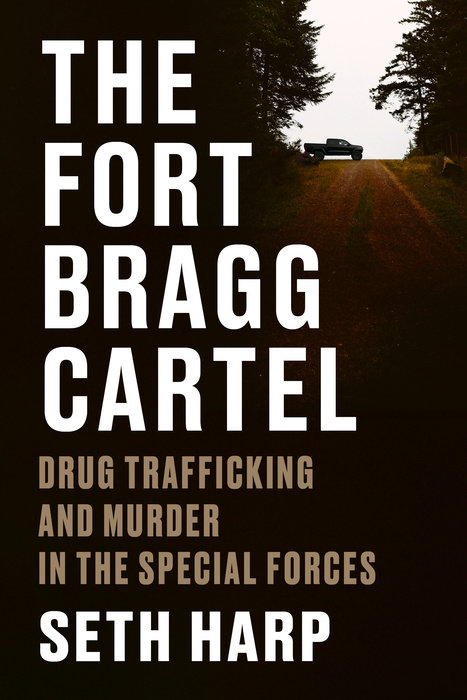
The stuff that finally got Atkinson caught was delivered to a town an hour away from Goldsboro called Fayetteville, home of the now infamous Fort Bragg. Today, Fort Bragg is the largest military installation in the country. And, thanks to the reporting of investigative journalist Seth Harp, we can also say with confidence that Sergeant Smack’s legacy lives on.