More than anything else, that ancient tale testifies to the eternal human folly of trying to outrun fate. And if that’s true for individuals, it’s doubly true for one of their most ancient collective creations, the phenomenon we call “empire.” Ever since Sargon the Great of Assyria founded history’s first trans-regional empire in 2300 BCE, the world has witnessed a succession of some 200 empires, of which 70 were large or lasting. Over the span of those 4,000 years, each empire rose, reached a peak so powerful that it seemed eternal, only to fade and finally fall, giving way to the next imperial reality.
Until January 2025 when President Donald J. Trump took office a second time, the United States seemed to be following that fateful journey. After nearly a century as the largest, most powerful empire in history, the country seemed to be on a gradual downward trajectory from the peak of power it reached around 1991 (when that other imperial power of the time, the Soviet Union, collapsed). But from the first day he took office the second time around in January 2025, President Trump assured us that his bold plans to “Make America Great Again” would save this country from that sad fate. To understand how and why our master, our president, is, in fact, leading America to its own appointment in Samarra at a remarkably rapid pace, we need to understand the way this country has exercised its global power and the dynamics underlying its long-term decline.
The Cold War Legacy
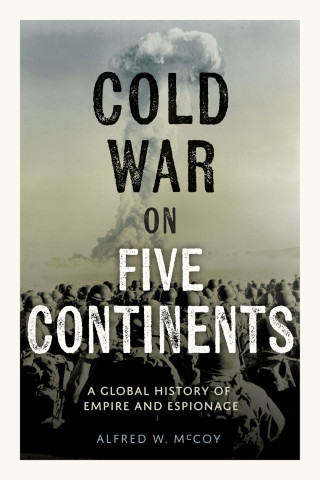
Throughout the 44 long years of the Cold War (1947 to 1991), Washington pursued an effective geopolitical strategy for containing its chief global rival, the Soviet Union, behind an “Iron Curtain” guarded by a chain of U.S. military bases and alliances that stretched for 5,000 miles across the broad Eurasian land mass. Whenever Moscow tried to break out of its geopolitical isolation by arming surrogates in Asia or Africa for war or revolution, Washington, as I explain in my latest book Cold War on Five Continents, sometimes sent troops, as in South Korea in 1950. Usually, however, it dispatched individual CIA officers to organize covert interventions to beat back any Soviet advance, as it did so effectively in Afghanistan in 1980. In the end, exhausted by one foreign adventure too many, Moscow was forced to acquiesce as its satellite states in Eastern Europe broke away and the Soviet Union shattered. By 1991, Washington had won the Cold War, emerging from that monumental conflict as the world’s sole superpower.
At that hour of seemingly ultimate triumph, the signs of America’s military omnipotence and its overweening imperial hubris were both amply evident.