The passengers were settling into their cabins and testing their mattresses when the ship’s engines started to churn. They rushed to the railing as the Asama Maru pulled away from the pier in Yokohama, Japan, in June 1942. Would they be able to see Mount Fuji? According to legend, a glimpse of Japan’s most famous mountain would guarantee their return in happier times.
The decks of the freshly painted Japanese troopship were crowded with America’s top officials in Asia and some of the West’s most prominent journalists, businesspeople and teachers. Also present were hundreds of missionariesand their families, many of whom had refused to abandon their posts or had been caught in remote locations when Japanese bombs fell on Pearl Harbor six months earlier. A small group of pacifists who remained dedicated to Japan risked the ire of their fellow passengers, shouting the battle cry “banzai” as the ship moved faster through the waves, guided by the tugboats past the breakwater and into Yokohama Bay.
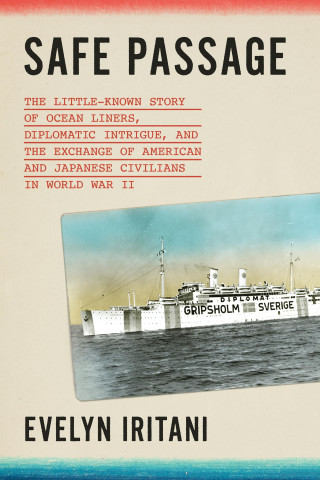
After leaving Japan, the Asama Maru and a second vessel were scheduled to pick up more Allied officials and civilians—including the famed columnist Joseph Alsop, a distant cousin of President Franklin Delano Roosevelt—from a handful of Asian ports and take them to the east coast of Africa. There, on neutral territory, these individuals were to be traded for an equal number of people of Japanese descent who were being sent from North and South America on the M.S. Gripsholm, a Swedish luxury liner chartered for this unusual wartime mission.
The stakes were high. The fate of more than 10,000 American men, women and children held in Japanese-occupied territories depended on the success of this trade, which the Americans hoped would be the first of many exchanges between the warring governments.
Suddenly, the Asama Maru’s engines stopped, replaced by the sound of the anchor chains being lowered into the water. Joseph C. Grew, the departing United States ambassador to Japan, walked over to a group of journalists on the deck. “We’re not sailing today,” he told them. He didn’t need to elaborate. They could tell from the diplomat’s pinched face, the pacing—his tone—that something was wrong.
Accusatory cables crisscrossed the ocean, couched in polite diplomatic language. The Japanese government was convinced that the American officials had secretly held back some high-priority passengers—which would be a violation of their painstakingly negotiated agreement—and were threatening to call off the exchange. For the Americans, this last-minute ultimatum was just one more example of Japanese treachery.