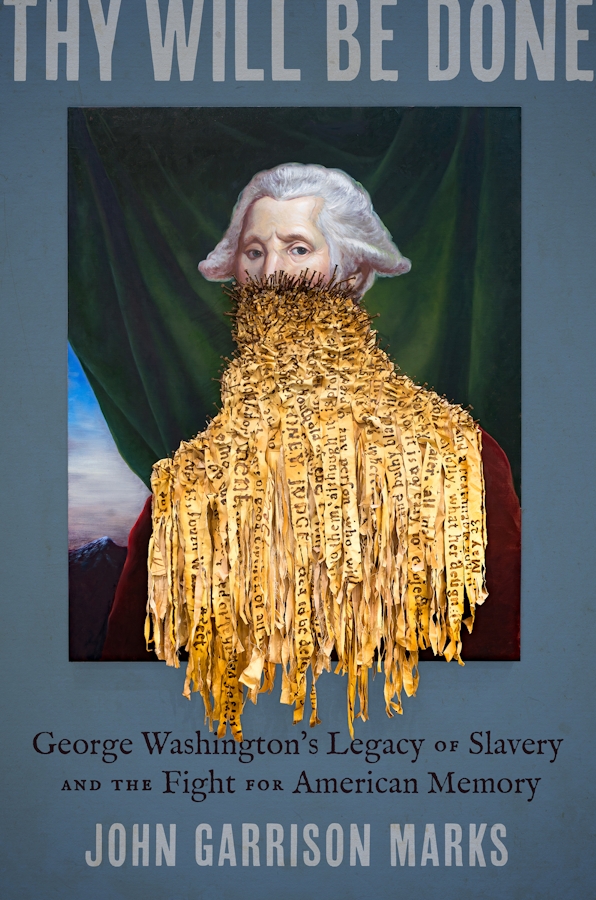
At the center of Thy Will Be Done is a question of how understanding Washington’s relationship with slavery helps us better understand our nation. “What is it, exactly, that Washington left to us?” Marks asks in the introduction. “Our current struggle to make sense of George Washington and slavery reflects a broader struggle to understand our relationship to the American past and what it should mean for us in the present.”
In our conversation, Marks discussed the arguments that surround Washington’s involvement in slavery, how these conversations can’t happen in a vacuum, and why unpacking this history should be a community effort. This interview has been edited and condensed for clarity.
In the book you talk about reviewing the past decade of commentary about Washington and slavery, and it being clear to you that little progress has been made over the past two centuries.
I think it’s really remarkable to look at the historical record and to see that the criticisms that people are levying against Washington for his involvement with slavery today are no more intense—are no more vitriolic than what people were saying about him in the 19th century.
Then likewise, the people who want to continue to celebrate Washington and who say that his involvement with slavery shouldn’t be a factor in our admiration for this person who did so much for the founding of the nation, that idea echoes what you see in these eulogies for Washington right after he died.
So, the fact that you see both sides of this conversation so early on in our conversations about Washington is really remarkable and they remain consistent for more than two centuries. I think in part, that’s because the people engaging in those conversations, the people using Washington’s history with slavery, or ignoring Washington’s history with slavery, are rarely doing it with a desire for better historical understanding. They’re doing it to be able to score points in the present. They are wielding Washington’s history with slavery as a cudgel against the opponents in the political and cultural fight that they’re engaged in.
What I’m trying to do in the book is to say, let’s understand the ways that our conversation about history right now is informed by this two centuries of history that preceded it, in order to kind of break ourselves out of that cycle, to embrace the ambiguity and complexity of Washington’s legacy with slavery, to stop trying to find one single answer that is going to settle this once and for all, to recognize that that’s impossible, and instead to decide what should this mean for us now in the present.