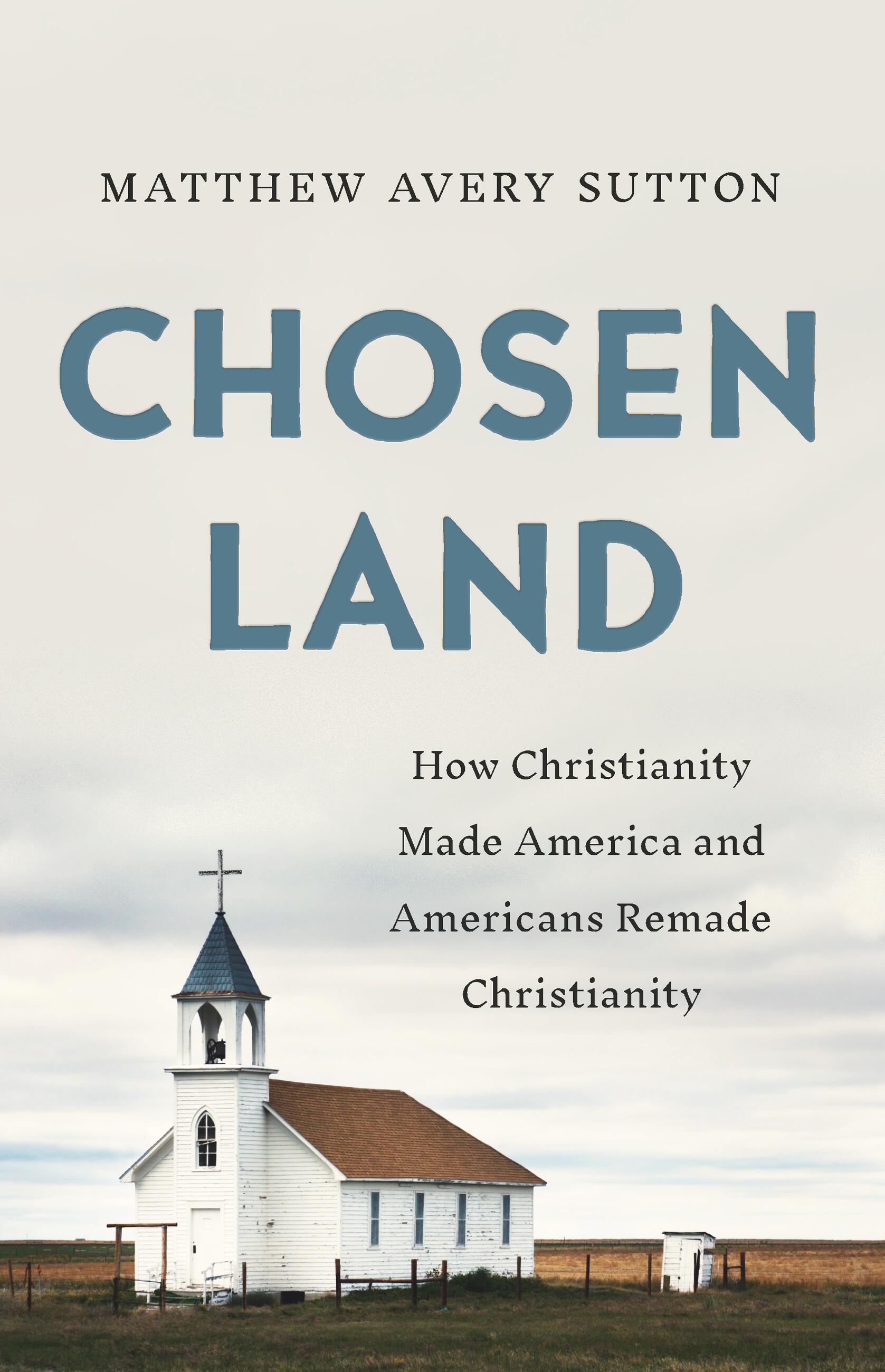
Historians will find plenty with which to argue in Sutton’s epic tale. One big quibble: He casts the rise of the New Deal state as a major blow to the “already-reeling protestant establishment,” arguing, “Churches no longer competed just against each other; they now competed against the federal government for the loyalty of the American people.” There is something to this. The Great Depression did overwhelm older systems of Christian charity. But for the activists and preachers at that Indianapolis meeting in 1932, the Roosevelt administration offered new heights of power and privilege. Americans today may not associate their Social Security checks with religious reformers, but the ongoing life of such programs testifies in part to the long-lasting impact of an earlier and more economically egalitarian vision of Christian America.
The history unearthed in Chosen Land has important implications for those seeking to understand religion and politics in the present moment. Sutton’s story might help readers put a finger on an ambiguity that runs through many contemporary condemnations of Christian nationalism. Are the MAGA faithful at fault for using political structures to advance Christian values? Or does the problem lie, rather, in the specific content of their values, some of which contravene a foundational democratic commitment to pluralism?
During a recent appearance on The Late Show With Stephen Colbert, which was aired only on YouTube after threats from the Federal Communications Commission, Talarico indicted the religious right as above all “a political movement.” He told Colbert that “there is nothing Christian about Christian nationalism. It is the worship of power in the name of Christ. It is a betrayal of Jesus of Nazareth.”
Talarico’s critique verges on irony. Given his own campaign for Senate, one presumes he is not opposed to the pursuit of power by avowed Christians. In fact, in that same interview, he outlined a more biblical approach to politics, citing the Gospel of Matthew on the measure by which believers will be judged: “by feeding the hungry, by healing the sick, by welcoming the stranger—nothing about going to church, nothing about voting Republican. It was all about how you treat other people.”
Talarico and his allies should be clearer with their critique: The issue is not that Christian nationalists are building a political movement around their Christian values; it is that those values are not Christian enough. In one 2023 sermon, Talarico suggested that if the United States were actually a Christian nation, then it would embrace all of the policies for which he is fighting: student-loan forgiveness, universal health care, gay rights, and basic support for the poor.
Talarico would fit snugly into the tradition, traced in Sutton’s book, of progressive Christians who have sought, across generations, to enshrine their religious convictions in the law. Not all that long ago—in the decades stretching from the rise of the New Deal to the civil-rights era—liberal and liberationist Christians wielded tremendous power in this country. As Sutton illustrates, the remarkable breakthroughs they won sprang not only from the courageous leadership of well-known figures such as Martin Luther King Jr., but also from the work of thousands of “everyday activists” whose names have been lost to history, even as their legacy quietly persists.