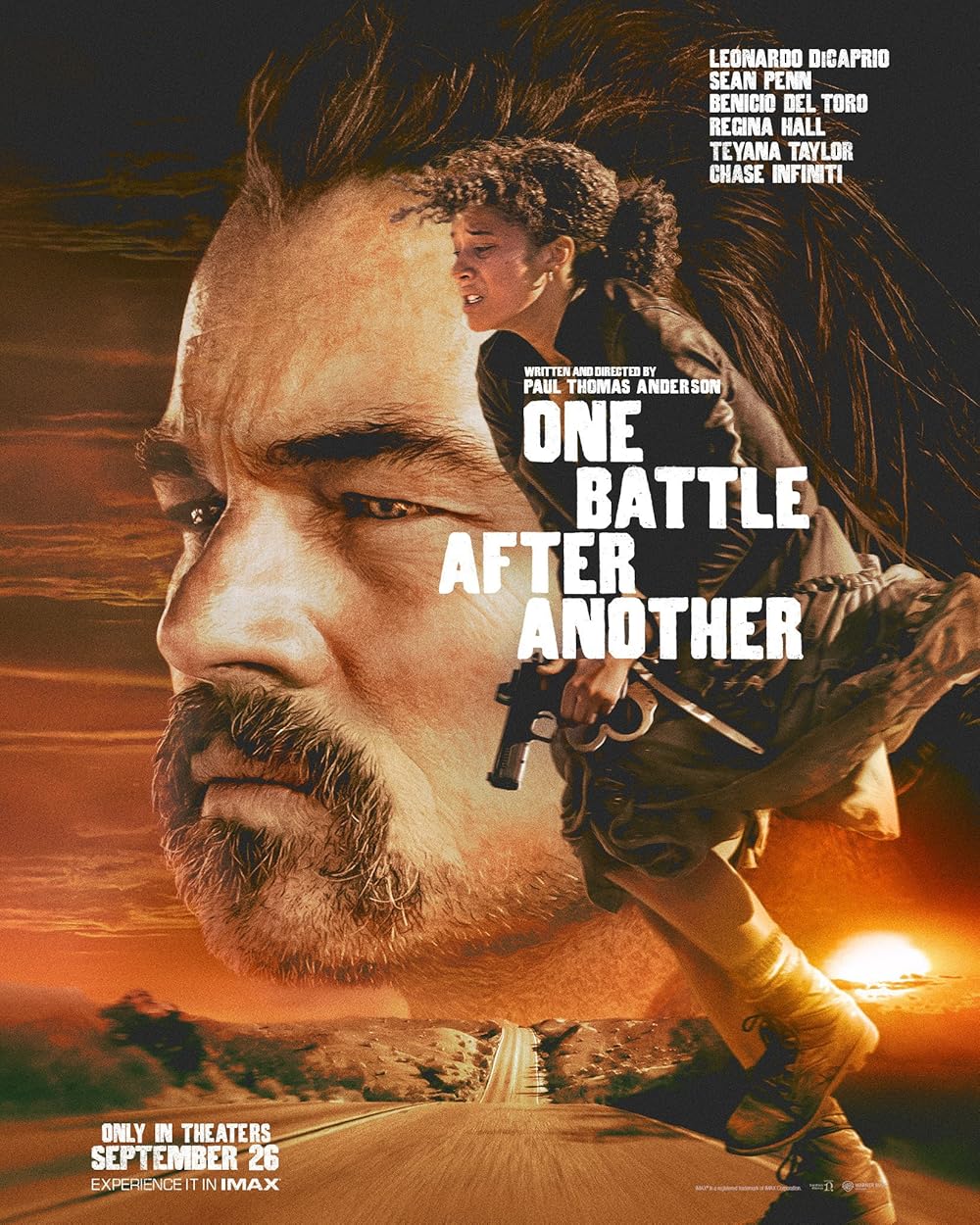
Coiled at the center of Paul Thomas Anderson’s One Battle After Another is a shadowy club committed to the “racial purification” of the American populace. Meeting in luxury hotel suites and bland office towers, these lumpy, balding men — generals, politicians, titans of industry — want to rebalance the composition of their country, and possibly the world. They call themselves the Christmas Adventurers, and they profess a creed of strict racial hygiene, inducting only “white Americans by Gentile-born,” in the hope of segregating white Americans away from the refuse of the worldwide underclass. “You want to save the planet,” says head Adventurer Virgil Throckmorton (Tony Goldwyn), “you start with immigration.”
Does that sound so farfetched to you? Based on a Thomas Pynchon novel published in 1990, first conceived around the turn of the 21st century, and filmed entirely before the 2024 general election, Anderson’s film arrived in theaters last fall at a time when immigration had become the battlefield on which all of America’s domestic conflicts are being fought. In the past year, the president has signed an executive order illegally ending birthright citizenship, and has openly yearned to denaturalize, deport, and even detain abroad U.S. citizens. “Homegrowns,” he said last year, “are next.”
These policies have been backed up and egged-on by a coterie of American white nationalists, among them Homeland Security Advisor Stephen Miller and Vice President J.D. Vance, who believe that America’s “cultural coherence,” established by early generations of white Anglo-Saxon immigrants, has been fatally compromised by nearly 150 years of immigration from places all across the globe. The only real Americans, they believe, are the descendants of those early settlers, a group now called “Heritage Americans.” Everyone else is, at best, a second-class citizen — though, given the pitch of their ethnonationalist rhetoric, invader would probably be the more accurate term. Miller apparently believes the country would be better off with about 100 million residents — a task that would involve removing more than 240 million people.
No wonder One Battle went off like a pipebomb upon its release last Fall. The film opens with a raid on a migrant detention camp by the French 75, a group of left-wing American radicals committed to “free borders, free bodies, free choice, and freedom from fucking fear,” as Perfidia Beverly Hills (Teyana Taylor) tells the white supremacist Col. Steven J. Lockjaw (Sean Penn). With his steamed-ham skin tone and fascist-dork comb-over, Lockjaw is a dead-ringer for the recently-demoted CBP commander-at-large Greg Bovino; ditto his beardy, neckless minions, who could easily stand-in for the federal thugs who murdered Renee Good and Alex Pretti. These are not direct references, but in 2026, they resonate all the same.