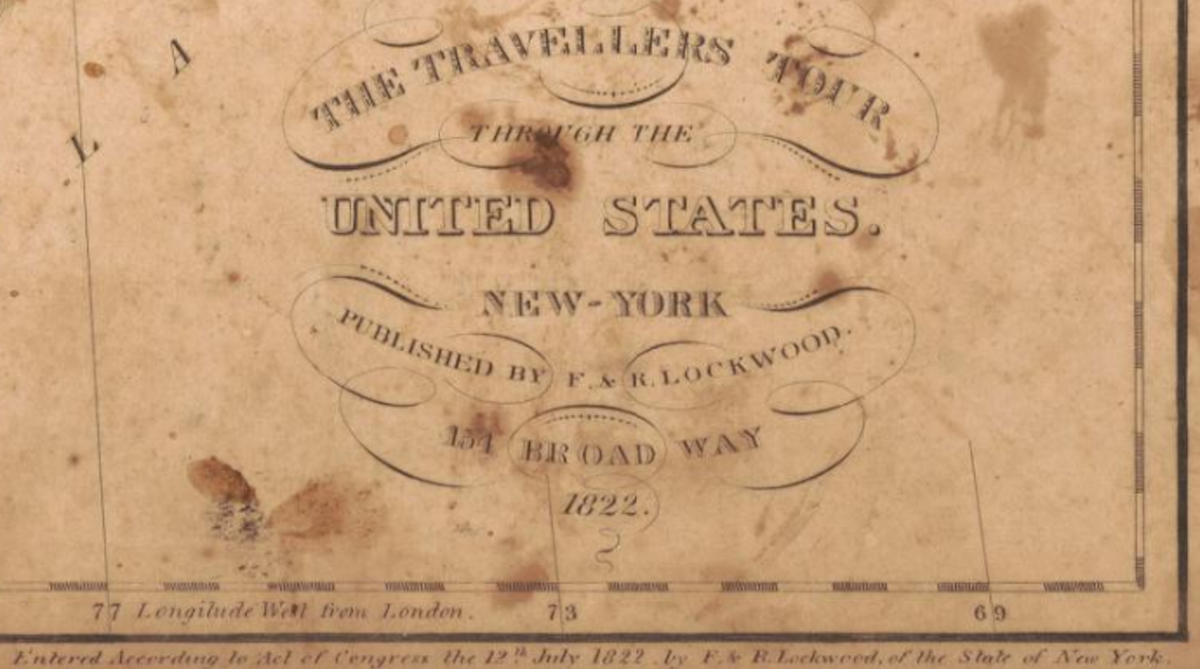
 & R. Lockwood, “The Travellers’ Tour Through the United States” was an imitation of earlier European geography games, a genre of educational game. Geography games generally used a map for a board, and the rules involved players reciting geographic facts as they race toward the finish.
“The Travellers’ Tour” first appeared in 1822, making it the earliest known board game printed in the U.S. But for almost a century another game held that honor. In 1894, the game manufacturer Parker Brothers acquired the rights to “The Mansion of Happiness,” an English game first produced in the U.S. in 1843. In its promotional materials, the company declared it “The first board game ever published in America.”
That distinction ended in 1991 when a game collector found the copy of “The Travellers’ Tour” in the archives of the American Antiquarian Society.
By 1822 the American market for board games was already becoming established, and middle- and upper-class parents would buy games for their families to enjoy around the parlor table.
At that time, New Year’s—not Christmas—was the holiday for gift giving. Many booksellers, who earned money from the sale of books, playing cards, and other paper goods throughout the year, would sell special wares to give as presents.
These items included holiday-themed books, puzzles—then called “dissected maps”—and paper dolls, as well as games imported from England such as “The New Game of Human Life” and “The Royal And Entertaining Game of Goose.”
Since “The Travellers’ Tour” was the first board game to employ a map of the U.S., it might have been an especially interesting gift to American consumers.
It’s difficult, however, to gauge just how popular “The Travellers’ Tour” was in its time. No sales records are known to exist, and since so few copies remain, it likely wasn’t a big seller.
A global database of library holdings shows only five copies of “The Travellers’ Tour” in institutions around the U.S. And while a handful of additional copies are housed in museums and private archives, the game is certainly a rarity.
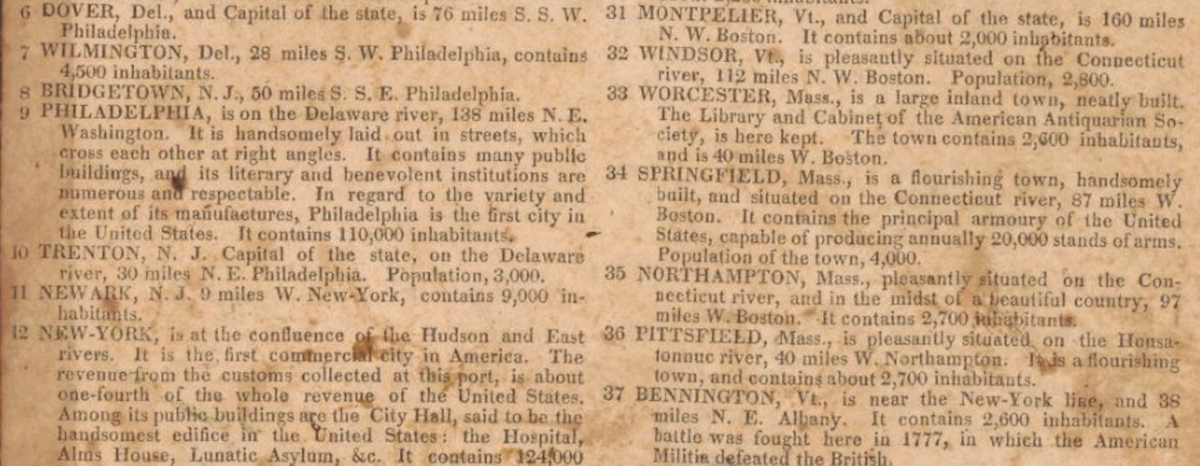
Announcing itself as a “pleasing and instructive pastime,” “The Travellers’ Tour” consists of a hand-colored map of the then-24 statesand a numbered list of 139 towns and cities, ranging from New York City to New Madrid, Missouri. Beside each number is the name and description of the corresponding town.
Using a variant spelling for the device, the instructions stipulate the game should be “performed with a Tetotum.” Small top-like devices with numbers around their sides called teetotums functioned as alternatives to dice, which were associated with immoral games of chance. Once spun, the teetotum lands with a random side up, revealing a number. The player looks ahead that number of spaces on the map.
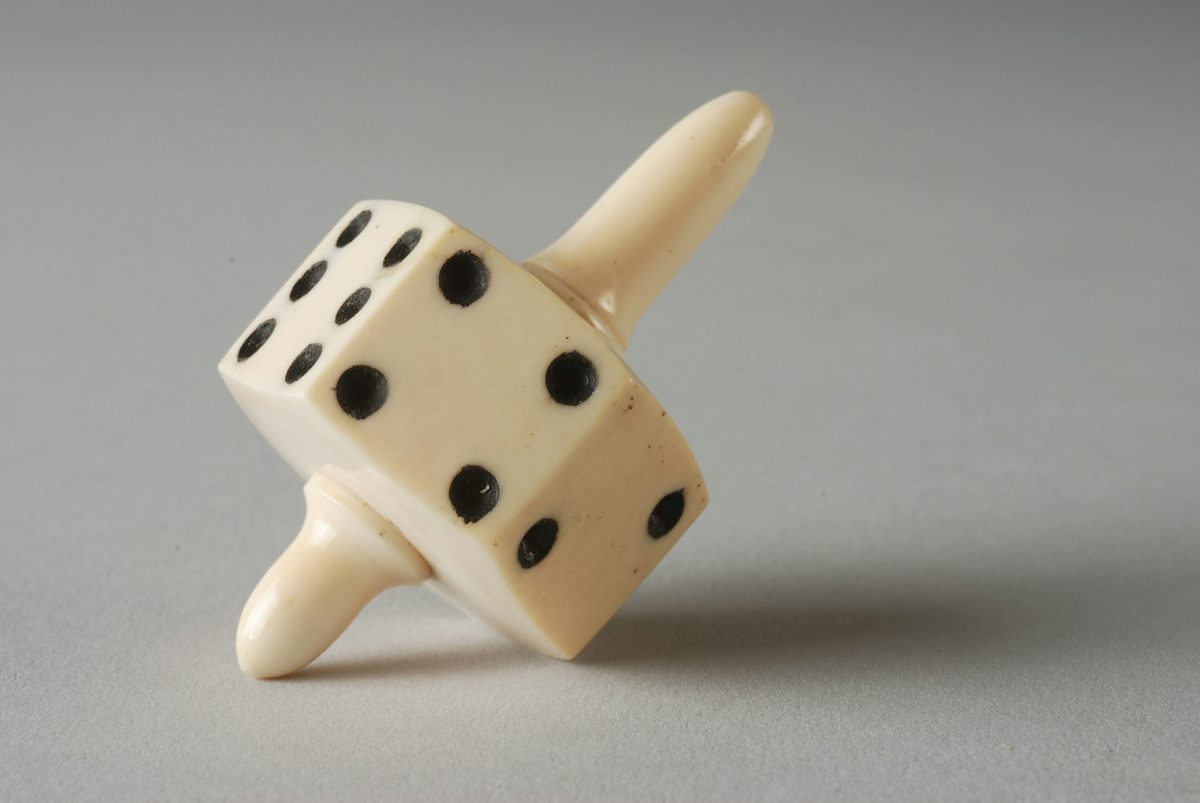
If they can recite from memory the name of the town or city, they move their token, or traveler, to that space. Whoever gets to New Orleans first, wins.