Close to the beginning of Edith Wharton’s 1917 novel, Summer, readers will find a passing reference to “an illustrated lecture on the Holy Land” attended by the novel’s main character, Charity Royall:
What, she wondered, did North Dormer look like to people from other parts of the world? She herself had lived there since the age of five, and had long supposed it to be a place of some importance. But about a year before, Mr. Miles, the new Episcopal clergyman at Hepburn, who drove over every other Sunday—when the roads were not ploughed up by hauling—to hold a service in the North Dormer Church, had proposed, in a fit of missionary zeal, to take the young people down to Nettleton to hear an illustrated lecture on the Holy Land.…1
A few pages later, Charity remarks that she liked the pictures but that the big words the lecturer used confused her, making the outing less fun than it might otherwise have been.
Here, as she often did, Wharton pulled an incidental slice of reality into her novel to add a light touch of ready-made verisimilitude to her fiction. Through a serendipitous entwining of accident and happenstance, I know the identity of the lecturer, the once very popular John Lawson Stoddard, whom she did not see fit to name.
Does knowing the identity of this flesh-and-blood lecturer aid an understanding of Summer, a book that looms with tenebrous plot-line possibilities the more one ponders it? Not really. Does it shed much light on the inner fictive life of Charity Royall that Wharton was just beginning to paint? Hardly. The most one may reasonably claim is that mentioning an illustrated Holy Land lecture added cultural background to Wharton’s literary portrait by alluding to a rich and familiar theme in nineteenth-century British and American fiction. That theme, Christian proto-Zionism, plays in a major key in George Eliot’s Daniel Deronda (1876) and Benjamin Disraeli’s Tancred (1847) and in a satirical arpeggio in Mark Twain’s The Innocents Abroad (1869), to name just a few instances.
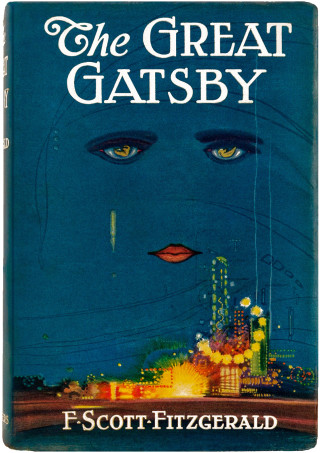
Identifying the “Holy Land” lecturer who Wharton popped into Summer, despite that man’s once-outsized and still-lingering fame in 1917, would fail to rate more than a discursive footnote were it not for the fact that this lecturer had a son who, like his father, became a household name, a son who, it happens, would appear in the opening pages of a later novel: F. Scott Fitzgerald’s The Great Gatsby. Fitzgerald inserted the son as Wharton had eight years earlier inserted the father, although with a slight twist. While Wharton chose a wholly anonymous approach, Fitzgerald employed a lightly disguised pseudonym in his novel. Soon into the story, one of Fitzgerald’s several ignoble characters, Tom Buchanan, declares:
“Civilization’s going to pieces,” broke out Tom violently. “I’ve gotten to be a terrible pessimist about things. Have you read ‘The Rise of the Colored Empires’ by this man Goddard?