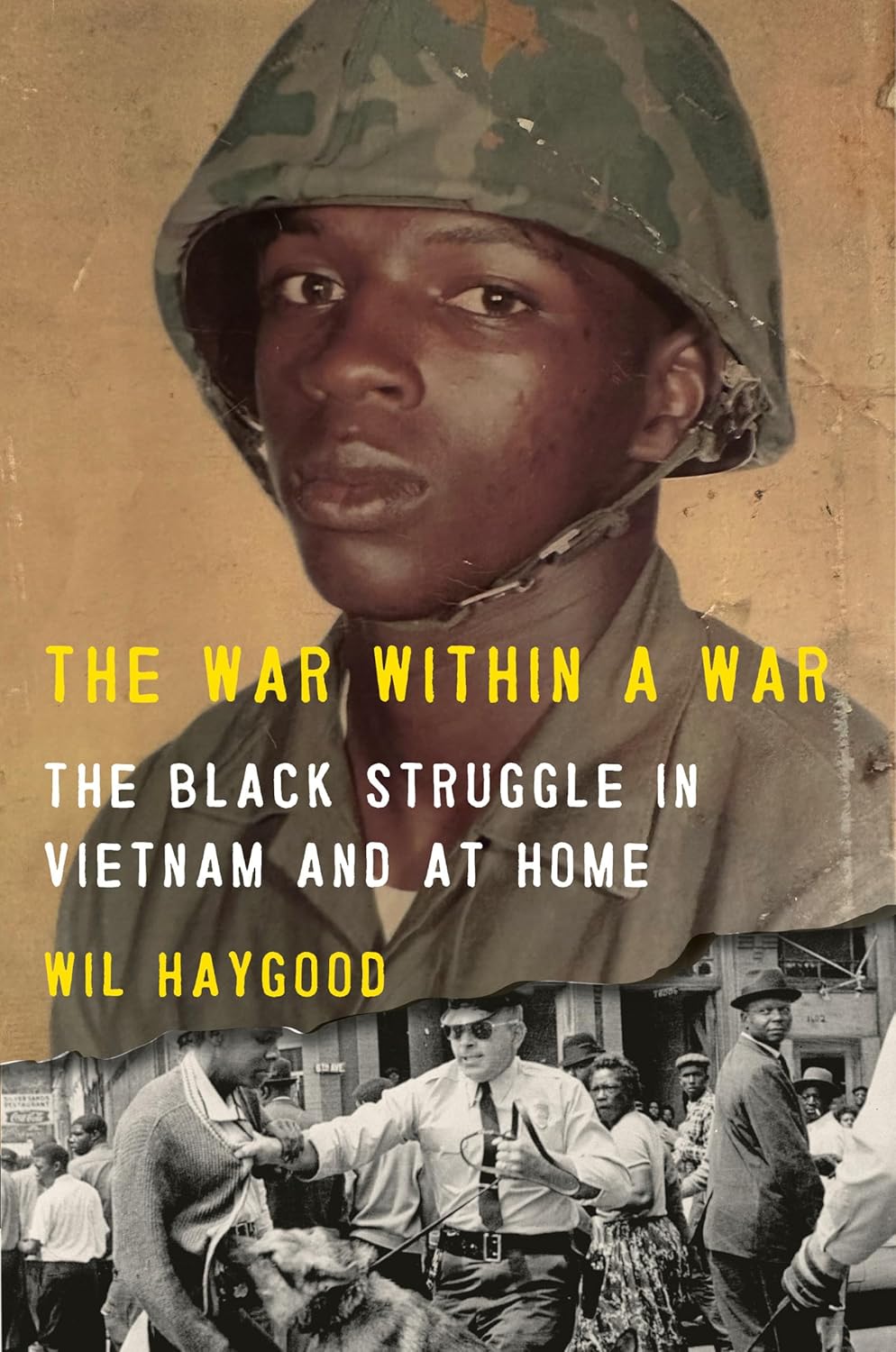
The high number of Blacks going off to Vietnam from my neighborhood can’t really be called a coincidence: In the early years of Vietnam, proportionately more Blacks than whites were being drafted into the war. The draft boards were more than 95% white. Those numerical dynamics made the administration of President Johnson nervous. The war coincided with the civil rights movement and the push for Black freedoms. Vietnam was inextricably linked to a wrenching era in American history, as Blacks were being compelled to fight a war on two fronts—for equality at home and a nation’s hubris abroad.
For the past four years I’ve traveled the country, sitting with Black veterans who fought in Vietnam and returned home to a nation on fire. White America was resistant in many places to integration and equality. Urban uprisings and rebellions by Blacks stretched from coast to coast. I remember sitting around the television watching scenes of street mayhem on the nightly news. My mom and grandparents, who I lived with, hailed from Selma, Alabama. Selma was on its way to becoming Selma. Always, amidst civil rights news, there was footage of Vietnam.
There has long existed in America a conundrum of Blacks and the military, and it stretches back across two centuries. A nation that had enslaved Blacks would come to call upon them during the Civil War to save America. Those Black soldiers—told by Confederate forces they’d be hanged if captured—served with distinction. “We have seen white men betray the flag and fight to kill the Union; but in all that long, dreary war we never saw a traitor in a black skin,” presidential candidate James A. Garfield, referring to the Civil War, said during an 1880 address in New York City.
In World War I military leaders dismissed the idea of Blacks fighting alongside whites. Patriotic Black Americans went to Europe and joined forces with the French to battle on behalf of Democracy. In World War II Blacks fought—when given the chance—and flew planes as Tuskegee Airmen to show their mettle. But nothing compared to Vietnam when showcasing Black bravery, strength, and even political expression in the war zones of Southeast Asia. On some military bases Confederate flags were visible. Black and white interactions—each coming out of segregated environments—could at times prove a combustible brew for military officers. Vietnam introduced America’s first racially-integrated fighting force. “Vietnam was the first time this country had witnessed troops led by African Americans,” as Lloyd Austin, the nation’s first Black Secretary of Defense, and who had older relatives who fought in Vietnam, told me during an interview in his Pentagon office.