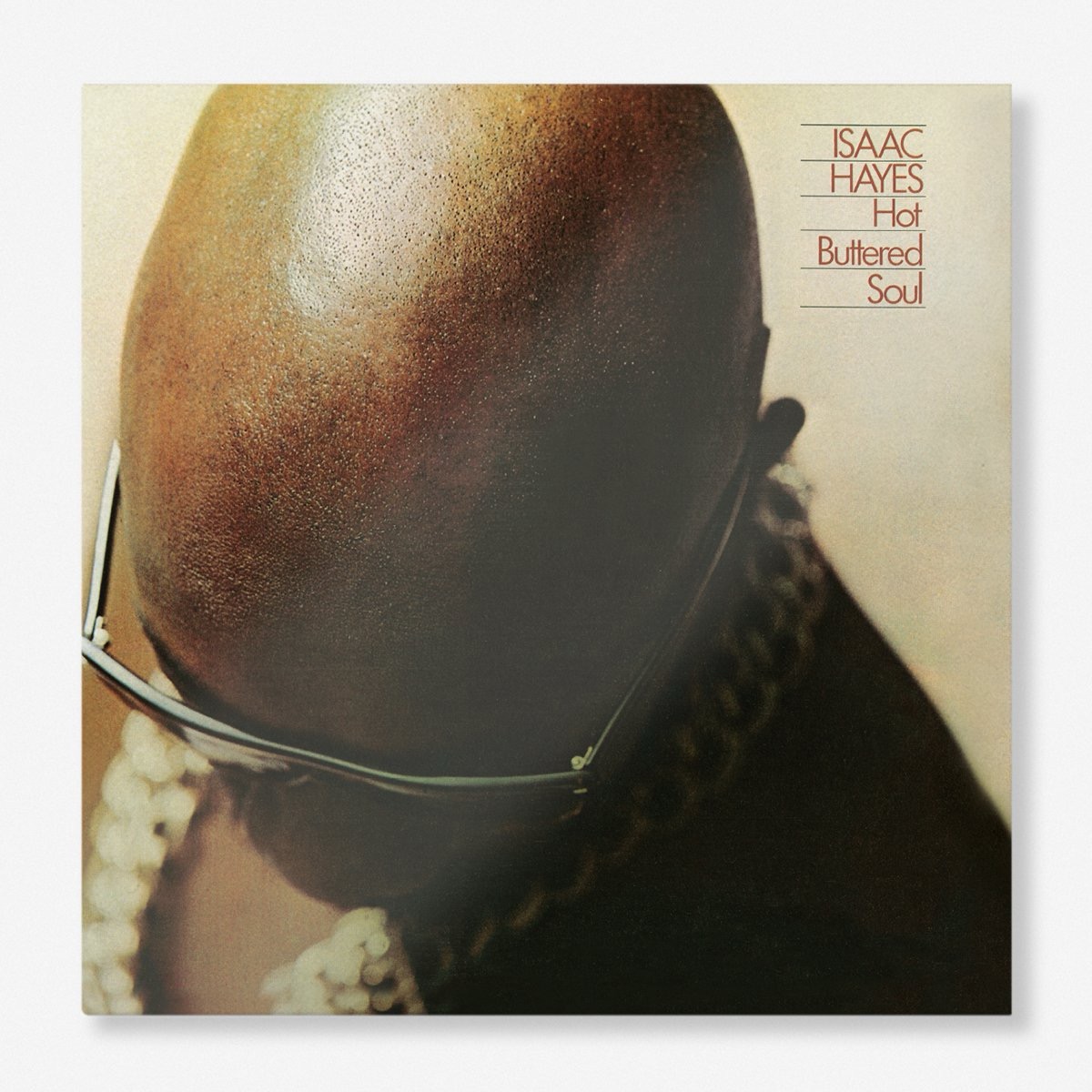
The album was both a product of and a departure from Hayes’s earlier work at Stax, where he had honed his skills as a pianist—he filled in for Booker T. Jones while Jones was away at college—and where he proved to be an especially gifted songwriter. Along with David Porter, Hayes wrote some of the label’s most iconic hits, including Sam and Dave’s “Soul Man” and “Hold On, I’m Coming.” Hayes wanted his own star turn, but, as he later explained, the Stax co-founder Jim Stewart thought his voice was “too pretty.” “At that time we were living in a James Brown era,” Hayes noted. “Rough singing . . . [but] I was a soft singer.” Sales of his 1968 solo début, “Presenting Isaac Hayes,” were unimpressive.
But then Martin Luther King, Jr., was killed, in Memphis. Hayes, who had considered King a friend, “flipped,” as he put it, and became more “rebellious” and “militant.” For a time, he also went quiet. “I could not create properly,” he said. “I was so bitter and so angry. I thought, What can I do? Well, I can’t do a thing about it, so let me become successful and powerful enough where I can have a voice to make a difference. So I . . . started writing again.” Hayes released “Hot Buttered Soul” in the summer of 1969, as part of Stax’s “Soul Explosion,” a release of twenty-seven albums designed to help the company recover from a disastrous distribution deal with Atlantic and the death of the label’s star, Otis Redding. But Hayes’s ambitions were less commercial than creative: “I didn’t give a damn if ‘Hot Buttered Soul’ didn’t sell,” he said, “because there were twenty-six other LPs to carry the load. I just wanted to do something artistic, with total freedom.”
The album contains no rage or protest in the conventional sense. Hayes mentions race only once, in a mystifying lyric on the track “Hyperbolicsyllabicsesquedalymistic”: “A slave’s on a horse every time she explores / Just heard a discussion about, uh, racial relations.” But the album’s very largesse was political: Hayes had internalized King’s death, one of the era’s preëminent signs of black vulnerability, and reëmerged as a giant.
Three quick drumbeats and the album opens, operatically, with the string arrangement of “Walk On By”: a velvet curtain pulled back to reveal a production that combines the opulence of chamber music with that of funk. The mounting orchestra is intercut with Harold Beane’s fuzz-heavy guitar. While the song, composed by Burt Bacharach, had been a 1964 crossover hit for Dionne Warwick, Hayes wanted his cover, he said, to target “the black listening audience.” That focus comes through in his ad-libs: he doesn’t just accuse his lover of “saying goodbye”; instead, he tells her, “You put the hurt on me! You socked it to me!” There is a delicious irony in Hayes’s decision to remake a song about wanting to go unnoticed into an epic tour de force. Don’t mind me, the lyrics say; I am inescapable, the music says.