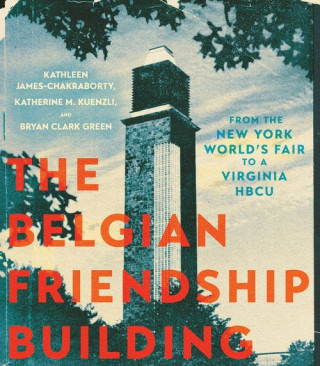
In 1941, the Pittsburgh Courier, one of the two African American weeklies with the highest circulation at the time, described the new Robert L. Vann Memorial Tower at Virginia Union University as “the largest memorial ever built for a Negro in America.”[1] Vann, the paper’s late editor, who had died the previous year, was an alumnus of the historically Black college in Richmond, Virginia. At 165 feet, the tower stood in proud contrast to the nearby Confederate memorials on Monument Avenue that had been erected beginning in 1890. Vann’s widow Jessie, who succeeded him at the paper’s helm, pledged $25,000 towards the tower, undoubtedly in part as a riposte to those statues (which stood until they were pulled down in the wake of George Floyd’s murder in 2020). At the time it was not easy for African Americans to challenge Jim Crow. The tower conveyed its message through its name and height rather than more overt symbols like figural statuary or classical embellishment. In part as a consequence it has largely been forgotten. It deserves to be remembered, and not only as the rare monument to Black achievement in the United States but as a pioneering example of modern architecture in America.

One of the earliest examples of European modernism to be erected on a U.S. campus, the Vann Memorial Tower and the Belgian Friendship Building of which it is a part were designed by a trio of distinguished modern Belgian architects — Victor Bourgeois, Léon Stynen, and Henry van de Velde — although not for Virginia Union, or in Richmond. It was built, rather, as Belgium’s contribution to the 1939 World’s Fair in Queens, New York. A showcase for Belgian craftsmanship, design, and materials, it included tiles from the region of Courtrai, schist facing from the Ardennes, and diamonds and other products from the Belgian Congo, the country’s largest and oldest colony.
That the pavilion ended up at an institution of higher education for Black people — a people whose violent exploitation in the Congo was a notable feature of both the building and of modern architecture in Belgium more broadly — is just one of the many ironies of the Belgian Friendship Building. Its story, which we explore further in a new book, makes clear how far a building’s use can stray from the one intended by its original client and designers.