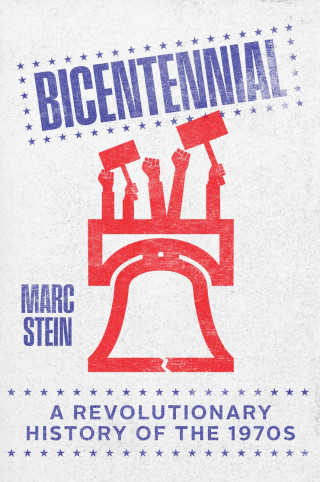
As historian Marc Stein traces in Bicentennial: A Revolutionary History of the 1970s, a national birthday can launch a much broader, more inclusive, and ambitious national project. Yes, the bicentennial too involved politicians advancing their own aims, and it involved selling things, with a proliferation of commemorative objects. But the events and their backlash also helped promote broader goals. Stein writes of the urban planners who sought to direct bicentennial resources toward remaking cities and revamping tourist destinations. He writes of the contingent of the New Left that hoped to rekindle what they viewed as the radicalism of the founders, and of marginalized communities, who mobilized for a reexamination of American history and for reform in contemporary society. Sometimes these groups disagreed about the past and agreed on the future. Sometimes they disagreed about the future, despite shared ideals of the past.
More than the Parade of Sails that glided into New York harbor, the bicentennial was about participating in a democracy and cultivating a reinvigorated sense of the past. In Stein’s accounts of Gay Raiders leader Mark Segal handcuffing himself to a banister overlooking the Liberty Bell in Independence Hall, and of Black and Indigenous activists protesting mistreatment of their communities, he shows how commemorating the past can challenge the present and the future, with depth and force. And in a year when many Americans may turn away from the Trump-infused spectacle of 250th celebrations, Bicentennial also makes the case for engaging with the anniversary and making your own meaning from it.
The official plans for the 200th birthday, headed by the American Revolution Bicentennial Administration, or ARBA, included ambitious construction projects, formal events, and public spectacle, from the parade of sails to the Freedom Train, a 26-car train loaded with founding documents and Americana, which chugged its way across 48 states.
Even several years before the anniversary itself, resistance to the commemorations began to take shape. In some cases, plans were interlaced with corruption and self-dealing, as in Philadelphia. Democratic Mayor Frank Rizzo helped Republican President Nixon to win the presidential election in 1972 with his cross-party endorsement. In turn, Nixon promised to give Rizzo’s Philadelphia a central role in the national birthday party. Bicentennial planning threatened to displace Black Philadelphians, with designs to bulldoze Black neighborhoods to make way for a bicentennial world’s fair and urban renewal projects. In response, Black Philadelphians mobilized for representation on planning committees to protect their homes and to add Black histories to the commemorations.