It is clear that border regimes—state institutions designated with the sole authority to deport and restrict entry—have today become a central mechanism for white supremacist worldmaking. What set of forces gave rise to these regimes, though, and how did they attain such wide-reaching, brutal strength? There is no shortage of historical antecedents. For the United States, many have noted the links between the Trump administration’s practices and those of Nazi and neo-Nazi movements (as well as, the second administration has made clear, those of apartheid-era South Africa). Others have connected Trump’s approach to border policing to the anti-Mexican crackdowns of the mid-twentieth century, when military-style operations rounded up and deported millions of residents of Mexican origin without due process (including a significant number of U.S. citizens) in the name of stemming an “invasion” of undocumented migrants.
But grasping the full scale and scope of today’s border controls requires us to look at the history of the carceral governance of Black people, a project that started with trans-Atlantic slavery and continued through colonial rule in Africa and the Americas and Jim Crow in the United States (a set of practices, in fact, that would influence the Nazis’ own legal codes). Anti-Black governance alone did not shape border policing, but it is an important, yet often elided, element of border policing’s complex genealogy. And if the crises of our present are inseparable from those of our past, then the efforts to resist ICE’s abuses must be part of a larger political project—one that requires us to move toward abolition, not reform.
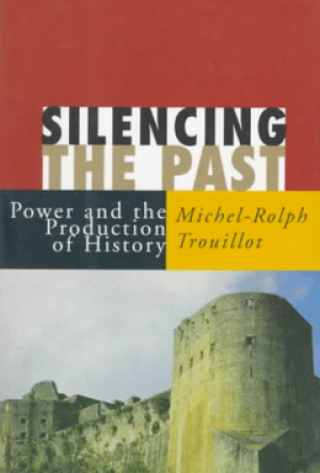
For colonial powers in the eighteenth-century Atlantic world, writes anthropologist Michel-Rolph Trouillot in Silencing the Past, Black people’s desire for freedom was simply “unthinkable,” even as the liberatory efforts of rebels and revolutionaries in Haiti and the wider Caribbean sent shockwaves through the Atlantic world. The prevailing white supremacist logic held that enslaved people were fundamentally content with their condition—a belief that would help facilitate the forced relocation of over twelve million Africans to the Americas and, to a lesser extent, continental Europe. Yet paradoxically, even though Black people were defined by the condition of transportability—the idea that it was their lot to be moved at will—their independent movement was nonetheless threatening, something to be avoided at all costs.
If mobility was the means through which Black people could attain their freedom, controlling mobility became paramount for those who sought to deny it. From the seventeenth century onward, an array of laws (often specific “slave codes”) and practices emerged to police Black mobility domestically and transnationally. Slaveowners and anxious state officials developed complex legal systems to prevent both marronage (escaping the plantation) and Black rebellion. Despite geopolitical rivalries, the Spanish, French, English, and Dutch frequently made agreements to return lost “property” throughout the eighteenth and nineteenth centuries.