Aside from his many excellent novels, Philip Roth made two lasting observations about the social situation of American novelists. The first dates to a March 1961 issue of Commentary magazine; in “Writing American Fiction,” Roth lamented the difficulty that novelists confront when trying to convey the excesses and absurdities of actual American life, because it always beats the wildest imaginings. Just think, for a moment, about the latest news out of Washington, or the gargantuan Costco product you most recently bought. More than sixty years later, Roth remains right. His second significant observation was about life outside America. In a 1990 interview in The New York Review of Books, he reflected on Cold War–era meetings with European writers behind the Iron Curtain: “It occurred to me that I work in a society where as a writer everything goes and nothing matters, while for the Czech writers I met in Prague, nothing goes and everything matters.”
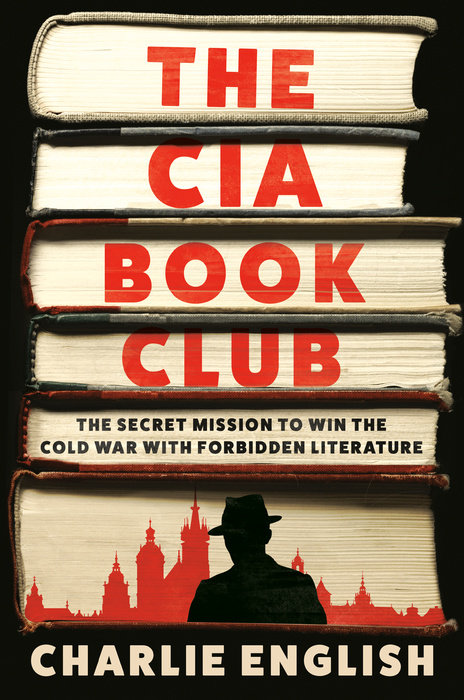
This insight came to mind repeatedly while reading The CIA Book Club, Charlie English’s spirited and challenging exploration of U.S.-backed dissident culture-warring in Communist Poland, a place where, for instance, a man was given an eight-year prison sentence in 1985 for distributing a brochure. English writes with verve and enthusiasm that match the genuine suspense and high stakes of successive efforts to get banned books and other materials into Poland and to get suppressed Polish writings out. English’s book is challenging because of the undeniable fact that those banned works from abroad—which Polish writer Adam Michnik describes as “a reservoir of freedom, of independent thought…of human dignity”—came courtesy of the CIA.
Did that make you wince? I imagine so. Because if you’re reading Commonweal, I’d wager you’re as committed to the free circulation of books and ideas as you are leery of the idea of a state intelligence service organizing this circulation. But don’t worry, you’re in good company in not liking this connection. The CIA didn’t like it either. Its Eastern Bloc–focused book-distribution program began in 1951 and concluded in 1991, but its existence wasn’t publicly acknowledged until the early 2000s. English’s source material includes interviews with some of the people directly involved with the program (the agency’s files remain classified), but the CIA itself does not seem to take much pride in it. According to the agency’s own former chief historian, Benjamin Fischer, the program was not in keeping with what the CIA regarded as its core function. English writes:
U.S. intelligence leaders liked to project [an image] of the CIA [as] an organization packed with spooks and paramilitaries who fought in war zones, in sharp contrast to the more intellectual pursuit of sponsoring books and publishing. “The bottom line was that it didn’t fit their image of themselves as CIA operators who went around recruiting spies,” [Fischer] said.
Indeed, among the hundreds of ordinary but crucial players in this story is a group of math and physics professors waiting for intellectual contraband at a Polish poultry farm.