In the first chapter of his 1874 novel The Gilded Age, Mark Twain offered a telling observation about the connection between past and present: “History never repeats itself, but the… present often seems to be constructed out of the broken fragments of antique legends.”
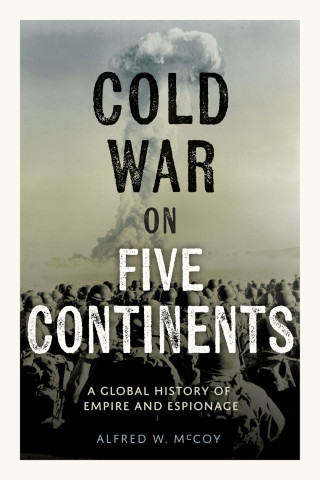
Among the “antique legends” most helpful in understanding the likely outcome of the current U.S. intervention in Iran is the Suez Crisis of 1956, which I describe in my new book Cold War on Five Continents. After Egyptian leader Gamal Abdel Nasser nationalized the Suez Canal in July 1956, a joint British-French armada of six aircraft carriers destroyed Egypt’s air force, while Israeli troops smashed Egyptian tanks in the sands of the Sinai Peninsula. Within less than a week of war, Nasser had lost his strategic forces and Egypt seemed helpless before the overwhelming might of that massive imperial juggernaut.
But by the time Anglo-French forces came storming ashore at the north end of the Suez Canal, Nasser had executed a geopolitical masterstroke by sinking dozens of rusting ships filled with rocks at the canal’s northern entrance. In doing so, he automatically cut off Europe’s lifeline to its oil fields in the Persian Gulf. By the time British forces retreated in defeat from Suez, Britain had been sanctioned at the U.N., its currency was at the brink of collapse, its aura of imperial power had evaporated, and its global empire was heading for extinction.
Historians now refer to the phenomenon of a dying empire launching a desperate military intervention to recover its fading imperial glory as “micro-militarism.” And coming in the wake of imperial Washington’s receding influence over the broad Eurasian land mass, the recent U.S. military assault on Iran is starting to look like an American version of just such micro-militarism.
Even if history never truly repeats itself, right now it seems all too appropriate to wonder whether the current U.S. intervention in Iran might indeed be America’s version of the Suez Crisis. And should Washington’s attempt at regime change in Tehran somehow “succeed,” don’t for a second think that the result will be a successfully stable new government that will be able to serve its people well.