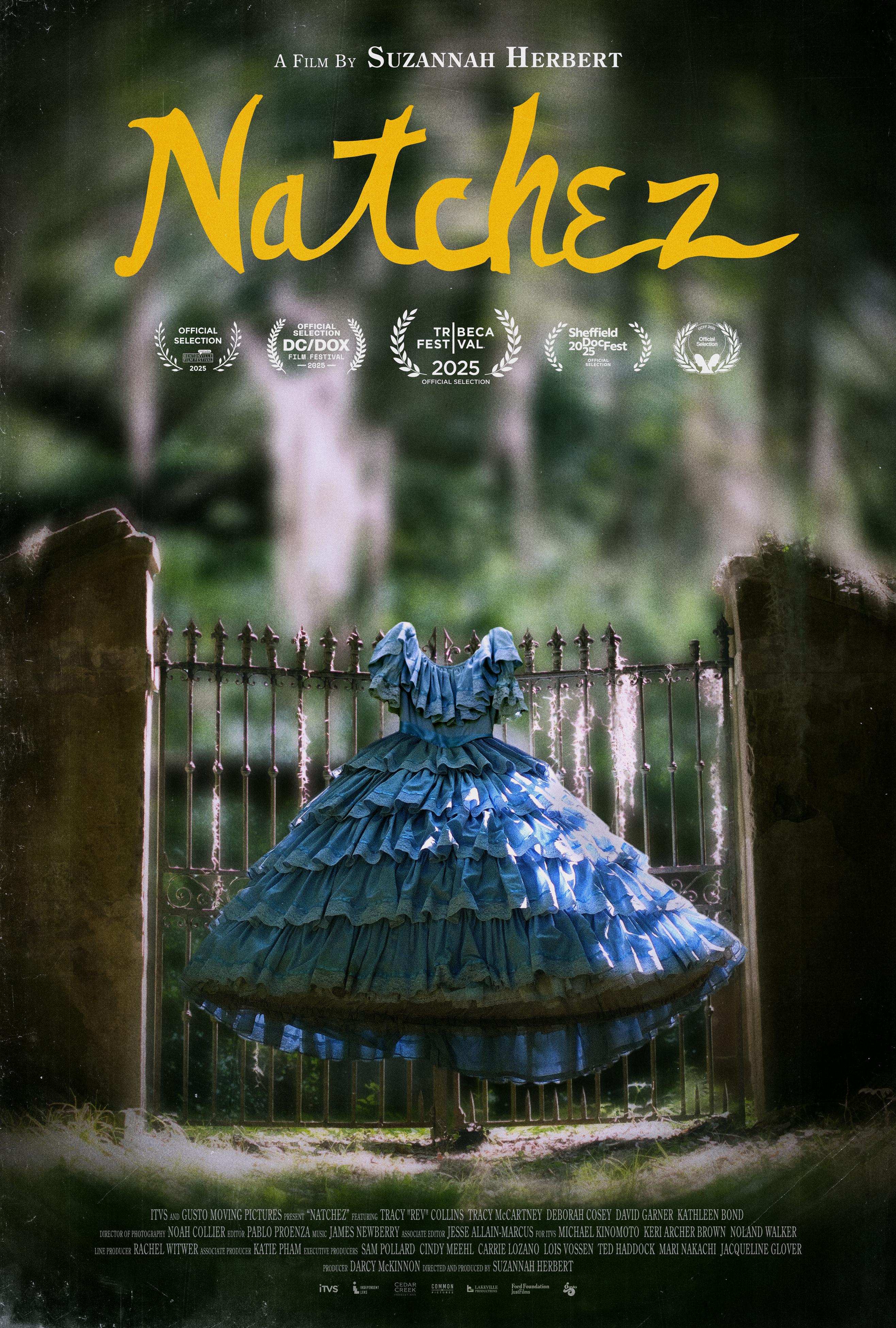
Slavery is definitely not “over” in Natchez. As a director, Herbert knows this. If it were, the entire tourism industry would collapse. After the boll weevil ravaged the community in the 1930s, it was institutions like the Garden Club that romanticized the antebellum South for visitors. Tracey McCartney, one of the featured women, cosplays as Scarlett O’Hara during tours at Choctaw Hall. White tour guides have pictures and memories of Spring Pilgrimages where the youth would be crowned king and queen. The young men would wear the Confederate uniforms of their ancestors.
At the same time, Black Natchez citizens would watch these festivities and consider them a slap to the face, says Debbie Cosey, the first Black member of the Garden Club and owner of the Concord Quarters, a bed and breakfast in former slave quarters. She says in the documentary that interested visitors to Concord Quarters would get the story behind the main house, where a script of what actually happened would not be tailored to be palatable for a wider audience.
In history, one encounters multiple vantage points and perspectives depending on the subject. But also, in history, what is often emphasized are the accounts of white people. What makes this documentary most engaging and nuanced are that power plays across multiple intersections. Despite Natchez’s strong queer communities, Natchez’s white queer people and white people are united in their cultural conservatism, promoting tours that glorify the city’s past as a major economic engine for mass enslavement. In contrast, the tours run by Black guides are characterized not by lunches inside halls and mayoral visits but by car rides and history lessons while standing right on sacred soil. The white tour guides indulge in fantasy and entertainment, while the Black tour guides are beholden to honoring their ancestral labor and sacrifice, without any gloss or pizzazz to the stories.
With re-creation and seriousness operating within the same town yet not shared across color lines, there is no wonder why Herbert was drawn to Natchez and its people. The participants’ stories reveal how both white and Black tours are staking their claim to a past that would have once erased the latter and centered the former. For a visitor, the choice of which tour to go on is not simply a case of availability but rather a choice between taking comfort in reinforcing a Southern fantasy or undermining that mirage altogether.