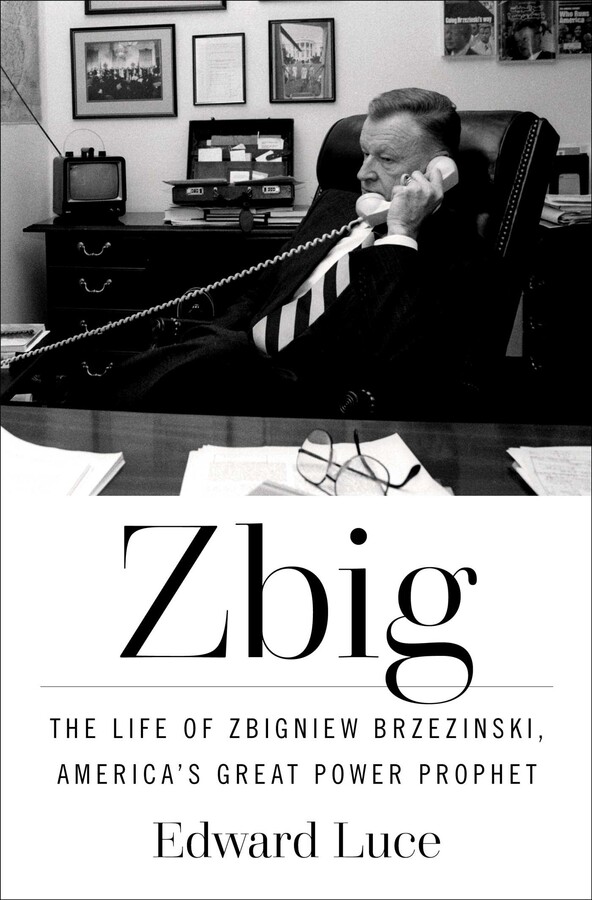
Brzezinski became a powerful force in the reshaping of US foreign policy at a critical historical moment – the immediate aftermath of the failure in Vietnam. For a few years it seemed that the US leadership class might be willing to re-examine the dangers of Cold War dogma and overextended imperial reach. The New York Times had published the Pentagon Papers, revealing the systematic mendacity behind the Vietnam War, as well as Seymour Hersh’s investigations into the illegal covert operations of the CIA. The Senate had convened an inquiry into CIA misconduct, and even the fanatical cold warrior Richard Nixon had promoted détente with the Soviet Union and opened a diplomatic door to China. One could be pardoned for hoping that a reorientation of policy was underway.
But almost as soon as the last helicopter left the roof of the American Embassy in Saigon, pundits and politicians began to warn against learning the wrong lessons from Vietnam. They fretted that the body politic was infected by ‘Vietnam syndrome’ – a reluctance to use force in a foreign land which was viewed as a pathology the US needed to cure. Brzezinski shared this worry. And as a Polish émigré and fervent Polish nationalist, he focused most of his fear on the Soviet Union. A visceral hostility to the USSR became the driving force behind his career as a policy intellectual, followed by a strong suspicion of post-Soviet Russia. He steered US foreign policy into a militant anti-Russian turn from which it has never recovered.
Luce’s Zbig aims to present Brzezinski as a ‘Cold War prophet’ who was prescient in his time and is relevant to ours. When Brzezinski came to Washington in the mid-1970s, Russophobia had been dormant since the near cataclysm of the Cuban Missile Crisis, but it returned in the shadow of the Vietnam debacle and started to spread in the late 1970s. It receded briefly during the Reagan-Gorbachev rapprochement and the crumbling of communism but resurged in the late 1990s, in tandem with the eastward march of Nato. When the idea of Nato expansion first surfaced in policy circles in the mid-1990s, Brzezinski – no longer in office but still influential – was among its most strenuous advocates. To him the plan simply acknowledged the new order of things: the triumphant spread of democracy after the collapse of Soviet communism.
In 1998, Congress approved Nato expansion into Hungary, Poland and the Czech Republic with substantial bipartisan majorities. In 2004, the Baltic states, three more Warsaw Pact nations and Slovenia were added. Diplomats from George Kennan to Jack Matlock (Reagan’s ambassador to the Soviet Union) and William Burns (later head of the CIA under Biden) all warned against extending Nato eastwards. They predicted that the siting of potential adversaries – perhaps eventually nuclear-armed ones – along its border would exacerbate Russia’s fears of encirclement and invasion. Brzezinski dismissed those anxieties as paranoia. In his world, dogmatic sentiment – disguised as rationality – trumped realities on the ground.