Casualties of the Revolution
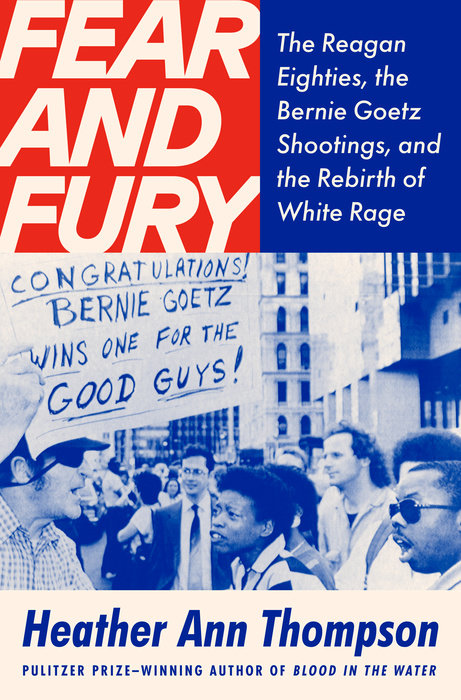
Goetz’s attack on Allen, Cabey, Canty, and Ramseur occurred a month and a half after Ronald Reagan utterly humiliated Walter Mondale in the 1984 presidential election. The Gipper’s historic reelection had reaffirmed the American public’s support for the “Reagan Revolution.” Leveraging widespread nostalgia for the rabid nationalism and unequally shared prosperity of the early Cold War period, this revolution offered deregulation and generous tax cuts for the rich, on the one hand, and austerity, organized abandonment, and discipline for the poor, working class, people of color, and queer people on the other.
While historians such as Brent Cebul and Nathan Connolly have increasingly pointed out continuities between the “New Deal order” forged by Franklin Delano Roosevelt and the “neoliberal order” that Reagan ostensibly inaugurated, Thompson makes the case that the early to mid-1980s were, in fact, exceptional — “a sharp break with the past.” Reagan had eagerly slashed social assistance programs built to blunt the worst effects of market capitalism, deepening the poverty and suffering of those on the margins. The president and his disciples also justified, through moralizing language, the widening gap between rich and poor, the intensifying misery of queer people and people of color in the early HIV/AIDS epidemic, and the expansion of the country’s already sprawling carceral machinery.
The situation on the ground in New York City was bleak. Still reeling from the 1970s fiscal crisis, the city government responded to the economic challenges of the late ’70s and early ’80s with crushing austerity measures. Amid deep cuts to the Department of Sanitation, trash and litter piled up throughout the five boroughs, and a fraying social safety net meant more substandard housing, houselessness, poverty, substance abuse, and crime.
Darrell Cabey was in the thick of it all in the South Bronx. Ronald Reagan had actually visited the struggling neighborhood on a campaign stop in August 1980. In a vacant lot littered with debris — and within spitting distance of two buildings tagged, in bright orange graffiti, with the words “DECAY” and “BROKEN PROMISES” — Reagan insisted that he hadn’t “seen anything that looked like this since London after the Blitz.” Cabey lived not too far away from the site of Reagan’s cynical photo op. He shared a cramped two-bedroom, twenty-first-floor apartment in the Daniel Webster Houses with his mother, Shirley, and his four brothers.
Although Shirley tried to keep Darrell and his brothers at home with “a nice TV” and a stereo, Darrell couldn’t resist the pull of the outside world. Unfortunately for him and so many other youth of color in the Reagan years and beyond, the outside world presented a wide range of dangers — from highly potent and addictive drugs to the violence of the drug trade, and from abusive and racist NYPD cops to bloodthirsty vigilantes such as Bernie Goetz.