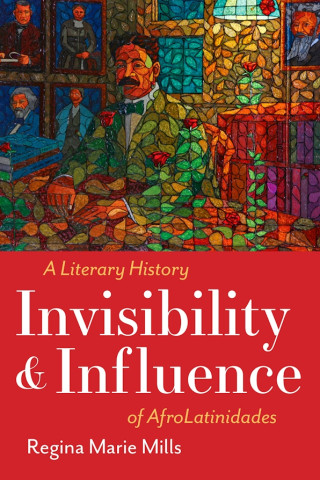
As a Black Puerto Rican, Schomburg often faced US and European societies that denigrated his culture, or worse, believed that there was no meaningful culture for Afro-diasporic and Puerto Rican peoples at all. Because of this erasure and denial of Afro-diasporic influence, Schomburg’s auto/biographical writings focused on African-descended peoples in Latin America, the Caribbean, and Spain and challenged both the white-centric and US Black-centered biographical histories that ignored the larger influences of Afro-diasporic people and migration in the United States and the Americas as a whole. In fact, one might argue that Bad Bunny’s Super Bowl performance that emphasized América and not the United States is itself aligned with Schomburg’s project.
Schomburg wasn’t only fighting against a white academy though; he was also fighting against US Black historians who frequently omitted Black history from outside the US. Despite being an autodidact with no college degree, he was a member of the American Negro Academy (and later became its president) and the Negro Society for Historical Research, which he co-founded with John Edward Bruce. Schomburg’s outsider status can also be seen in the content of his presentations. According to one of Schomburg’s biographer, Elinor Des Verney Sinnette, “Schomburg was the only presenter before the American Negro Academy who consistently reminded the membership of the role of blacks in Spain, Central America, and the West Indies.”
Schomburg’s auto/biographical writing called attention to the white racism that shaped narratives of American history. While white Americans considered their work (especially on Black people and people of color) as objective since they were not part of the community and could look from the outside without entanglement, Schomburg rejected that definition of objectivity. In his 1913 lecture to “the Teachers’ Summer class at Cheney Institute,” entitled “Racial Integrity: A Plea for the Establishment of a Chair of Negro History in Our Schools and Colleges, etc.” (which he would later revise for the 1925 piece, “The Negro Digs Up His Past”), Schomburg argued that white historians created narratives more concerned with maintaining white supremacy than providing accurate histories.[5] Indeed, he suggested that the histories of his time “bear no analogy to our [African-descended people’s] own”; so, it is imperative to build “a course of study in Negro History and achievements.” This early call for Black history as an area of study influenced future activists, students, and scholars who fought tooth and nail for Black studies, Chicana/o/x and Latina/o/x studies, Asian American studies, and other ethnic studies fields. 101 years after Schomburg’s call for Black Studies, Zohran Mamdani would graduate as an Africana Studies major from Bowdoin College.