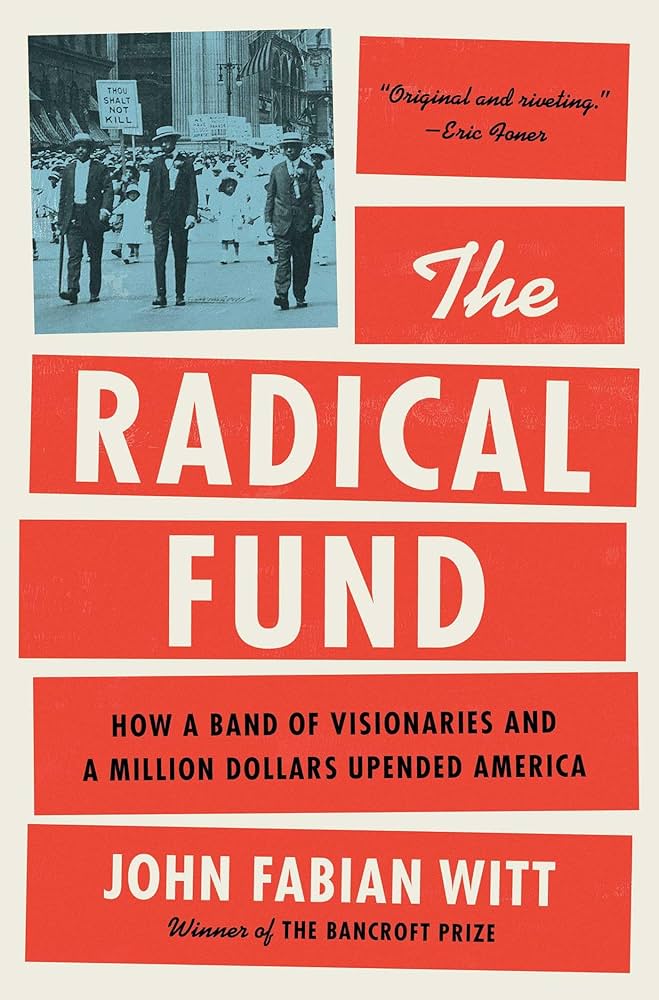
The book’s cast of characters is a who’s who of early-twentieth-century activism, and the money underwrote what Witt calls “nearly every controversial cause of the age.” Funds supported W.E.B. Du Bois’s study of Jim Crow schools; Clarence Darrow’s 1925 defenses of both John Scopes for teaching evolution and Ossian Sweet for defending his home against a white mob in Detroit; legal teams for Sacco and Vanzetti as well as the Scottsboro Boys in Alabama; A.J. Muste’s Brookwood Labor College, founded to teach the art of organizing; union drives by the Southern Tenant Farmers Union, International Ladies’ Garment Workers Union, and Brotherhood of Sleeping Car Porters; and the NAACP’s early campaign against lynching as well as its blueprint to dismantle Jim Crow via litigation. Grants—and sometimes loans—supported bail funds, radical publications, and research. Witt’s background in legal history is on full display in his attention to several key court decisions that Garland Fund resources supported, such as Steele v. Louisville & Nashville Railroad, which established equal treatment for Black workers from unions and employers.
In linking such famous episodes in U.S. history to a little known foundation, Witt makes an argument about the potential of philanthropy to create institutional change. In Witt’s telling, the fund’s resources “allowed its directors to put issues on the political agenda” and “offered a safe harbor during lean years for the labor movement,” among other accomplishments. Yet he is careful not to overplay his hand, concluding that “the American Fund did not secretly and single-handedly undo the old Jim Crow, shrink economic inequality, or produce the new law of free speech.” Those changes came from economic shocks, world wars, mass organizing, and demographic changes, but “when crisis arrived, the ideas, institutions, and movements of the Fund’s interwar workshop were ready to reshape America.” It is simply enough, Witt suggests, for the Garland Fund to have played a critical role at some particularly vulnerable moments. He presents landmark achievements as products, in part, of a marriage of private giving and radical ideas. Credit need not go to the fund alone for credit to be due.
Yet in playing up philanthropy’s ability to nurture, The Radical Fund misses an opportunity to more critically discuss money’s potential to distort activities on the ground. Baldwin and his fellow board members may have been underdogs in the world of foundations, but they wielded significant power over grantees. Theirs was a critique of philanthropy as an institution of wealth concentration, and not of grantmaking as a means of distributing it. What made the Garland Fund a radical funder lay more in what it funded than in how it did so; it still relied on a small, appointed board to make grant decisions behind closed doors. A deeper discussion in The Radical Fund of the stakes for grantees between, say, receiving resources as a grant versus a loan, or of matching requirements, would have provided a more nuanced portrait of how funding shaped organizational capacity, priorities, and strategies. (The fund’s inability to recoup most of its loans, however, and eventual conversion of many into grants suggests the limits of funder power.)