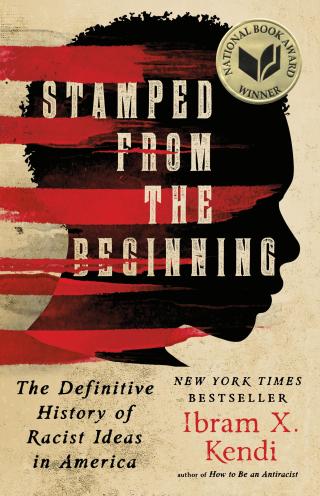
My adventure began with the broad claims made by Ibram X. Kendi in his widely read book, Stamped from the Beginning, which, building on earlier post-colonial scholars of “whiteness,” attributed the origins of the repulsive racist idea that I have just described to the Enlightenment, and particularly to Locke’s foundational treatise An Essay Concerning Human Understanding, which appeared in in 1690. The term “essay” does it no justice: it is a long and dense philosophical work, published in four books, that, for all intents and purposes, was one of the most widely read treatises of not only Britain’s enlightenment, but also all of Europe’s. Its insistence on ways of knowing, its exploration of how humans come to understand truth and to repudiate falsehood, it provided the definition for individual as well as group “enlightenment.” Paired with Locke’s theories of government, it helped to explain how human beings can and should make their own judgments about government (instead of accepting divinely chosen monarchs). I had read An Essay Concerning Human Understanding comprehensively, and Kendi’s discussion of it clashed with my remembered reading. I had pondered every page for questions of race and racism. How had I missed what Kendi had found? Thus began my journey down a nasty rabbit hole, one that has led me to think more deeply about canons and sources of civilization, and to explore more deeply today’s fierce debates about the connections between racism, slavery, and democracy in America’s (and Britain’s) history.
In Kendi’s reading, as in much recent scholarship, the Enlightenment was anything but enlightened. It embodied whiteness and privilege. Its scientific theories created racism. It legitimated slavery. Slavery, in the contemporary “anti-racist” account, emerged in each of England’s thirteen colonies in the Americas as a result of relatively unified (and relatively democratic) support among whites. My point here is not to belabor the realities of racism in early America: on that I think we are all agreed. But I do want to challenge an assumption about its pervasiveness, and where it came from, and especially the idea that it was “stamped” from the beginning. From my study of these sources (and many others) I would argue instead that it was contested from the beginning, and that it changed over time and varied by place.
I suggest that maintaining our focus on the works and the authors whom historians in the past identified as progressive helps to conceal a more complex, and more interesting, debate over principles of privilege and power, over racism and inclusion, a debate fiercely fought on many levels in early modern England and its colonies, even as they went through three revolutions over those centuries. Racism and slavery were not isolated from those struggles, but part of larger contests over power. Many scholars and thinkers whom we now identify with the Enlightenment were in fact pushing back against slavery and racism as well as the larger structure of power that had mainly promoted them.