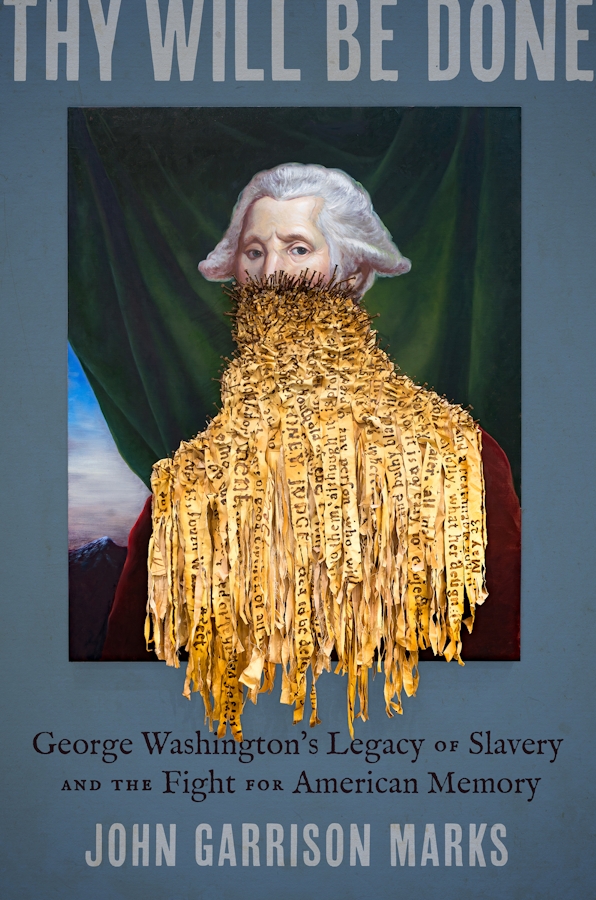
Most of the time, our arguments about Washington aren’t really about Washington at all. They’re about democracy, or equality, or what it means to be an American. People have continually drawn on Washington’s image or words to wage the political and cultural battles of the day. They leverage his immense symbolic power to serve arguments about contemporary issues. In my book, the people citing Washington’s history with slavery are rarely doing so to promote a better understanding of the past. Rather, they’re wielding history as a cudgel to make points in the present. Simply put, no one serves that purpose better than Washington.
2. How has that focus changed over time, and what makes his role as an enslaver important to understanding change– and continuity?
What most stood out to me while I was researching the book was how much continuity I saw in the ways people referenced Washington’s involvement with slavery. Over the past several years, there’s been a new wave of intense controversy over how we should publicly acknowledge Washington and his legacy. A growing number of Americans in recent years have highlighted Washington’s hypocrisy, making the case that his role as an enslaver should lead us to remove him from places of public honor. Others have demanded we continue to revere Washington; obviously the most notable recent example is the White House’s insistence on celebratory narratives and the removal of the slavery exhibit from the Presidents House site in Philadelphia. Still others, in social studies curriculum and at some historic sites, argue that Washington’s eventual emancipation of the people he enslaved redeemed his lifetime of involvement in the institution, and that this is what we should remember.
What was really fascinating in researching the book was how early and consistently all three of these perspectives appeared in the record. In 1797, British abolitionist Edward Rushton wrote directly to Washington, criticizing him for being a “proprietor in human flesh and blood.” Shortly after Washington’s death in 1799, Black Philadelphia minister Richard Allen told his congregation they should mourn Washington because he had set an example by freeing his slaves, and in so doing managed to “wipe off the only stain” from his legacy. A few weeks later, Henry Lee’s famous eulogy of Washington ignored slavery entirely, calling Washington “the most illustrious and most beloved personage this country has ever produced.” You see people making nearly these exact same points still today.