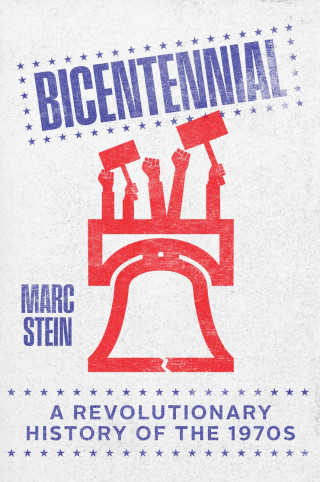
The simmering resentments of the Bicentennial reached their fullest expression, unsurprisingly, in Philadelphia, as the historian Marc Stein recounts in “Bicentennial: A Revolutionary History of the 1970s.” Frank Rizzo, the city’s mayor, had traded support for Nixon’s reëlection bid for a promise that Philadelphia, and not Boston, would be chosen to host the international exposition. That would have involved razing homes in Black neighborhoods. Philadelphia’s Black community organized an extraordinarily successful opposition, staging events like a “Rally Against the Bicentennial” and march after march in which activists carried signs reading “Bicentennial Is a Ruling Class Ripoff” and “Bicentennial Is a Racist Pig Scheme.” A poll from 1971 showed that more than two in three Philadelphians opposed the Bicentennial, in its entirety.
A growing public dissatisfaction with the American Revolution Bicentennial Commission led Jeremy Rifkin, a charismatic New Leftist who charged Nixon’s commission with “political, ideological, and commercial exploitation of the observance by the White House and commissioners and staff,” to found the People’s Bicentennial Commission in 1971. It was the People’s Bicentennial Commission that leaked A.R.B.C. documents to the Washington Post the next year—documents that demonstrated the commission’s collusion with the G.O.P., including a memo in which the director of the commission described the Bicentennial as “the greatest opportunity Nixon, the Party, and the government has as a beacon of light for reunification and light within the nation and with the world.” The Post then published a series of articles, beginning with “The Big Birthday Bungle.” The Congressional Black Caucus called the Bicentennial a “fraud on the American people.” Jesse Jackson urged Americans to boycott it.
The Democratic Presidential candidate George McGovern charged Nixon’s commission with “secretly planning a bicentennial of boosterism and false patriotism designed for the re-election of President Nixon, the swelling of the GOP campaign fund, and the commercial profit of Nixon’s Tories.” A congressional investigation in 1972 gave some hint at the intensity of national division. The American Indian Movement activist Russell Means, in a statement, told the Senate that the Bicentennial “should not be a celebration of the past . . . for no American can truly celebrate . . . the events of Sand Creek, Washita or Wounded Knee.” Nor ought it be a celebration of the present, “for who can celebrate the unemployment, the bad health and the poor housing which characterize the lives of so many American Indians, Eskimo and Aleut people?” He called, instead, for a celebration of “a new beginning.”