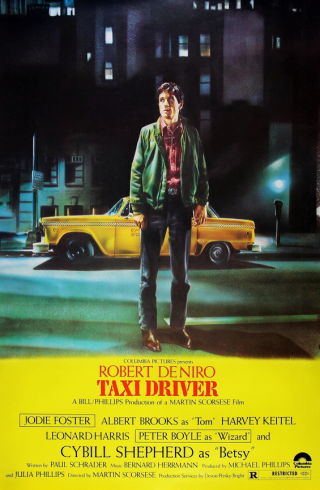
On the fiftieth anniversary of the film’s release, it’s time to place Taxi Driver (1976) back within its historical context. In the 1970s, films such as Coming Home (1978) and The Deer Hunter (1978) emphasized the disillusionment of veterans who were experiencing disabilities, psychiatric trauma, and readjustment difficulties in a post-Vietnam society. Like many male-fantasy Vietnam War-era films, Taxi Driver contains some historical truths but also reinforces deeply problematic myths about veterans, homecoming, and trauma.
Psychiatric Trauma in Homecoming Narratives
Taxi Driver reflects common fears about Vietnam veterans returning to the United States. In 1971, Vietnam veteran John Kerry warned Congress “about what the result is of the feelings these men carry with them after coming back from Vietnam. The country doesn’t know it yet, but it’s created a monster, a monster in the form of millions of men who have been taught to deal and to trade in violence, and who are given the chance to die for the biggest nothing in history; men who have returned with a sense of anger and a sense of betrayal which no one has yet grasped.”[1]
On the surface, Taxi Driver is about a Marine Corps veteran named Travis Bickle (Robert De Niro) who served honorably and returned to New York City while dealing with trauma. In the 1970s, Dr. Robert J. Lifton, a psychiatrist specializing in studying war crimes, conceptualized post-Vietnam Syndrome as a combat stress unique to the conditions of fighting in Vietnam (such as measuring victory by body-counts, “free-fire zones,” and dehumanization).[2] Symptoms included delayed onset trauma, social ostracism, betrayal, guilt, feeling scapegoated, alienation, rage, psychic numbing, and disillusionment.[3]
Post-Vietnam Syndrome served as a powerful critique of the war itself as an “atrocity-producing situation,” in the words of Lifton, where ordinary people may “commit acts of evil.”[4] By the early 1970s, a majority of Americans believed that the war in Vietnam was not only a mistake, but that it was fundamentally and morally wrong.[5] Whistle-blower and Marine Corps veteran Daniel Ellsberg exposed that the US government had been lying about the war, and Ronald Ridenhour reported on war crimes at My Lai, where US soldiers massacred 504 unarmed civilians, mostly women and children.[6] Against this backdrop, popular media represented Vietnam veterans as mentally-damaged social pariahs coming home from a deeply unpopular war.