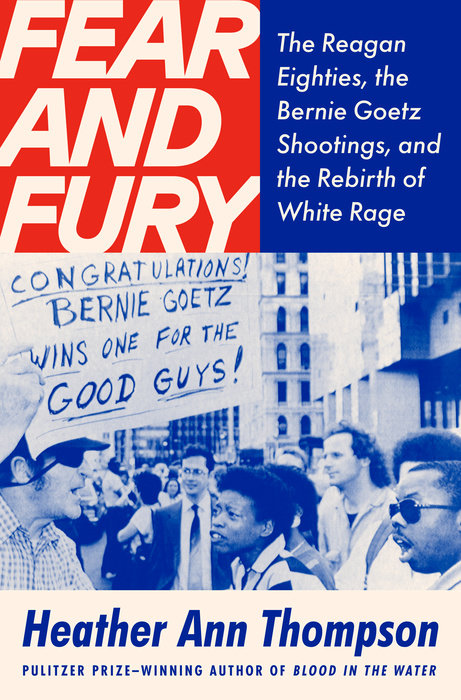

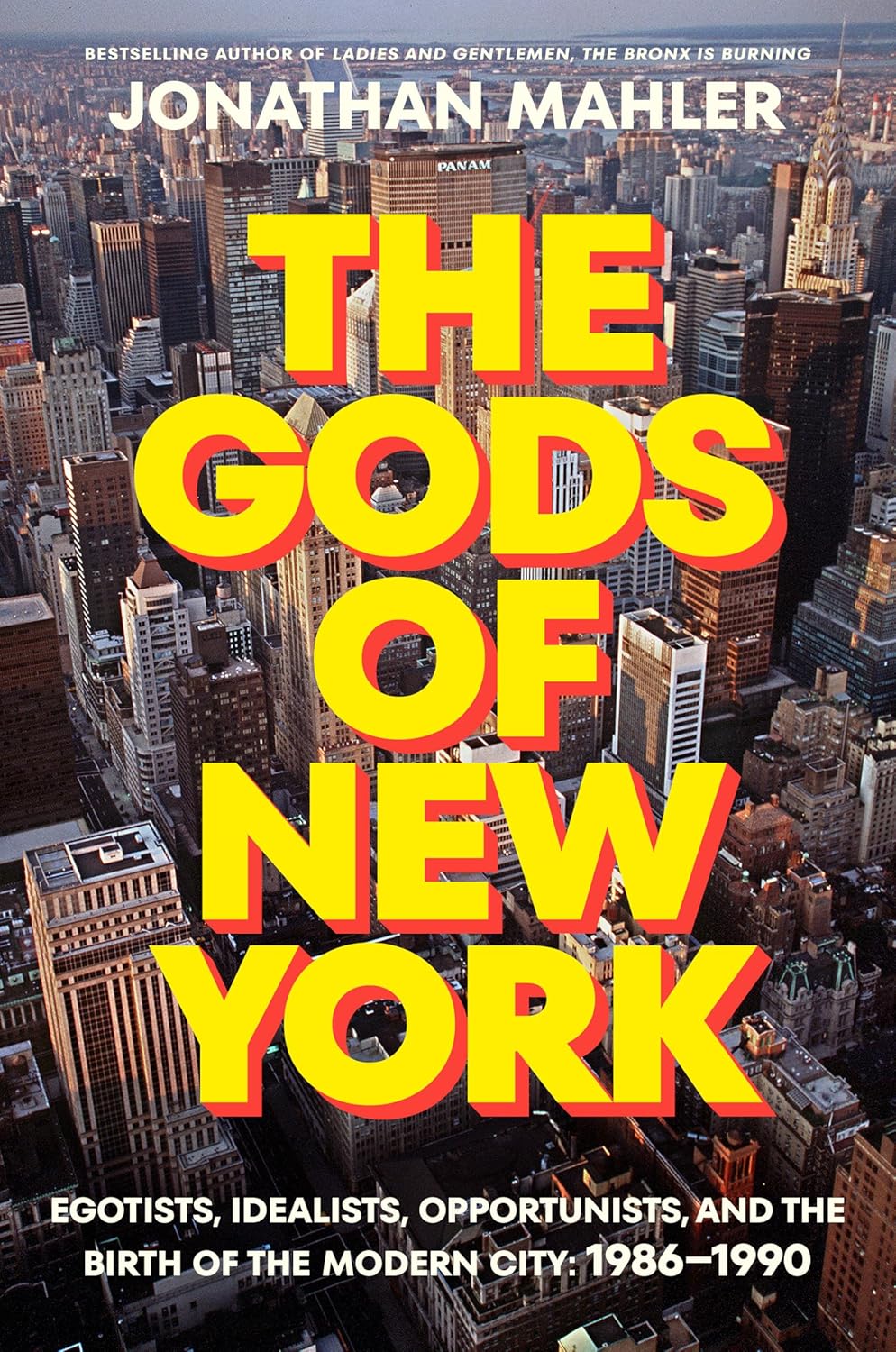
Now, some forty years later, three new books have revisited the shooting. Goetz is a recurring figure in the journalist Jonathan Mahler’s book The Gods of New York, which places his case alongside a handful of other transformative conflagrations in the late Eighties—including the Black Monday stock-market crash, the Central Park jogger case, the AIDS crisis, and the crack epidemic. Goetz is also the main subject of Fear and Fury, by the historian Heather Ann Thompson, and Five Bullets, by the CNN legal analyst Elliot Williams, both of which narrate the shooting and ensuing legal saga in great detail. Goetz, for all three authors, is an embodiment of the era’s prevailing politics of fear; he was a “human Rorschach test for New Yorkers,” Mahler writes, “revealing their deepest anxieties about the city.” They present New York in those days as a natural incubator for reactionary violence, such that many observers at the time wondered if the shooting was not so much a random event as an inevitable one, a product of a city that was increasingly shaped by racial tensions, wealth inequality, and fears about crime. Though much has changed in the intervening decades, it’s easy to recognize these aspects of Goetz’s era in our own. The renewed interest in his case raises an uncomfortable question: Is the city still ruled by its own violent id?
Bernie Goetz moved to Manhattan from Florida in 1975, the year the city almost went bankrupt. The federal government and the city’s creditors had demanded budget cuts, which in turn exacerbated the already squalid conditions around the city. Trash rotted in the streets and fires dotted the skyline, especially in the South Bronx, where slumlords took advantage of the gutted fire department and the promise of easy insurance payouts. As the police department’s ranks shrank, crime festered, both aboveground and below.
Before the Seventies, New York’s social safety net was relatively robust. For decades, blue-collar jobs had outnumbered white-collar ones, and public services were plentiful and well-functioning—hospitals, day cares, parks, free education. But the recession of 1969–70 hit New York hard, draining the city of half a million jobs. By 1972, roughly one in eight New Yorkers was receiving some form of public assistance, up threefold from a decade earlier. This placed an enormous amount of stress on the welfare system, which in turn became a vector of racialized hostility. New York couldn’t pay its bills, many insisted, because it was too generous to black and brown people, who had moved to the city in droves after the Second World War and who were said to be responsible for rising crime and disorder.