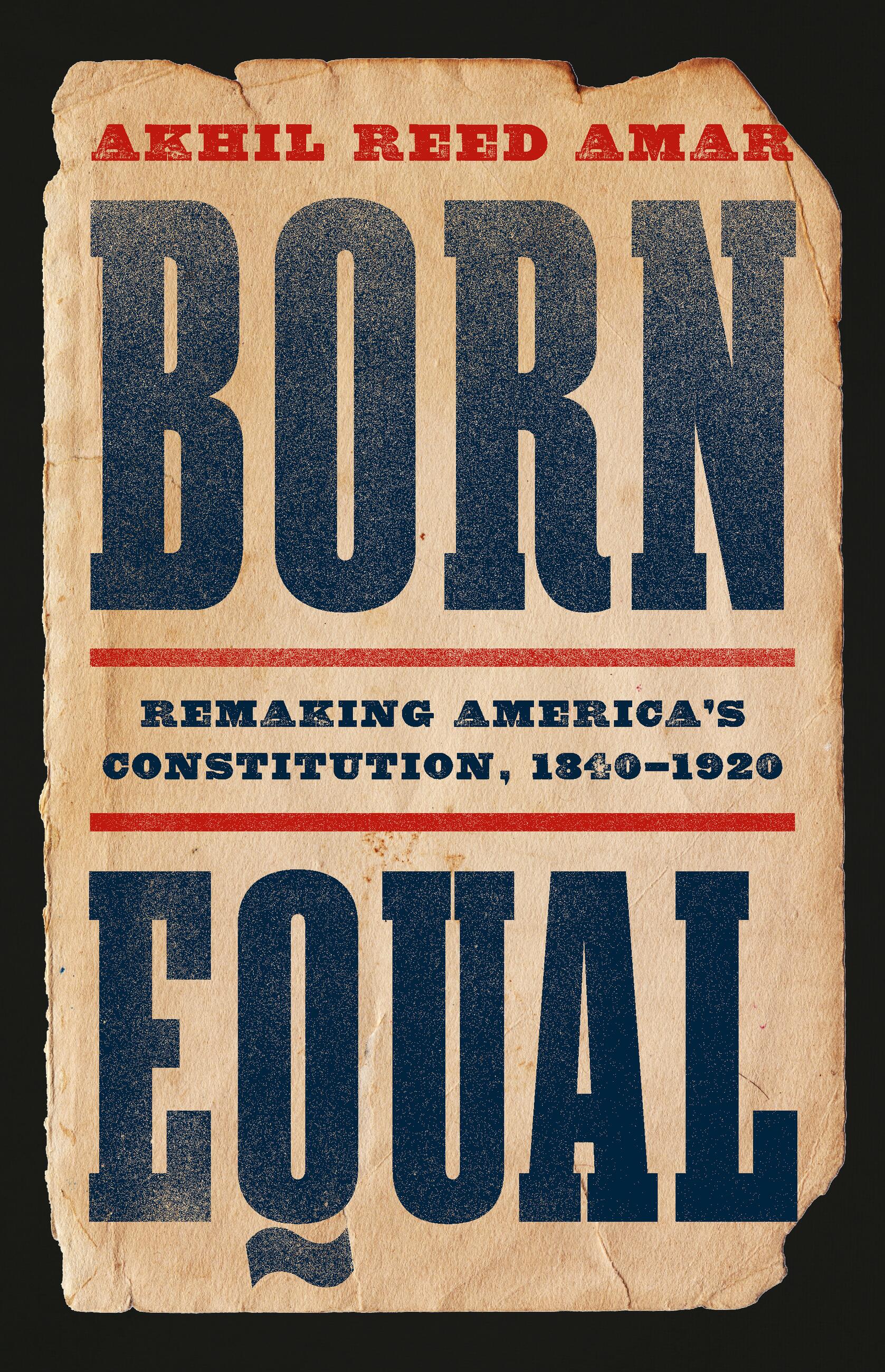
The first three-quarters of Born Equal focuses chiefly on the struggles in the Northern states to advance a liberal originalism, especially in campaigns against slavery and in support of women’s rights. Amar therefore begins with the World Antislavery Convention of 1840 in London, when the eight women in the American delegation were excluded from the proceedings. It was a powerful moment on the road to the women’s-rights convention held at Seneca Falls, New York, in 1848, and to the expanding role of women in the abolitionist movement.
Amar’s narrative here is rich and detailed. The same can’t be said for his treatment of the Southern slave states: He devotes relatively little attention to their internal politics, defense of slavery, economic organization, or the development of secessionist thought. No member of the slaveholding leadership is mentioned often enough to merit first-name treatment (also, perhaps, a sign of Amar’s scorn), and even though many had their own versions of constitutional originalism and the right of revolution, he doesn’t take them very seriously. As a result, Amar pretty much regards the slaveholders’ behavior in the deepening crisis over slavery’s future as “foolish” and “stupid.” The handwriting, he insists, was on the wall: The political balances in the country were coming to favor the Northern states; slave-grown crops like cotton were unlikely to fare well in the contested trans-Mississippi West; and the world was turning against slavery on multiple grounds. “A truly farsighted South” (a stand-in term for a complex region and set of people, white and Black) that recognized the “evil” and “unsustainability” of slavery would have sensibly tried to cut some deals: accepting gradual emancipation, say, on the model of New York, in return for a variety of concessions, including cash and land grants in the West. These states might, that is, have heeded Lincoln’s constitutional views and moral imperatives, along with the economic benefits that such an arrangement may have brought.
In this, Amar offers a version (albeit a more transactional one) of the long-debunked “repressible conflict” interpretation of the coming of the Civil War, which argued that slavery had reached its natural limits and that a negotiated settlement was possible, only to be spurned by self-interested politicians who had forgotten the lessons of the founders. The truth is that the South’s cotton economy was thriving and had made the fortunes of what had become the richest and most powerful landed elite in the world. Slave labor was also exploited very profitably in the production of commodities other than cotton—sugar, rice, tobacco—as well as in mining, building infrastructure, and even some manufacturing. And by the 1850s, the winds of abolition and progressive reform were waning and a new conservatism and nativism was taking hold in the United States. Enslavers or those sympathetic to them still controlled the White House, the Supreme Court, much of Congress, and had strong supporters in both the Whig and Democratic parties. Why shouldn’t the slaveholding leadership have thought that secession and political independence were achievable?