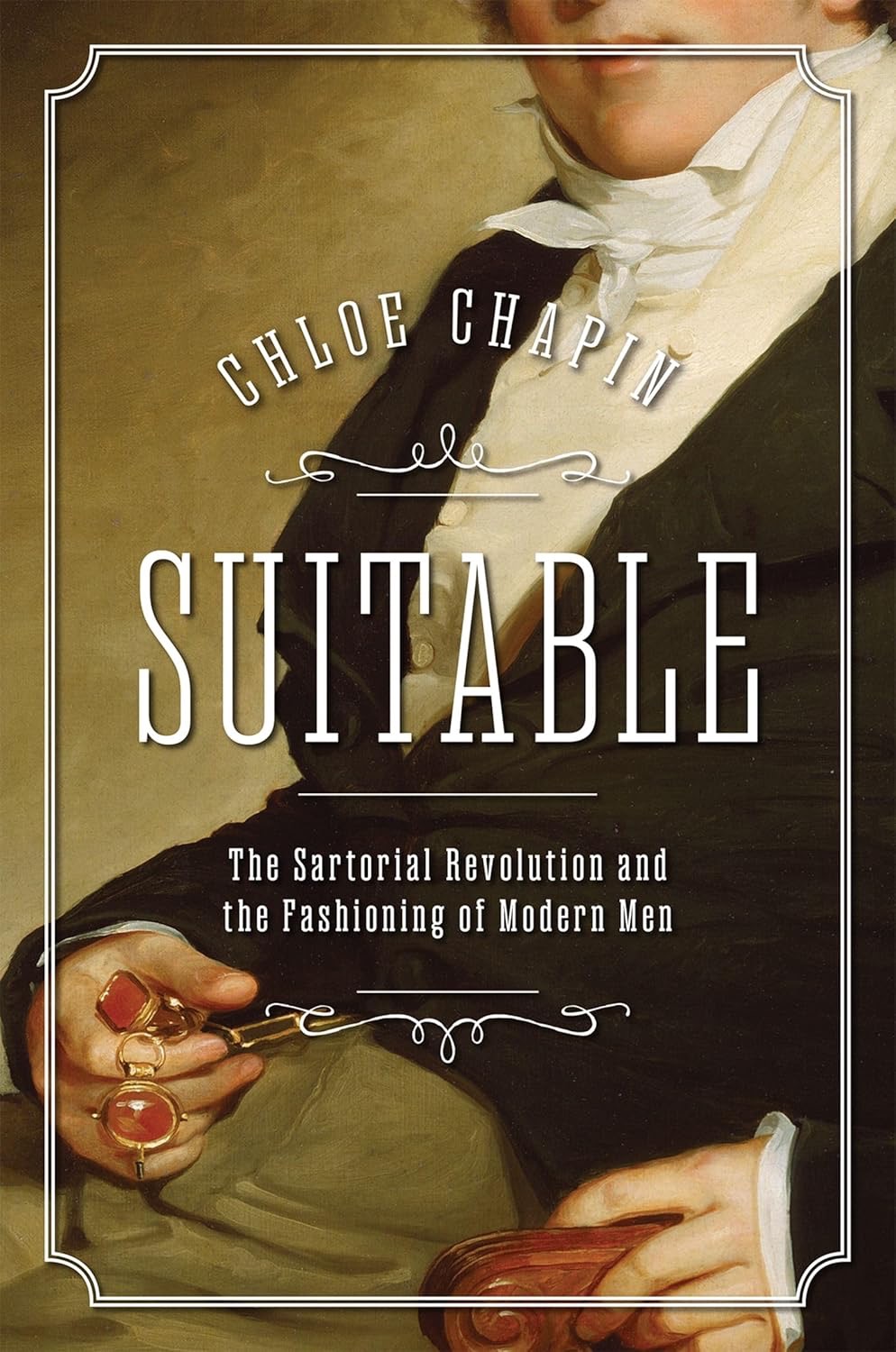
The sartorial orthodoxy of masculine style was born in revolution, raised in industry, came of age in a culture of capitalism, reached maturity through the language of democracy, and then traveled across the globe through colonialism. This transformation, taking place over a roughly seventy-five-year period between the American Revolution and the Civil War, coincided with a period of intense political and cultural identity formation, led by the first generations of Anglo-American men not raised under monarchial rule. During the age of revolution, the rise of industries, cities, and society led to enormous prosperity and new ideas of equality and democracy among white men. By the middle of the nineteenth century, the seriousness and stability of their suits suggested a new naturalness for their authority that came to seem both right and inevitable.
The American Revolution was pivotal to the establishment of modern democracies. The Industrial Revolution turned a handmade world into a modern landscape dominated by machines. But there was a third global transformation on their heels. Up until now, this revolution has been invisible, because we haven’t been able to see the plain, uniform suits that characterize this revolution. This “sartorial” revolution was built on the principles of the American and Industrial Revolutions, and it, too, had such profound ramifications that it deserves to be understood as a key shaper of the modern world. This revolution was not about nations or industries, but about humans and their relationships to each other and to the material world closest to their own bodies. The shift in style of dress and self-presentation of this Sartorial Revolution harnessed together new ideas of politics, industry, commerce, fashion, gender, class, and race, and materialized these new ideas most clearly in the modern suit.
Plain, boring suits might seem so normal and so trivial that they can’t possibly deserve such critical attention. But the plain, dark suit is probably the most prevalent form of visual media across the modern world. The suit helped white men to perceive themselves and others as equals, and it visually unified men divided by political difference. It also helped shape the kind of power that would later be described as patriarchal hegemony, heteronormativity, and white supremacy. At the same time, it trapped white men in a cage of conformity that looked so natural that even they couldn’t see it. Because the suit was so visually and materially plain, it resisted attention, even as it grew in power. When the Founding Fathers—and then subsequent generations of American men—used the plainness of suits to symbolize the enlightened, rational, republican, industrial, and civilized citizen, they marked both the suit and the men who wore it as impervious to critical examination and analysis. In becoming American, British colonial subjects rejected the oppressive power of kings, but when they adopted a system that transferred and diffused that power among themselves, the suit camouflaged this individual and collective power in a uniform of masculinity that was deceptively plain and simple. The primary power of suits has been their ability to hide in plain sight.