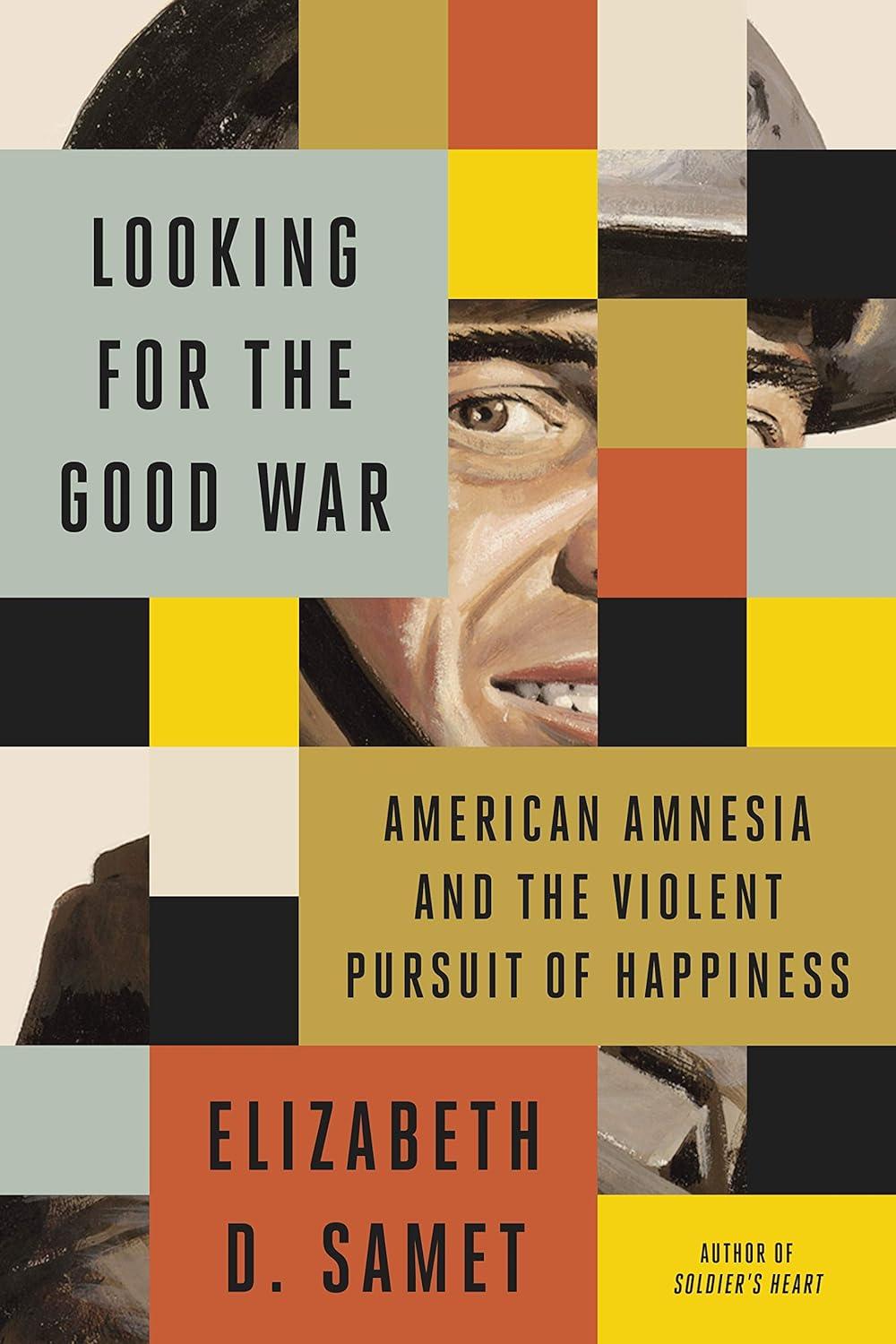
The terrorist strikes of September 11, 2001, supposedly launched a new kind of American war, with unfamiliar foes, unlikely alliances, and unthinkable tactics. But the language deployed to interpret this conflict was decidedly old-school, the comfort food of martial rhetoric. With the Axis of Evil, the menace of Fascism (remixed as “Islamofascism”), and the Pearl Harbor references, the Second World War hovered over what would become known as the global war on terror, infusing it with righteousness. This latest war, President George W. Bush said, would have a scope and a stature evoking the American response to that other attack on the U.S. “one Sunday in 1941.” It wouldn’t be like Desert Storm, a conflict tightly bounded in time and space; instead, it was a call to global engagement and even to national greatness. “This generation will lift the dark threat of violence from our people and our future,” Bush avowed.
Elizabeth D. Samet finds such familiarity endlessly familiar. “Every American exercise of military force since World War II, at least in the eyes of its architects, has inherited that war’s moral justification and been understood as its offspring: motivated by its memory, prosecuted in its shadow, inevitably measured against it,” she writes in “Looking for the Good War: American Amnesia and the Violent Pursuit of Happiness” (Farrar, Straus & Giroux). A professor of English at West Point and the author of works on literature, leadership, and the military, Samet offers a cultural and literary counterpoint to the Ambrose-Brokaw-Spielberg industrial complex of Second World War remembrance, and something of a meditation on memory itself. It’s not simply that subsequent fights didn’t resemble the Second World War, she contends; it’s that the war itself does not resemble our manufactured memories of it, particularly the gushing accounts that enveloped its fiftieth anniversary. “The so-called greatness of the Greatest Generation is a fiction,” she argues, “suffused with nostalgia and with a need to return to some finest hour.” Those who forget the past may be condemned to repeat it, but those who sentimentalize the past are rewarded with best-seller status.
The mythology of the Second World War features six main elements, by Samet’s tally: that the United States joined the war in order to rid the world of tyranny and Fascism; that “all Americans were absolutely united” in their commitment to the fight; that “everyone” in the country sacrificed; that Americans got into the war reluctantly and then waged it decently; that the war was tragic but ended on a happy note; and, finally, that “everyone has always agreed” on the first five points.