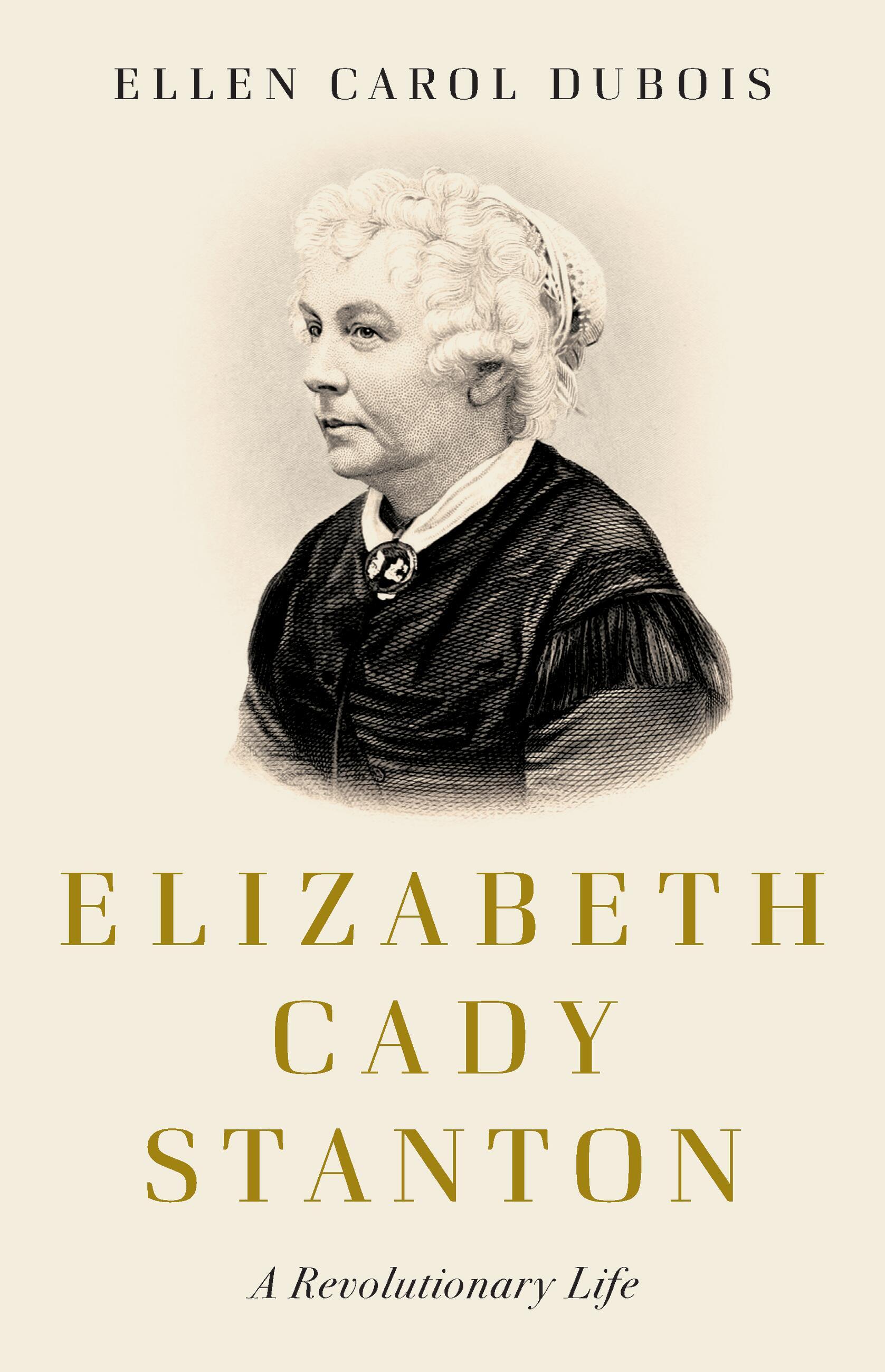
As Stanton realized that Reconstruction would not enfranchise women, she began to think less about what the vote could do than who was worthy of it—and specifically, why Black and immigrant men were less worthy of it than she was. She was becoming influenced by social scientists such as the French philosopher Auguste Comte, who were less concerned with enshrining individual rights than with imposing a social order—a departure from her earlier universalist thinking. In speeches and writing, Stanton began to depict the potential enfranchisement of immigrants and freedmen as a cataclysm that could endanger “daughters of Jefferson and Washington” such as herself. “Think of Patrick and Sambo and Hans and Yung Tung . . . making laws for Lucretia Mott,” she said in one particularly nasty rant, conjuring slurs for Irishmen, Black men, and German and Chinese immigrants. “The more frequently her great hopes for a revolution in women’s status were blocked,” DuBois writes, “the more she shifted back to more familiar hierarchies and prejudices.”
The contemporary flattening of Stanton into an avatar of white feminism might suggest that her racism was representative of her peers. This undersells the singular malignance of her outbursts, which drove away Black and white allies alike. In January, 1869, at a meeting of an interracial advocacy group called the Universal Franchise Association, Stanton issued a diatribe about how the country risked placing “educated refined women . . . in the humiliating position of supplicants at the feet of serfs, peasants, plantation slaves, paupers knaves drunkards, all the ragged ignorant foreign and native riff raff in the country.” Word of Stanton’s comments spread through an outraged suffrage community. Not long after, Mott quit her leadership position in the A.E.R.A.
Stanton’s nadir came in May of that year, when the organization met for its annual convention in New York. The Fifteenth Amendment, which would formally grant the vote to Black men, but not to any women, was at the top of the agenda. Most members supported the amendment: Lucy Stone, a Boston-based suffragist, declared that she would be happy if “any body can get out of the terrible pit.” Stanton opposed it, and urged the group to hold out for a universal-suffrage law, though no such amendment was forthcoming. Douglass stood from the audience to rebuke his old friend; many others joined him. The A.E.R.A. erupted in outrage against its embattled, embittered founder.