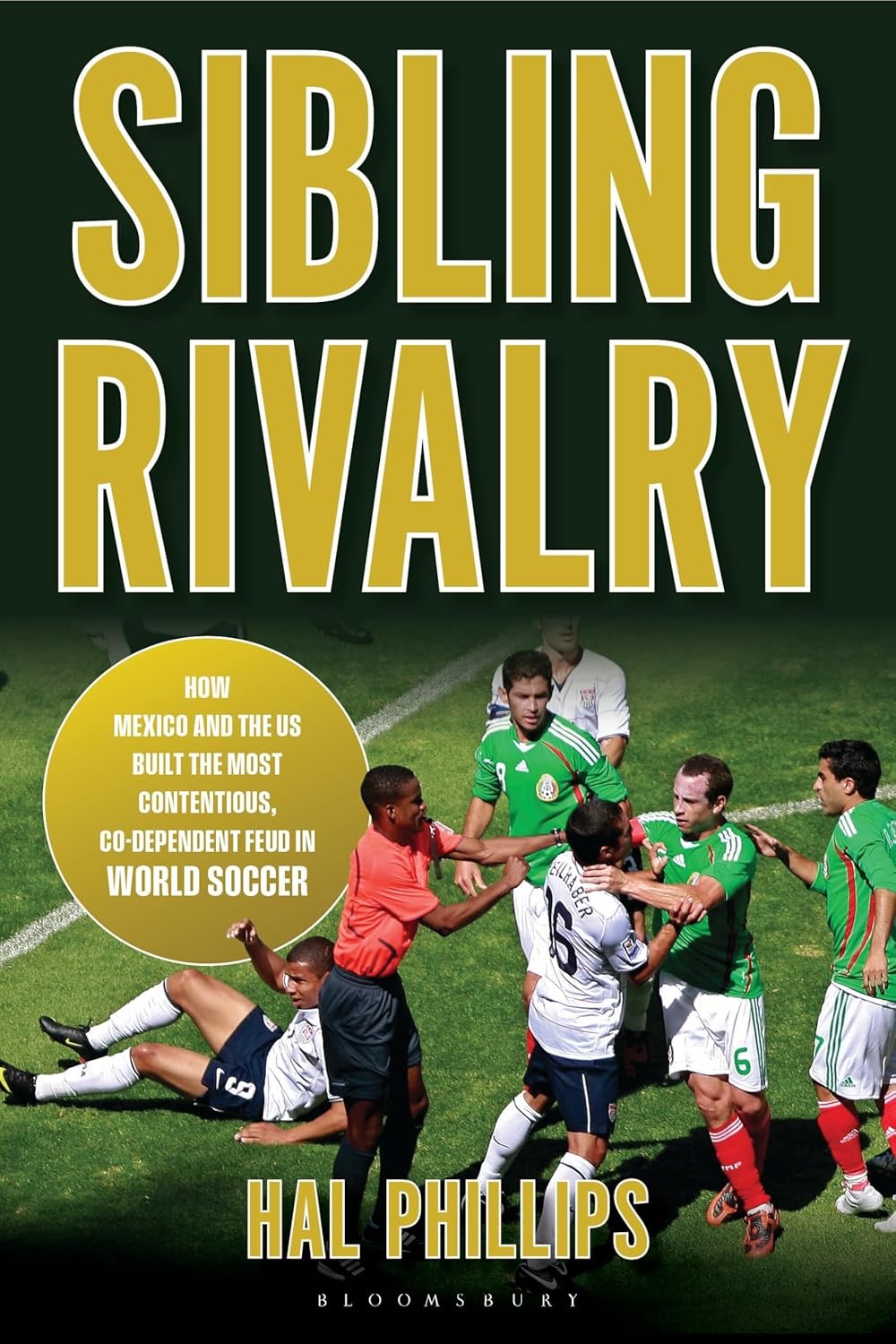
Until 1990, pro soccer in the US hadn’t just stalled: Everything had gone to pieces. The North American Soccer League had gone bankrupt in 1984; the second division American Soccer League failed the year before. When I played semi-pro in Greater Boston during the mid-to-late ’80s, I was playing with and against guys who were on our national team. That was a problem. I thought, if I'm playing with them, they're not playing in the right league. There were no pro leagues. Yet by the time I was 24 years old in 1990, we had qualified for our first modern World Cup. Major League Soccer (MLS) was poised to launch. Then the Women's National Team won a World Cup in China in 1991.
But the hinge rivalry moment came in 1991 when Bora Milutinović debuted as our national team coach, and the US beat Mexico in the very first Gold Cup, the North American Championship. All of a sudden we were like, “I guess we're pretty good at this.” Then, [high-level soccer executives] Jack Warner and Chuck Blazer, aside from embezzling millions of dollars, single-handedly brought the US men’s and women’s national teams to prominence by getting them on American television. Warner and Blazer recognized that US versus Mexico was about the best product they could muster outside of a World Cup, in terms of ratings and spectacle. These matches drew more than 90,000 people to the Rose Bowl for an exhibition match in 1994. That was the blueprint. The two sides would contest 20 very close matches all through the ’90s before huge crowds. During the 1980s they played just twice.
The politics of the 1990s made the US-Mexico border a newly contentious issue that, really, hasn’t abated. How did that play into the emerging rivalry?
There are lengthy historical interludes [in the book], because I didn’t think one could really understand the rivalry without getting into how much the United States has disregarded and trampled on Mexican sovereignty, something that continues to this day. During Ronald Reagan’s drug war, the US government shut off seaborne avenues, stuff was coming up through Mexico, and the border was politicized in a way it had never been before. In the 1990s, I remember Pete Wilson's nativist campaign for governor of California, before [presidential hopeful] Pat Buchanan exploited the same issue in 1992. Then the US signed NAFTA, the North American Free Trade Agreement, which created even more resentment. All of this coincided with the fact that the US was finally a worthy rival to the Mexican national team. American fans were so happy at what was happening with this new rivalry, we didn't even notice how much [Mexico] resented their loss of dominance. For Mexican American fans, each match became an assertion of Mexican identity. Eventually, US fans reciprocated, and the stakes were raised yet again.