By 2011, “intersectionality” had nearly completed its journey from intellectual obscurity to cultural ubiquity. In an era of social-media politics, with everyone talking to (or shouting at) everyone else, arguments and identities tended to stack atop one another, and so “intersectionality” made intuitive sense: it explained why movements needed to be accountable to multiple constituencies at once. In conversations among progressives, the word often functioned as a way to commend the work of Black women. One story on National Public Radio praised the playwright Lorraine Hansberry for being “intersectional before it became a thing”; another observed that Beyoncé was working to “nudge her listeners toward the concept of intersectional feminism.”
Unlike many intellectual concepts, this one has a clear origin story: “intersectionality” was born in 1989, in a law-review article titled “Demarginalizing the Intersection of Race and Sex: A Black Feminist Critique of Antidiscrimination Doctrine, Feminist Theory and Antiracist Politics.” The author, a professor named Kimberlé Williams Crenshaw, proved to have a knack not just for provocative legal essays but for coinages, too. Around the same time, she popularized another term that would reach the mainstream—“critical race theory,” a name for a branch of legal scholarship that eventually became a catchall for left-leaning ideas about racism. During a 2020 campaign rally, Donald Trump promised to ban C.R.T. training in the federal government, calling it a “hateful Marxist doctrine,” and in the years that followed C.R.T. became central to a debate over how—or whether—schools should teach students about race.
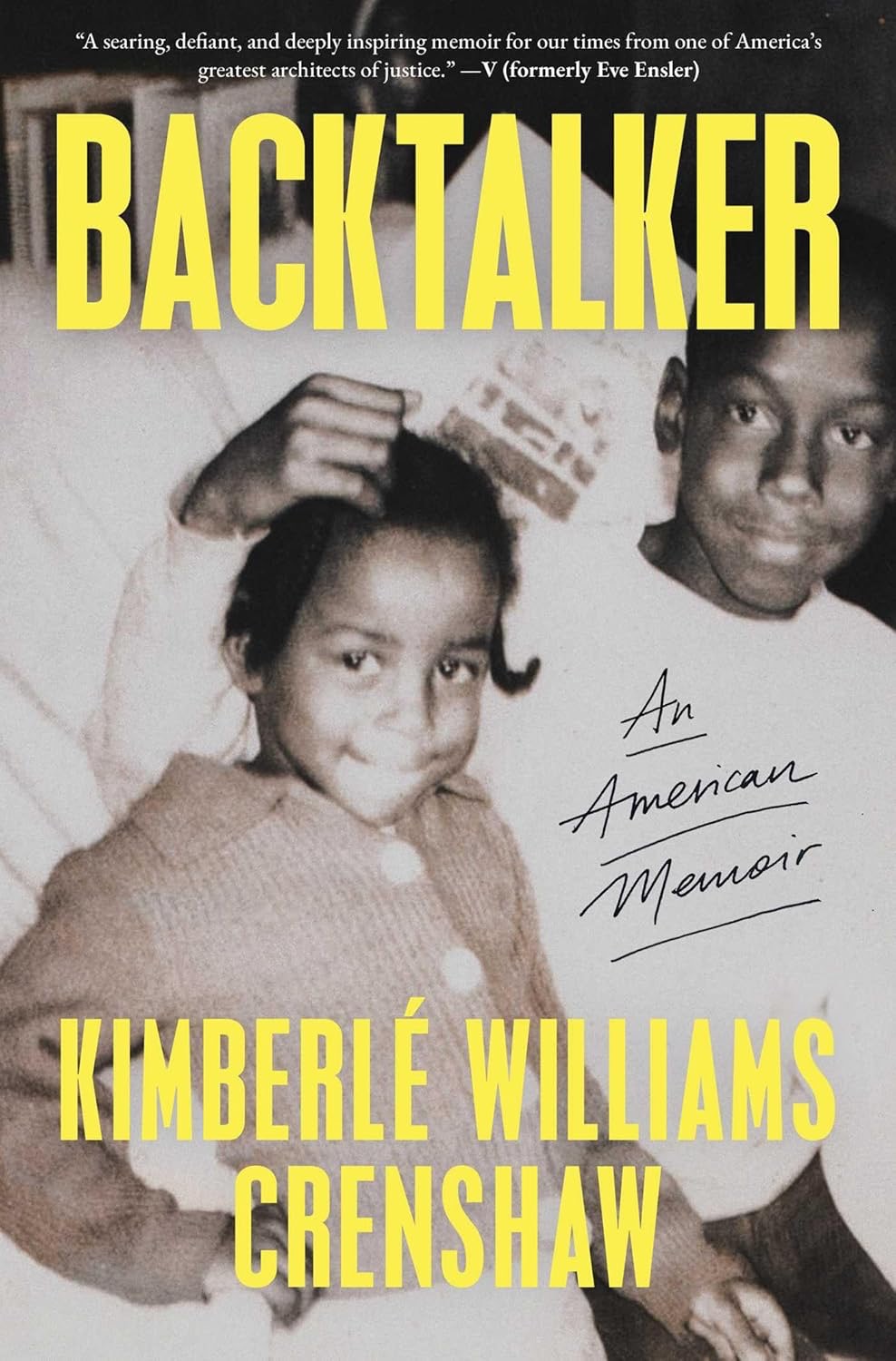
Plenty of scholars and journalists have written histories of these contentious terms, “intersectionality” and “critical race theory.” Now Crenshaw has written something different: a history of herself. In “Backtalker: A Memoir” (Simon & Schuster), she frames her life and her remarkably influential career as one long fight against various forms of exclusion and unfairness. Like many radical thinkers, she seems to harbor a certain ambivalence about radicalism itself. She tends to present her ideas as sensible and traditional—the reasonable conclusions of a clear-eyed intellectual who simply refused to shut up about what she witnessed and experienced. At times, she seems genuinely puzzled by the controversy her ideas have aroused, among both potential allies and dedicated opponents. Near the end of the book, she writes about what it was like to hear her coinages taken up by people who had doubtless never opened a law journal. “Fox TV jumped on the bandwagon, amplifying efforts by a few dedicated extremists to attack critical race theory as ‘divisive,’ ‘dangerous,’ and ‘un-American,’ ” she writes, and though it’s clear that the people on television didn’t consider these descriptions to be compliments, Crenshaw might have taken them as such. Neither of the movements she named was designed for mainstream acceptance. C.R.T. was born as an insurgent project, and intersectionality was once a critique of the civil-rights movement. What are they now?