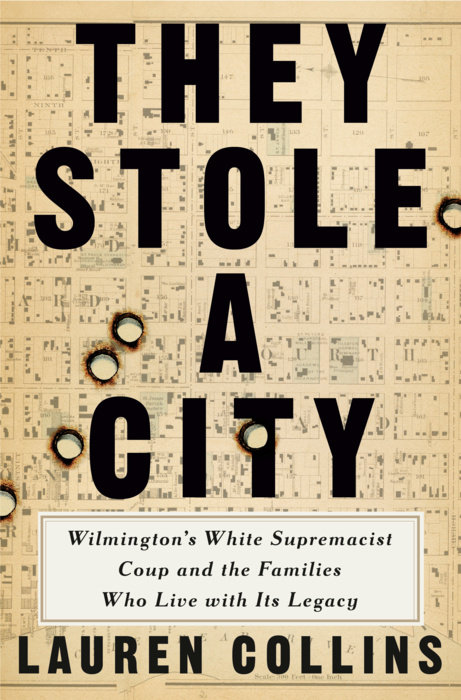
I was born in Wilmington and lived there until I was eighteen, but I didn’t know much about 1898 until 2016, when I watched a documentary called “Wilmington on Fire,” directed by Christopher Everett. The film showed how white Democrats murdered Black men in the streets, banished Black leaders and their white Republican allies, and overthrew the city’s democratically elected biracial government, establishing a precedent of impunity for racial terrorism and solidifying Jim Crow. It also demonstrated that the incident had been overlooked and even actively suppressed. (“Before Rosewood. Before Tulsa. A massacre kept secret for over one hundred years,” the film’s tagline read).
In recent years, thanks to the work of scholars, artists, and local activists, public awareness of the violence of 1898 has increased. During one trip back to Wilmington in 2016, I went with Everett to visit a memorial that had been underwritten by the descendants of both white perpetrators and Black survivors, including Brown’s father, James. It features six paddle-shaped bronze pillars in a semicircle and an inscription explaining plainly that “Wilmington’s 1898 racial violence was not accidental” but, rather, part of a campaign to “create a system of legal segregation which persisted into the second half of the twentieth century.” The memorial was erected in 2008 on the outer limit of Wilmington, where the street turns into a highway and whisks you out of town. A few fancy lampposts that the city installed only emphasized the loneliness of the site. During our visit, we were the sole pedestrians around, but a trace of human presence caught my eye: a piece of plywood nailed high on a telephone pole. We could just make out a message, against the hot blue sky, stencilled on the board in red and black letters: “1898 WAR CRIME.”
The two signs spoke in eloquent juxtaposition: one a handsome, official monument tidily summarizing the events of 1898 and what they meant; the other, a homemade, guerrilla effort that challenged the neat closure of that narrative. Together, they suggested that the event is still being adjudicated, with high stakes for people living today. It’s not hard to see how 1898—a period of white backlash against Black success, the violent harassment of elected officials, the undermining of democratic norms, the weaponization of misinformation—relates to our current political moment. There is no more explicit example of the vulnerability of American democracy, and of the magnitude of the task of repairing it once it is breached.