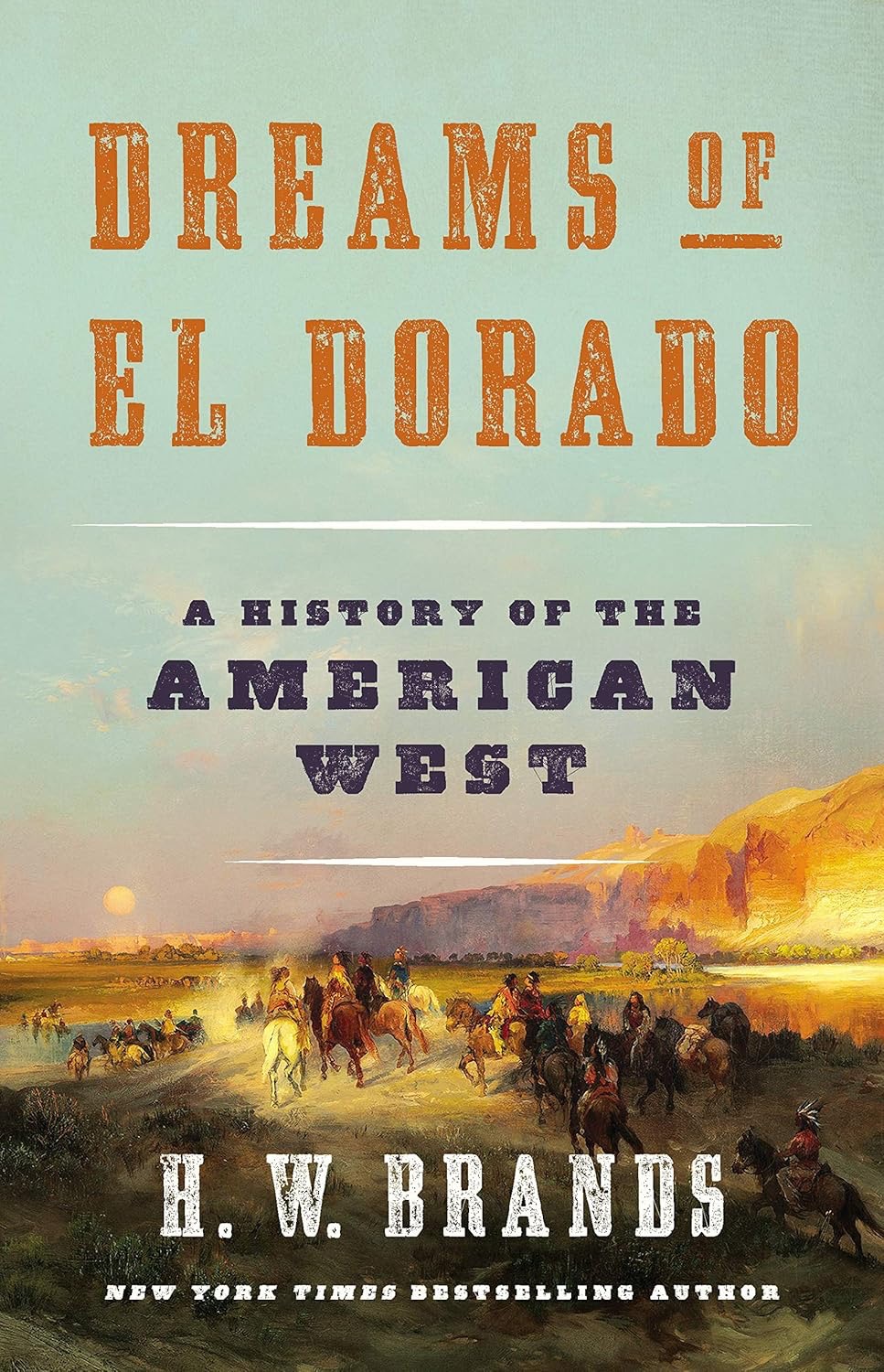
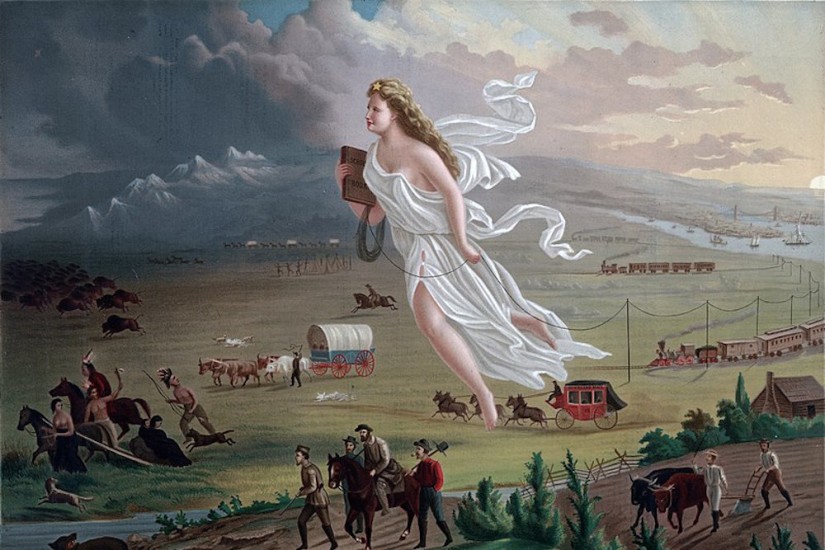
Although the book’s publication date is in October, Dreams of El Dorado has the feel of a book crafted for the Father’s Day market. Brands’s has a deft narrative touch and a talent for highlighting the human drama undergirding historical events. But Dreams of El Dorado is not challenging history. It is scholarship as entertainment, history as adventure story. The book’s purpose is not to cause the reader to rethink their conventional understanding of the American past, but rather to affirm what on some level they already know. Brands is Cody-like in his treatment of history as a vast theatrical pageant, and unfortunately Turner-esque in consigning the violence against indigenous people to the historical background.
If there is any larger insight to be gleaned from Dreams of El Dorado, it has to do with how difficult it remains for many historians to include a complete treatment of Native Americans in their narratives. Brands’s book appears on the heels of several other books by popular historians, both inside and outside the academy, that have struggled with making North America’s indigenous peoples meaningful actors in the past. Jill Lepore’s These Truths: A History of the United States purports to be a comprehensive single-volume history of the United States, but as Christine DeLucia detailed for LARB readers several months ago, for the vast majority of Lepore’s narrative, Indians are “simply ghosts, spectrally off-stage in the American story.” The title of David McCullough’s new book, The Pioneers: The Heroic Story of the Settlers Who Brought the American Ideal West, betrays the book’s not-so-subtle biases. McCullough may be a two-time Pulitzer Prize winner, a recipient of the Presidential Medal of Freedom, and the very voice of history to many Americans thanks to his frequent narration of PBS documentaries (including Ken Burns’s The Civil War). But The Pioneers recycles tired 19th-century tropes of Indians as savage obstacles to white efforts to bring “American ideals” to the “unbroken wilderness.”
Brands is too smart a scholar to ignore Native Americans or to reduce them to cardboard stereotypes. But they exist nonetheless as foils to what in his telling emerges as the real story of the American West: white settlers exploring a new landscape and making it their own. Brands has little interest in the methodological challenges involved in Native history. He makes no use of indigenous records, such as the calendar sticks of the Tohono O’odham or the winter counts of the Lakota, to try to understand an Indian perspective of events. While he quotes at length from the well-known autobiography Black Elk Speaks, Brands confines to a brief footnote the questions over the reliability of Black Elk’s recollections: the spiritual leader’s words were filtered through both an interpreter and the imaginative pen of the Nebraska poet (and non-Native) John Neihardt. In reworking his interviews with Black Elk into a popular book, Neihardt obscured key details, such as the fact that his Lakota holy man was actually a catechist for the local Catholic Church. (Indeed, the Vatican is currently considering Black Elk for sainthood.) Dreams of El Dorado makes no attempt to explore the indigenous discourse about the genocidal practices of the United States that Jeffrey Ostler managed to unearth in his innovative, just published Surviving Genocide: Native Nations and the United States from the American Revolution to Bleeding Kansas.