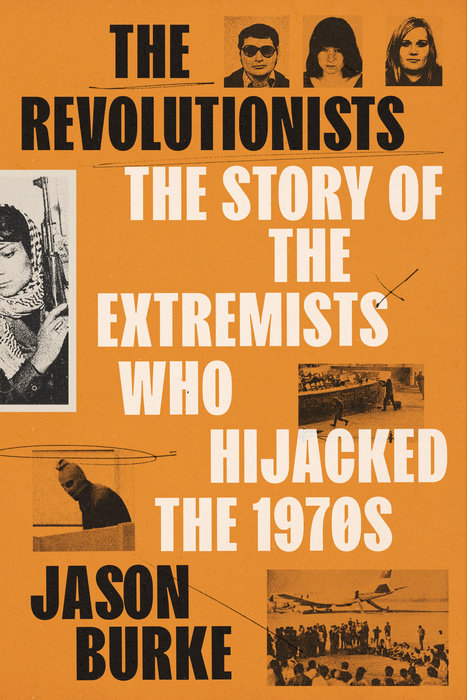
Burke recounts the work of the Red Army Faction in Germany, the so-called Baader-Meinhof Gang, detailing its campaign of terroristic bombings and its enthusiastic collaboration with left-wing Palestinian nationalist organizations. He writes about the Japanese Red Army, a militant outfit in league with the PFLP’s Wadie Haddad, that massacred dozens of Israelis in 1972 at Ben Gurion Airport (then called Lod). He digests the events that culminated with the massacre of the Israeli Olympic team in Munich at the hands of the PLO-affiliated Mohamed Daoud Odeh with the support of the Red Army Faction. From a bloody attack on Vienna as vengeance against the oil-producing states that had given up on OPEC’s 1973 embargo, to the Entebbe hijacking in 1976, to the 1983 Marine barracks bombing in Lebanon by the nascent Hezbollah, Burke’s narrative establishes an incontrovertible continuity between the socialist movements of the late-20th century and the Islamist variety.
The author also paints a discomfiting portrait of the Western cowardice that prevailed in this decade. A contemptible timidity reigned in Stockholm, where then–Prime Minister Olof Palme thought that his being a “vocal critic of U.S. foreign policy” meant Sweden would avoid importing “the conflicts of the Middle East” to Swedish streets. It triumphed in Bern, too, where the Swiss capitulated to PFLP demands with an alacrity fueled by the assumption that the rest of Western Europe would capitulate as well, so they’d better be first. Cowardice gripped U.K. Prime Minister Edward Heath’s government when it convinced itself it had a “moral obligation” to its blackmailers. Fear drove the West Germans to blame everyone, especially the Israelis, for inspiring their own homegrown terrorist movement. The French and the Italians routinely deferred to the notion that their “best interests were served” by giving in to terrorist ultimatums. At the time, almost every international air carrier “had adopted a strict policy of total compliance” with their tormentors’ demands. Even the United States lent succor to this international terrorist enterprise to preserve the relationships Washington had cultivated within it.
But Burke’s is also an account of the free world’s awakening from its somnolence. As the author writes of one CIA assessment in 1976, “There was widespread frustration across much of the West with what was seen as a ‘weak and ineffective’ international response to ‘international terrorism.’” That changed with Israel’s successful liberation of the hostages who had been seized by the PFLP’s external operations unit (Popular Front-XO) and the German outfit “Revolutionary Cells” from the infamous Ugandan airfield in Entebbe. That operation, one American author observed at the time, “marks a turn in the tide of the Free World’s response to the new technique of terror.” He was right. West Germany found its spine, too, when it liberated Lufthansa Flight 181 from a Somali airfield and neutralized its PFLP hijackers in 1977 in the first German show of expeditionary force since 1945.